Menu Sidebar
Menu

To D or not to D: Obstacles and opportunities with digitized scholarships

Many of us still view scholarships as government help, or an odd altruistic act of a celebrity or gigantic corporation.


However, with the development of digital technologies and availability of scholarships from around the world, the scholarship landscape seems to be shifting. Plenty of small- and medium-sized businesses are announcing their own scholarships nowadays, which sometimes even turn into internships and employment. Sweet, right?


So, what are the most common obstacles we encountered, and some of the benefits that accompany these scholarships?


Digitized world, analog problems


Even though they are digital, these scholarships still require same administration.


Documents can be uploaded electronically and/or via app, but students still need to fill out an application and possibly write an essay. Whether it’s technical knowledge on how to fill out an application or write a good essay, or students’ motivation in question, these challenges need to be addressed by counselors.


Lurkers in the digital world


Digitized scholarships present an additional threat: that of scammers and data abuse, both of which are serious issues. Not all scholarship providers are legit, unfortunately.


The solution to these cyber-lurkers?


Find a reliable platform that screens all the scholarship providers and presents only the verified ones.


The upside of the digital world

Old administrative and motivational issues of scholarships, accompanied by new cyber pitfalls, might make you re-consider using digital platforms at all, but there are significant benefits to be gained.


The danger of scammers and data abuse is erased by choosing a serious platform (at ScholarshipOwl, for example, we check and verify every scholarship before we present it to our members).


That still leaves administration and essay writing, and this is where digital possibilities really become interesting.


Availability = time well-used


The biggest issue with scholarships today is, of course, finding the appropriate ones and recommending them to students with high chances of winning. Even then, odds are that the competition will be quite stiff.


Students invest themselves during this process and become de-motivated when they don’t get that scholarship. Is it any wonder their drive and interest are plummeting?


The common answer to this conundrum is to opt for loans – they are highly available, and provide financial means necessary for furthering education. We all know how that usually works out.


Digital platforms bring innumerable scholarships to the palm of your hand (literally). The algorithm of ScholarshipOwl platform, for example, matches students with scholarships tailored for them. This also means higher probability of them actually winning.


But the biggest benefit for counselors is the time that becomes available. With digital support, time spent on browsing heaps of scholarships and finding verified, relevant ones is cut down to minutes.


This is where real potential is for better time management – since the technical drudgery is eliminated, you free up time for the administrative side of scholarships, and helping with essays to get your students those stellar scholarships.


Are digital scholarship platforms worth it?

As with any well-balanced essay, the answer is: it depends.


On the one hand, an unstructured, unprofessional digital platform might leave you and your students with more problems than the traditional route.


On the other, a well-thought-out platform with loads of experience frees up lots of time and streamlines the application process, while connecting your students to scholarships they have high chances of winning.


The best would be to try it out – check out ScholarshipOwl’s website, or any other verified scholarship platform, and see firsthand how you and your students can benefit.

This blog was written by Scholarship Owl. They offer some other great free resources that might be of interest:

Free comprehensive guide on college scholarships
Documents you need for scholarship application
10 common mistakes with scholarship applications
Common mistakes when applying for college scholarships
Writing a cover letter
Writing a scholarship personal statement

Have any of your students considered taking a Gap Year?

If not, maybe they should. Mint.com has published a blog “The Ultimate Guide to Taking Your Dream Gap Year” that might be of interest to some of your students that are considering this option.

Why Students Should Consider Taking a Gap Year

Attending college can feel like a lot of pressure, especially if you aren’t positive what career path you want to take in life. Taking a gap year can help provide you some clarity on what your passions are, and help make you a well-rounded individual. It’s a big choice to make, but these benefits of taking a gap year may help you make your decision. 

Independence

For many young adults, college can feel like their first real moment of independence. But with class schedules, homework, studying, and authority figures like teachers and parents still having a say in at least some part of your life, how independent are you really? By taking a gap year, you have the opportunity to set out truly on your own for the first time.

Time to Reflect 

Our lives tend to be fast-paced, and time passes in the blink of an eye. It can be hard to find moments to take a step back and think about the big picture. By taking a gap year, you allow yourself time to figure out what you truly want for yourself out of life, and come up with a plan to achieve those goals. 

Learn a New Language and Culture

If you choose to take your gap year in a foreign country, it is a great opportunity to practice a new language. Understanding the language will help you become more socially integrated into your new community, which in turn will help you understand the culture. According to the Gap Year Association, 94% of people said they spent their time abroad learning how to communicate with people from different backgrounds. The ability to acknowledge and respect other cultures will allow you to be more open-minded throughout your life, including in the workplace where you may encounter various beliefs and values. 

Improve Career Opportunities 

Some people may view taking a year off of work or school as a setback, but in reality it can offer a lot of new opportunities for you. People who travel abroad and take a gap year have better people skills, strong problem-solving abilities, and possess a better sense of self. These characteristics are highly attractive to employers — but be ready to address these soft skills in your cover letter or a job interview. 

How to Save for a Gap Year

One factor that deters many from taking a gap year is the concern of how you can afford to take a year off to travel. Before you jet off on your new adventure, use these tips to help you save up the funds you’ll need to support yourself throughout the gap year. 

Set a Goal

Think about everything you want to accomplish during your gap year and put a monetary estimate on it. Consider things like transportation costs, housing, and various living expenses that you’ll have to afford throughout your 12 months. There are simple ways you can save money, like cutting back on your subscriptions, or you can make a plan to put a certain amount aside every paycheck that you’ll use for your gap year. 

Do Your Research  

While traveling abroad can offer you a lot of spontaneous experiences, planning your gap year should not. Before heading off on your adventure, research things like the cost of living and transportation. Countries in Southeast Asia are more affordable for someone traveling on a budget versus European countries. You’ll also want to understand the exchange rate in the countries you’ll be visiting to make sure you’re making the most of your dollar. 

Make Sacrifices 

While it’s not something that most 20-somethings want to do, in order to save money you may have to make some sacrifices. Social expenses like bar tabs, movie tickets, and eating out at restaurants can add up quickly and take away from your gap year budget. Cut back on these activities will be beneficial for your wallet and your health! 

Work As Much As Possible 

The purpose of a gap year is to take a break from our regular day-to-day tasks and responsibilities, but you will have to work hard beforehand. If your job allows, take on extra hours or shifts to earn more money. You may also want to consider a part-time job or side hustle to help you save additional funds.

Plan and Book Ahead

Once you’ve started saving additional money for your gap year, consider spending some of that extra cash on accommodations or travel. Booking these things at the last minute can end up costing you more, which may prevent you from doing everything you wanted during your gap year. Use platforms like Google Flights or Kayak to set up price tracking so you can be sure you’re getting the best possible deal. 

Money-Saving Tips During Your Gap Year

You’ve saved the money, made the plans, and on your way to somewhere new to begin your gap year. But once you arrive, it may be tempting to splurge and blow your budget. These tips will help you stick to your budgeting plan and ensure you come home with money to spare. 

Don’t Exchange Money at the Airport

While it’s super convenient to exchange money at the airport, it also comes with a high commission fee. If you know what regions you plan to visit, exchange cash at your bank before leaving for your trip. You can also wait until you get to the main part of the city you’re visiting to exchange, where you’ll likely find better rates. 

Carry a Prepaid Card 

If you choose to go to your bank and exchange money before leaving, also consider picking up a preloaded currency card as well. This card will help you avoid ATM and overdraft fees, keep a better handle on your spending, and even lock in the exchange rate. If possible, wait until the rate is favorable to load your card — a prepaid currency card will protect you from any rate fluctuations. 

Use a Budgeting App 

Your gap year is all about gaining experiences and creating memories, and sometimes those come at a price. From dinners with new friends, to drinks at a piazza, and excursions through exotic locations, you might see your money disappear more quickly than you anticipated. Using a budgeting app like Mint can help you see exactly what you’re spending your money on and help you make adjustments.

Applying for College After a Gap Year 

At some point, your adventure abroad and gap year has to come to an end. While you may not want to immediately get back into the swing of things, it’s important you take steps to prepare yourself for applying to college upon your return. 

Deferring Your Acceptance 

If you’ve applied to college, received your acceptance letter, and suddenly feel a bit hesitant about to head off to school in the fall, that’s okay. Universities and colleges are more commonly recognizing gap years as a way for students to grow and experience the world. Check with your college’s deferral policy, outline your gap year plans, and share with the admissions board for approval of your request to defer. 

Records and Transcripts

If you choose to take a gap year between high school and college, it is recommended that you discuss with your guidance or college counselor first. While many high schools will have your transcripts and records on file for a few years after graduation, it is important to confirm with your counselor that they will keep these for you. 

Standardized Test Scores

Your test scores will still be valid after you return from your gap year, if you take either the ACT or SAT before you leave. These scores are valid for five years, and you can request score reports through the tests respective websites. If you’re unhappy with your scores, you can always retake the tests — just be sure to continue studying throughout your gap year to ensure you’re prepared.  

Accounting for Your Gap Year

Approximately 40,000 Americans take a gap year between high school and college, so most admissions counselors are familiar with what they entail. But that doesn’t mean you don’t have to provide an account for your year. Whether you choose to write your personal essay about your experience, or submit it as additional information with your application, be ready to clearly explain why you chose to take a year off and what you gained from the experience. 

Additional Resources

If you’re thinking about taking a gap year, there are a lot of factors to consider. It’ll take thoughtful planning, saving and budgeting to ensure you make the most of your time, but it can be one of the most rewarding experiences of your life. By taking a gap year before college, you can grow yourself into a more well-rounded individual and set yourself up for a successful college experience and full life.

Mint.com has some other great blogs for students. Check them out at: https://blog.mint.com/

Scholarship Opportunity for your Students

According to the National Center for Education Statistics, only 59% of students graduate college within 6 years. Scholarships can help your students cover some of the costs of attending College.

Course Hero is offering (3) three scholarships. Two (2) monthly scholarships are for $5,000 and their erit based opportunity is for $10,000. Details are below:

_______________________________________________________ 

MERIT BASED SCHOLARSHIP  

Scholarship Amount: Up to $10,000 
Application Deadline: October 31, 2019
Frequency: One recipient every six months 

Eligibility: 
– Must have a 3.0 GPA or higher 
– Must attend a university or plan to attend a university (a four-year or a two year college) 
– Must be a US Citizen 
– Must be at least 16 years old 
– Must submit an essay (500 words or less) 

Link to apply: www.coursehero.com/scholarships/  

ONGOING COURSE HERO SCHOLARSHIP  

Scholarship Amount: Up to $5,000 
Application Deadline: Continuous – new scholarships are added twice a month 
Frequency: Two recipients every month 

Eligibility: 
– Must attend a university or plan to attend a university (a four-year or a two year college) 
– Must be a US Citizen 
– Must be at least 16 years old 

Link to apply: www.coursehero.com/scholarships/ 

6 Reasons Your Students Should Take a Dual Enrollment Course and 3 Reasons They Should Think Twice

What is dual enrollment?

A dual enrollment course is a single course that provides a student with both high school and college credit. It can be taught at the student’s high school, at a community college, at a four-year college or online. The instructor will either be a professor at the college or a teacher at the student’s high school who has been approved by the college to teach the course.

What are some of the benefits of dual enrollment courses?

  • Students who earn college credit during high school may be able to transfer those credits to the college they ultimately choose to attend. If the course satisfies a general education requirement, the student will have more time in their college schedule to explore other interesting classes, study abroad or internships. If the transferred credits satisfy a prerequisite, the student will likely be placed directly into a higher level course. Students who take several dual enrollment courses during high school may earn enough credits to graduate early or complete a double major in four years.
  • Dual enrollment courses are a cost-effective way to earn college credit. Dual enrollment courses are generally much less expensive per credit than equivalent courses taken while enrolled in college. In some situations, dual enrollment courses are subsidized or can even be free.
  • Taking a dual enrollment course can help you get into college. Academic rigor is one of the most important factors in getting accepted to college and admissions counselors are impressed by students who challenge themselves academically in high school. Since dual enrollment courses are college level courses, a student who normally takes regular high school classes (not honors or AP) can use dual enrollment courses to show a willingness to take on an academic challenge and demonstrate an ability for success at the college level.
  • Dual enrollment courses give high school students the opportunity to practice being college students. They will enter college with a better understanding of a professor’s expectations and the amount of reading and writing required for an introductory level course.
  • If the course is offered at a local college, high school students will benefit from spending time on a college campus. This experience will likely ease the transition to college. Students will have the opportunity to interact with professors and teaching or graduate assistants. They will learn to navigate a campus and use a college library. High school students will also benefit from meeting and observing college students who may become friends, sources of information on college life and serve as role models.
  • Spending time on a college campus can assist students with the college search process. They will learn details about college life that will help them decide what kind of college would be a good fit for them. They will know what it feels like to attend a college of a certain size or in a certain location so their criteria for selecting a college will be more fully developed when they begin their college search. When they are later touring colleges, students will ask better questions and will have a context in which to place the answers they receive.

What are some drawbacks of dual enrollment courses?

  • Dual enrollment courses are not generally considered to be as rigorous as Advanced Placement (AP) courses. Academic rigor is important in the college admissions process. Admissions counselors will study a student’s transcript and compare the courses the student chose to the courses offered at his/her high school. Selective colleges are looking for students who take the most rigorous courses available. If a student is planning to attend a selective college, AP courses will be more impressive to college admissions counselors than non-AP dual enrollment courses.
  • The college a student ultimately chooses to attend may not accept the transfer of credits earned in dual enrollment courses. More selective colleges may limit the number of dual enrollment transfer credits they accept or may deny them entirely.
  • Some high schools do not weight dual enrollment courses in the same way that they weight honors and AP classes when calculating a student’s grade point average (GPA). Therefore, students who typically take honors and AP classes could find that even an A in a dual enrollment course brings down their GPA. For this reason, students should discuss their specific circumstances with their high school counselor before enrolling in a dual enrollment course.

Dual enrollment courses are unique educational opportunities that can offer significant advantages for the right student. When deciding whether to take a dual enrollment course, students should think about their college goals, compare the courses available to them at their high school and discuss their options with their school counselor.

Michelle McAnaney is the founder of The College Spy, a full service independent educational consulting firm that assists students and families across the US and internationally with the college selection and application process. Prior to founding The College Spy, Michelle was a guidance counselor and educator for more than 15 years, including serving as the Director of Guidance at two high schools, an adjunct college professor and a GED tutor. Michelle holds a master’s degree in school counseling and a bachelor’s degree in human development. She recently completed UC Irvine’s certificate program in educational consulting and is a MBTI (Myers-Briggs Type Indicator) Certified Practitioner and a NLP (Neuro-Linguistic Programming) Master Practitioner. Michelle visits over 40 colleges each year so that she has first-hand knowledge of the colleges and universities her clients will be considering. You can find her on Facebook, Twitter, Instagram and LinkedIn.

Fall for Ed Tech with Five Free Tech Tools to Foster Engagement

If the weather is cooling, the leaves are changing colors, and you are wondering, “Where has the time gone and why am I starting another year staying late at work?” you might be a teacher!

Many educators view the start of the new school year as the ideal time to set professional and personal goals. They reflect on challenges from the previous year and insights from colleagues about how to connect students to content. They consider their work-life balance and strive for ways to work smarter, not harder.

What were your goals for the new school year? Less time on paperwork and grading? Collect data and assess student growth more efficiently? Stretch your budget with free resources? It’s not too late to make those dreams a reality! There are several free educational technology tools that can help every educator to achieve their goals! Many have paid add-on features, but the free version is sufficient to explore and meet your goals.

Access free, engaging lessons for every content area and grade level.

Nearpod is a presentation platform, a student engagement tool, a way to collect data organically, a resource for lessons, and so much more! The best way to learn about Nearpod is to sign up for a free account. On your homepage, select “Explore Lessons” from the drop-down menu on the right side of the screen. From there you can search for lessons in your content area. To get started, search “Teaching Tolerance” for examples of free lessons for all grade levels that are ideal for social studies/history teachers, literacy teachers, school counselors and others. Another great resource is “Common Sense Media” for digital citizenship lessons for all grade levels. You can also simply type in the content area you teach and scroll through lessons.

Assess learning and engage students in short, video-based reflections.

Flipgrid is increasingly popular with educators because the video discussion platform gives each child a voice. It allows every student to participate and share insights and feedback. Rather than relying upon standard hand-written exit cards (which limits communication to one-directional feedback: from the student to teacher), Flipgrid allows students to share responses in short videos. This is especially helpful to foster continued student engagement and provides a platform for students who struggle with writing to express themselves. Educators use Flipgrid for icebreakers, reflections on lessons, feedback, conversation, and so much more! Responding in a 90-second video clip to a reflection question means students are focused on content and learning and it helps students to make meaningful connections to the material and to each other!

Schedule meetings with ease.

Meeting coordination is a time-consuming task for educators. Often just planning a parent meeting with a group of educators with different prep periods can take more time than the actual meeting! The process often results in a series of frustratingly long chains of emails from colleagues sharing who is available and not available and reasons why. How can one cut through the clutter and schedule meetings easily? Simple! Check out Doodle! Select a series of dates/times and share out the link. As people respond, it’s easy to see when most people are available to schedule a meeting. One of the great things about Doodle is the ease of use. Respondents do not need to sign up for an account to respond. Doodle isn’t limited to meetings; you can use it to vote on the location for the next staff happy hour, book club selection, and more!

Organize your schedule and collaborate with colleagues.

Are you a perpetual “to-do” list maker? Are you a fan of post-it notes for reminders? If so, check out Google Keep! It’s essentially shareable notes with links and pics in your pocket. You can categorize to-dos by shopping lists, household chores, work tasks and more. Share notes with family or colleagues to make checking off items a collaborative process. For example, a shared shopping list means anyone in your household can add to it and any family member who hits the local market can review the list and cross off purchased items. Many students use Google Keep to keep track of homework and other tasks. The reminder feature is helpful to schedule reminders at the start of each class period to nudge forgetful students to write down assignments. Many students share the note with parents who can easily see what the homework is and when their child crosses off each completed assignment at home. No need to ask, “Did you do your homework?” A parent can simply check Google Keep and see their child’s progress.

Educators share Google Keep notes for shared projects. Planning a big event at school like a club project, talent show, graduation, or career fair? No need for check-ins on progress when it’s easy to check the to-do list!

Automatically grade assessments and easily collect data.

Use Google Forms to collect data, grade quizzes, and more! Educators love using EZ Analyze and other similar add-ons to automatically grade quizzes and track time on tasks. There are lots of add-ons that allow users to automatically email respondents, students, families, etc… The investment in automation can feel daunting at first, but it saves a considerable amount of time in the end.

Let this school year be the year you take control of your schedule by using educational technology tools that allow you to engage more, be more efficient, and provide you with a platform to take back control of your time. The job of educators can be all-consuming. We invest our hearts and souls into what we do. Being more mindful about our tasks can free up time to be more proactive and even take less work home. Implementing educational technology to streamline tasks is a form of self-care that will yield benefits for your students and for you.

Angela Cleveland, M.S.Ed., M.Ed., MA has 15 years of experience as a school counselor, is a Google Certified Educator, and she is the 2017 NJ School Counselor of the Year. Angela is the Webmaster for the New Jersey School Counselor Association (NJSCA) and has presented internationally about technology integration. Angela co-authored the book 50+ Tech Tools for School Counselors: How to Be More Engaging, Efficient, and Effective from Corwin Press.

What is an LRAP?

Ardeo Education Solutions is a mission-driven company that partners with higher education institutions to provide loan repayment assistance programs (LRAPs) that are smart for students and smart for colleges.

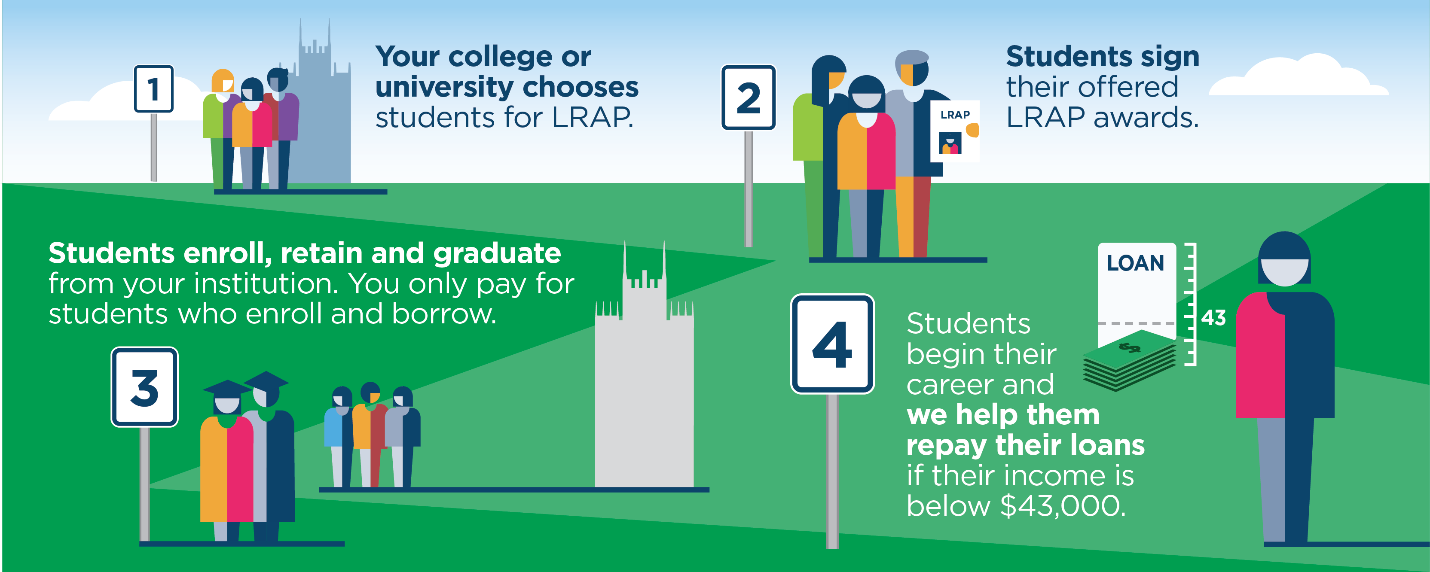
LRAPs are a compelling safety-net for prospective students and their families. LRAPs provide a powerful promise: if income after graduation is below a certain amount, typically $43,000 the program will help repay federal student loans, parent PLUS loans and private alternative loans.

How do LRAPs help students and families?

  • Ardeo’s loan repayment assistance programs provide peace of mind – the promise of the LRAP reduces stress for cost-conscious students and their families during the college selection process.
  • LRAPs remove financial barriers – empowering students to take advantage of the opportunity that borrowing can unlock, and making the life-changing impact of higher education more financially accessible to more students.
  • They help overcome fear and uncertainty caused by borrowing, enabling students to enroll in the best-fit program – so they don’t have to settle for anything other than the right college or university for them.

How does it work?

To receive assistance, students must meet the following eligibility criteria:

  • Be a graduate from the institution where the student signed their offered LRAP award.
  • Be employed and work 30+ hours a week.
  • Begin making their loan payments.

Why are LRAPs important?

Loan repayment assistance programs are changing how colleges, students and families think about financial aid. College cost is a key concern for students and families when making their higher education choice – with taking on student and parent loans as a hefty deterrent to prospective students making the right choice for them.

More than 120 colleges and universities across the country have offered an Ardeo LRAP to their students. For institutions that market their LRAP broadly, 25.4% of their enrolled students say they would not have enrolled without the program.

How is LRAP assistance calculated?

  • First, Ardeo looks at a student’s eligible federal, private and parent PLUS loan payments, relative to their borrowing limits.
  • Then the student’s annualized income is compared with their LRAP’s specific income threshold, to find their income proportion.
  • Finally, Ardeo reviews their average time worked (out of 40 hours per week) to get the student’s hours-worked proportion.

Why do graduates love LRAPs?

  • On average, Ardeo pays LRAP graduates receiving assistance $703 per quarter.
  • 92% of graduates have said they are grateful to their alma mater for offering them an LRAP.
  • Ardeo responds to graduates’ requests for assistance within one business day
  • Ardeo will write a reimbursement check within one week of receiving documentation.
  • Reimburses 96.5% of assistance requests.

Want to learn more about loan repayment assistance programs (LRAPs) and how they help students and families? Ardeo has information available at mylrap.org.

Letting go of that imperfect essay

I just finished working with a smart high school senior who has dreams of attending a Big 10 university next fall. In her Common App essay, she wanted to show admissions readers just how creative she is.

She succeeded, anchoring her story around a photo montage she crafted from her travels and hung on her bedroom wall. Looking at the photo display also helps keep her calm when she feels stressed from all the pressures from the outside world.

The story did everything colleges want in a Common App essay. It answered the prompt and showed in a genuine way that she is creative and knows how to relax. It was not the most complex essay I’ve read this year. For some reason, that started to bother me. Should we keep going? Could we improve it?

Even I knew the essay was finished, and even though she loved it, I started to doubt the work we had already done together. I wondered if I pushed her a little more, asked a few more questions, would she reflect more?

No. No. No.

That happens to me sometimes.  I have to remind myself to let go.

Do you ever catch yourself saying these things after reading what should be a final draft of a student’s essay?

  • He could have …
  • She should have …
  • I saw such potential …

Here are 3 things I do when I go to that place:

  1. Stop and Ask Myself: Whose essay is this, anyway?
  2. Reflect: Take my ego out of the equation and remember that the final essay reflects on the work we did together; it does not reflect on me.
  3. Remind myself: The student made choices along the way – about topic, about theme, about sentences and paragraphs. I might not agree with all of those choices, but I don’t need to.

It’s November, and the first deadlines have passed. It’s also crunch time, when counselors and other well-meaning adults tend to step in and help too much, which can result in over-edited student work. When that happens, the student’s voice gets lost, and the essays don’t sound genuine.

Breathe. Slow down before you get out that red pen. And please, remember to let go of that imperfect essay.

Our Gift to You: A Free Book for You and Every Parent in Your School

We’d like to give you a free electronic copy of our book: How to Write an Effective College Application Essay: The Inside Scoop for Parents.  After you click on the link, you’ll find out how to get free books for every parent in your school, too. We also have companion books for professionals and for students.

How do you approach the college essay? We’d love to hear how you talk to your students when they panic, and what your biggest college essay challenges are. Feel free to email me kim@wowwritingworkshop.com.

About the Author

Kim Lifton, a 2018 Top Voice in Education, LinkedIn, is President of Wow. We are a team of professional writers and teachers who understand the writing process inside and out. The Wow Method has been used by students to write application essays and resumes; by business owners to create blogs, websites and other communication materials; and by English teachers to improve student writing skills. We can even help you write a great poem or short story. If it involves words, we can help!

Suicide Prevention Information

We have covered the topic of suicide prevention regularly in our magazine and in this blog because it is a huge problem in our society and as a Counselor working closely with students you can see the signs when a student is depressed and possibly thinking about suicide. Recognizing and acting on those signs can make all the difference in the world.

Choice Mutual recently published a comprehensive post on the subject. On average, 112 Americans die by suicide each day. Suicide is the second leading cause of death among 15-24 year olds and more than 9.4 million adults in the United States had serious thoughts of suicide within the past 12 months.

Here are some of the warning signs of suicide they outlined:

  • Talking about wanting to die or to kill oneself
  • Looking for a way to kill oneself
  • Talking about feeling hopeless or having no reason to live
  • Talking about feeling trapped or in unbearable pain
  • Talking about being a burden to others
  • Increasing the use of alcohol or drugs
  • Acting anxious or agitated; behaving recklessly
  • Sleeping too little or too much
  • Withdrawing or feeling isolated
  • Showing rage or talking about seeking revenge
  • Displaying extreme mood swings

Here are some ways you can support students who may be exhibiting some of the above signs:

Warning Signs of Suicide Risk
Most people who are feeling depressed or desperate enough to consider suicide give clues to how they’re feeling. You can be the first step towards help for someone you care about by learning to recognize these clues to suicide risk.

Verbal Signs

“I want to kill myself.”

“I don’t want to be here anymore.”

“No one understands me.”

“I can’t take it anymore.”

“Things will never get better.”

“I’m tired of being a burden to my friends and family.”

“No one would miss me if I were gone.”

Physical Changes

Acting Differently

  • Changes in mood: more withdrawn, anxious or sad, or sudden mood lift after a down period
  • Changes in eating or sleeping habits
  • Suddenly taking more risks: not taking prescribed medication, drunk driving, ignoring physical limitations, having unprotected sex, using more drugs or alcohol
  • Loss of concentration.
  • Withdrawing from friends and family.
  • Losing interest in things that used to be enjoyed.
  • Not planning for the future
  • Hurting oneself on purpose
  • Thinking and talking about death a lot
  • Unexplained good-byes or unusual personal expressions that have a sense of closure

Situations

  • Recently having lost a loved one, relationship or job
  • Having money problems
  • Having questions or worries about being gay, bisexual or transgender
  • Previous suicide attempts
  • Recent death of a loved one
  • Problems in an important relationship
  • Problems at work or school
  • Social isolation

Suicide Prevention Resources:

Check out the full post at Choice Mutual here: https://choicemutual.com/suicide-prevention/

Tips to prevent distracted driving

Distracted driving means the driver is doing something that takes their attention away from the road. There are three categories of distracted driving:

  • Cognitive distraction means you’re paying attention to something other than driving.
  • Visual distraction occurs when you take your eyes off the road.
  • Manual distraction is when you remove your hands from the steering wheel.

It may sound like it isn’t a big deal but the fact of the matter is that distracted driving accidents injure over 1,000 people every day in the U.S. and kills about nine more.

While reading and sending text messages is the biggest culprit for distracted driving there are other habits your students can identify and break in order to become a more focused driver. Here are some tips to help prevent distracted driving:

  • Plan ahead. Set your GPS, turn off your phone and any other electronics, and set your mind on your trip before you get on the road.
  • Make any needed adjustments to your mirrors, seat, heat or air conditioning, and any other vehicle systems before you put your car in gear.
  • Skip the food and drinks if at all possible; if you’re on a long trip and have to eat stick to neat snacks instead of messy meals.
  • Make sure others in the vehicle (baby brother or sister) and pets are secure before you leave. If you have to attend to them pull off the road first.
  • Do your personal grooming before you get into the car. If you have to brush your hair or remove your jacket pull over and park.
  • Stash any loose gear such as a handbag or briefcase before you leave the driveway. Check your vehicle for anything that might roll off a seat or console and secure it before you leave.
  • If you have passengers that tend to distract you feel free to politely tell them you need to focus on your driving.

Remember, anything that takes your attention from the role of driving is a distraction. It only takes a second to have an accident, so plan ahead and pay attention!

These tips come from ratesforinsurance.com which has put together a nice guide about distracted driving. Things that are covered in the guide are: laws by state, apps available, organizations, prevention (particularly for teens), effects of distracted driving (from 10 studies), FAQ and other resources. Check it out here: https://ratesforinsurance.com/distracted-driving/

Tips that can help your students save on their cell phone plans

Many of your students are on a tight budget and one of their largest expenses are their cell phone plans. There are some ways to save on these plans (through a little research they should be able to cut their bills in half).

Moneysavingpro published some great tips that your students can use:

Did you know your students can cut their wireless bill by over half just by going with a smaller carrier? These mobile providers are called MVNOs, which stands for Mobile Virtual Network Operators. You’ve probably already heard of a few of them, like Boost Mobile and Metro by T-Mobile (formerly MetroPCS).

These carriers buy up extra space on the four major networks: AT&T, T-Mobile, Verizon Wireless and Sprint – and resell it at a discount. MVNOs can afford to give you better rates because most of them operate completely online and do not spend the big bucks on marketing as the major wireless carriers do. The best part is that college students can get service on the same great networks for half the cost.

Benefits of MVNOs

Your students need to save money and need a reliable wireless service. MVNOs are the ideal solution.

  • Cheaper prices by up to 50% or more
  • Service on the same networks as the major carriers
  • Custom plans let you pay only for what you need
  • No credit checks and no contracts
  • Easy to bring your own phone and keep your number
  • Great customer service
  • Convenient and fast online signup

The Cheapest Cell Phone Plans for College Students

Here are a few examples of MVNOs that offer cheap cell phone plans that meet the high-usage needs of today’s college student – along with their budget.

Mint Mobile

Mint Mobile saves you money by selling their plans in bulk. You can purchase three, six, or 12 months at a time. The more you buy at once, the lower your per month price will be. The highest plan gives you 10 GB of 4G LTE data, which is plenty for most smartphone users. You’ll get unlimited talk and text with any plan. This MVNO runs on the nationwide T-Mobile network.

TextNow

Are you a heavy data user who needs a little more from your plan? TextNow, which operates on the T-Mobile and Sprint networks, offers an unlimited data plan option. They also feature a free Wi-Fi plan and 2 and 5 GB options. All plans include unlimited texting and calling.

Tello

For the college student who has to tighten those purse strings as much as possible, Tello is a great option. You pick and choose as much or as little calling and data as you want. Unlimited text messages are included. Tello runs on the Sprint network.

Here is a link to a comparison engine where your students can compare plans: https://www.moneysavingpro.com/cell-phone-plans/compare/

Save Even More: Buy a Refurbished Cell Phone

Buying a used or refurbished smartphone is a great deal, both financially and practically.

  • You’ll save more than 50% off the retail price of a brand-new phone (which can run as high as $1000!).
  • There are plenty of reputable sellers now, most of which even offer some kind of warranty on your purchase.
  • There are phone repair shops virtually everywhere now – getting your device fixed is easy and affordable.
  • Buying a used phone is environmentally responsible. Most people upgrade before their device is actually worn out or obsolete.

They Can Put More Cash in Their Pocket By Selling Their Old Phone

Not only do they need every penny they can get their hands on but they also don’t have much room in their dorm or apartment for extra stuff. If they are replacing their phone, take that old one and sell it for some cold hard cash.

Recap

There’s no reason for college students to pay premium prices for cell phone service or top-end smartphones.

  • Choose an MVNO and a discount cell phone plan.
  • Buy an old or refurbished phone at 50% or more off retail.
  • Sell their old phone for cash.
Newer Posts
Older Posts

Link for Counselors

Current Publication

View Current Publication

Advertisements

LINK Newsletter for Counselors

Sign up to receive our bi-weekly e-newsletter.