Menu Sidebar
Menu

Workforce Pell Grant Act – A Community College Student Success Opportunity

College access advocates have legitimate concerns that the Workforce Pell Grant Act could have an unintended negative impact on students related to lifetime Pell Grant eligibility. Students may eventually review associate and bachelor’s degree options and the funds utilized for the short-term job training program may limit future Pell Grant educational financing. This new dynamic is similar to the longer-term concern that remedial/developmental courses some college students are required to take will impact them running out of funding later in their educational endeavors.

Community colleges have a great opportunity to serve students who qualify for the Workforce Pell Grant Act. First, they can offer training at a lower cost than other organizations. While this provides students a benefit, policy and operational coordination is needed to fully support students. Following are some specific examples of what can be done.

High School Students – Vocational-Technical courses available for college dual enrollment can be offered and then placed on the community college transcript. This saves the students time and money. Students with an interest in these fields should enroll. Also, these credits could be a college degree elective for students entering other career fields.

All Students – Credit for Work Experience and Industry Recognized Credentials transferring into the community college as degree credit can also assist students. A timely review of these documents is important, way before the student applies for college graduation, so this information is available for academic advising appointments.

Student Advising Approach – Many associates of applied science degree programs have mini certificates and other certificates a student can earn along the way towards obtaining their degree. Some specific examples are electronic technology, computer aided drafting and automotive services.  Students should be advised to stack credentials.

Non-Credit and College Credit Department Coordination – Some community colleges might have a field of study being taught in both divisions. For example, IT and electronics. Coordination can assist students in the non-credit courses to be considered for college credit if they decide later on to work towards a degree program.

Utilizing these steps can allow community colleges to utilize the Workforce Pell Grant to promote short term and long-term student retention and success.

Kenneth McGhee is a Financial Aid and Enrollment Management Consultant.

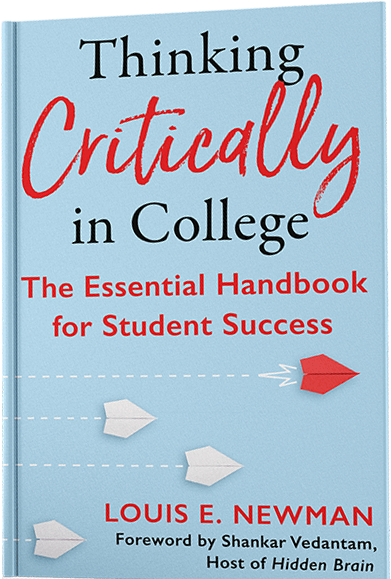
Thinking Critically in College:  The Essential Handbook for Student Success – Book Review

“Nearly every first-year college student discovers that college courses are more academically challenging than they expected, and certainly harder than classes in high school. Professors expect students not just to absorb material, but to analyze and synthesize it, to consider multiple perspectives, to evaluate conflicting evidence, and then to apply what they’ve learned in new contexts.

Thinking Critically in College explains how to do all this and more.

Unlike most college prep books—which advise you to go to office hours, get enough sleep, take good notes, and learn how to get along with your roommate—this one actually shows you how to do the work your professors will assign and explains how to tackle common academic challenges. This accessible and comprehensive handbook covers metacognition (thinking about how you think); basic critical thinking skills; college-level reading, writing, and quantitative reasoning; how to think about academic disciplines; decoding actual assignments from college courses and tackling research projects.

Written in a personal, engaging style that draws on the author’s experience as a professor and academic advisor for more than forty years, Thinking Critically in College is an indispensable guide to doing the work of college for students from all academic backgrounds. 

For more information about Thinking Critically in College:  The Essential Handbook for Student Success, as well as presentations and workshops for faculty and students and information about Professor Newman’s College Success Coaching services, see this website.” 

Being Proactive about Student Retention

College Admissions, Financial Aid and Billing Office Questions to Consider

For students enrolling for college effective July 1, 2026, the student loan limits have been changed from the current amounts available. To prepare for these changes college administrators should consider reviewing the following questions and the resulting data.

What percentage of the freshman admitted students accept our offer of admission?

What is our percentage of freshman admitted students enrollment yield rate?

How many of our Federal Pell Grant eligible students are on a payment plan?

What is the average per semester payment plan amount for our Federal Pell Grant eligible students?

What is the average per semester payment plan for students who are not awarded a Federal Pell Grant?

How many parents are currently utilizing the Federal Plus Loan? What is the average amount borrowed?

What is the number of parents and students borrowing from private student loans? What is the average amount of the loan?

What is the freshman student retention rate for their sophomore, junior and senior year?

What are the top five reasons students do not return to the institution? EXAMPLES: No longer in a specialized major, not accepted to a competitive program like nursing, financial issues and/or academic difficulties.

What financial gaps does the institution see as potential challenges based upon Federal loan borrowing changes?

Based upon a review of all this data, how can institutional scholarships impact our enrollment, retention and student success objectives?

By Kenneth McGhee, Financial Aid and Enrollment Management Consultant

A new/old way to connect with students: Backgammon

An ancient game can help teens prepare for college

What if there were a board game that could help teens develop their cognitive skills, build their confidence, and hone their social skills? Good news! There is, and it’s not chess.

It’s Backgammon, a game as old as time that is still relevant in an age dominated by screens and digital interactions.

In Backgammon, two players use strategy and logic – along with a little bit of luck – to “bear off” all their checkers from the board before their opponent. It’s fun, it’s social and it’s a great way to meet new people. In Backgammon circles, new players of all skill levels are always welcome.

As you can tell, I’m a Backgammon enthusiast from way back, and the game is having a moment, especially among younger people seeking new modes of social connection. In New York and San Diego, Backgammon clubs and game nights are becoming fashionable social activities. Some high schools have started Backgammon clubs as well.

Initially, in 2026, I and some partners are launching eight Backgammon clubs in Chicagoland under the banner of the Chicago Backgammon League. In addition, we will be working with the U.S. Backgammon Federation (USBGF) to recruit educators and high school counselors who know the game to help students prepare for college.

If you have played Backgammon, you are familiar with the appeal and how it can foster critical thinking and social connections. Engaging in real-world activities and problem-solving can also improve a teen’s attention span, something that is often in short supply thanks to the TikTok-ification of our culture.

The program being launched in the Midwest will be offered every Saturday. We are planning to go national next. By providing an engaging, interactive, and mentally stimulating alternative to screen time, this initiative will help teens build the confidence and connection necessary to thrive in a college environment and beyond.

Backgammon has been around for 5,000 years, so it has long-standing appeal and staying power. Teens, whether or not college is in their future, deserve the opportunity to give it a try.

If you are a high school counselor who would like to be part of this unique initiative, get in touch at JackSchacht@ChicagoBackgammonLeague.com. Our organization, along with the USBGF, will also be happy to support the establishment of high school clubs anywhere in the country.

Jack Schacht is a long-time Chicago entrepreneur who helped college-bound students and their families find an affordable path to higher education through his company, My College Planning Team.

1 in 3 Young Professionals Live With Their Parents

Based on a survey of 1,000+ U.S. workers ages 18–33, Zety’s new Boomerang Kids Report finds that 1 in 3 (34%) live with their parents, driven largely by soaring housing costs (62%) and low salaries (38%).

Key findings:

  • 45% currently live with family — 34% with parents, 11% with other relatives.
  • 37% don’t feel comfortable telling coworkers or managers they live at home.
  • 55% believe living at home undermines their professional credibility, and 43% fear it could limit promotion opportunities.

Something to definitely discuss with your students as they embark on the next stage of their lives.

What happens when they’re homesick?

Longing for the comforts of home when everything is new and different isn’t surprising, but the depth of homesickness among students on college campuses appears to be rising.

According to Christopher Thurber, a psychologist at Phillips Exeter Academy, a boarding school in Exeter, New Hampshire, “about 20 percent of students entering college say they’re bothered by missing home, and about 5 percent have homesickness so severe that it interferes with their daily lives or causes significant symptoms of anxiety or depression.”

My niece Sara Griffin, who attended Elon University in Elon, North Carolina, says that she found the transitions, heading home and returning to campus, were the hardest for her. And there’s a bunch every fall. First, there’s the big drop-off in late August. Then, in varying order, there’s Parents’ Weekend, where family members come to campus, and then Fall Break, where students traditionally return home. And then it seems, as quickly as the leaves turn, it’s suddenly Thanksgiving and there’s another visit home. After that time off, students return to campus for sometimes as little as two weeks before they head home again for the holiday break. With this many stops-and-starts in a freshman’s routine, it’s understandable why getting adjusted can sometimes be so challenging for so many students.

It’s okay to miss home a little, but it’s not considered very socially acceptable to let it get to you so much that you become depressed or anxious. One of the biggest problems homesick students encounter is admitting that they need help. Resident Assistants (RAs) are trained to identify symptoms and respond with a variety of tools

Suggested strategies for students to battle homesickness:

  • Realize that homesickness is natural and everyone feels it to a greater or lesser degree.
  • Don’t make any snap decisions to leave; time is the greatest healer.
  • Figure out what helps you relax (music, exercise, etc.) and what makes you happy on campus, do more of that.
  • Get busy. Focus on the new opportunities, new people, and new surroundings.
  • Try not to be alone too often. It’s much harder to be sad, bored, and lonely when you’re with other people.
  • Determine what you’re missing from home and see if there’s some way to replace or replicate it on campus. For some students, it’s food; a care package can work wonders.
  • Don’t call home too often. It’s better to plan specific times to chat. Many homesick students find Skype or FaceTime more challenging because they can see their parents, siblings, pets, house, etc. Try and keep it to a brief phone call.

The good news, according to Larry Marks, PhD, psychologist at the University of Central Florida Counseling Center, is that “usually the feeling lessens as the first semester goes on. Focusing on classes, making friends, and getting involved in campus activities will help with the transition.”

Lee Bierer is an independent college adviser based in Charlotte. Send questions to: lee@bierercollegeconsulting.com; www.bierercollegeconsulting.com

Signet Research Study – $100 Amazon Gift Card Winner

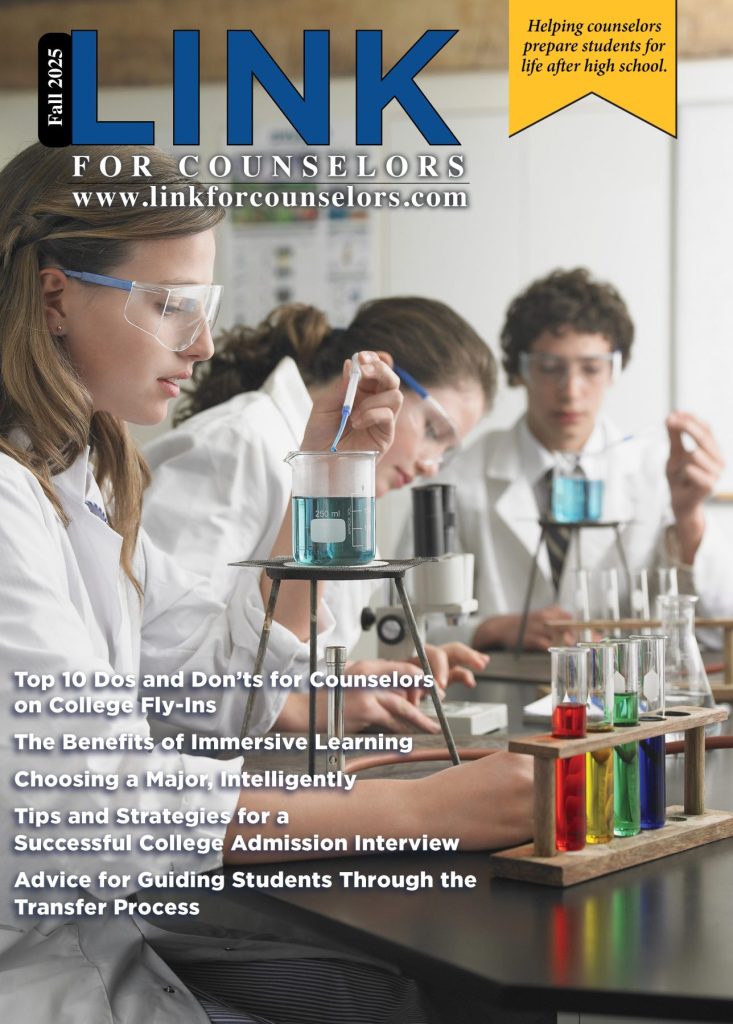
LINK for Counselors recently had Signet Research conduct a readership survey on readers of the Fall 2025 issue of LINK for Counselors. You can see the final survey results here – https://www.linkforcounselors.com/wp-content/uploads/2025/11/Staff-Report-LINK-For-Counselors-Fall-2025.pdf

All survey participants were entered into a drawing for a $100 Amazon Gift Card. The winner that was randomly selected by Signet Research was Twila Simmons-Walker of Horizon High School in Scottsdale, Arizona. Congratulations to Twila and thanks to all that participated.

Beyond the Court: How Title IX Changed My Life

Three!!! Swoooosh!” The crowd roared. The game was on the line, and all those hours practicing three-pointers finally paid off. That moment wasn’t just about scoring points. It was about the confidence, discipline, and determination that basketball gave me.

Basketball has always been more than a game for me. It was a pathway to education, leadership, and opportunity. As a basketball player, I worked hard on and off the court, and that dedication paid off. With the guidance of incredible coaches, a former El Paso Parks and Recreation Director,  and a dad who pushed me to be my best, I helped my high school team win a state basketball championship and earned a spot on the Texas All-State team. Those moments weren’t just victories on the court, they led to doors I never imagined would open.

One of the biggest doors opened by basketball was the chance to go to college. My talent and hard work earned me a scholarship, and that scholarship changed the trajectory of my life. It allowed me to be the first in my family to pursue higher education, receive a college degree, and step into leadership roles that shaped who I am today. Basketball gave me confidence.  It was the kind of confidence that carried into the classroom and eventually onto national committees where I now advocate for students.

But none of this would have been possible without Title IX. Before its passage in 1972, opportunities for women athletes were limited, and the idea of receiving a scholarship to play basketball would have been out of reach for so many. Title IX changed that by ensuring that women had equal access to athletic programs and resources. For me, it meant that my time in the gym, my passion for the game, and my leadership on the court were valued and not dismissed because of my gender.

We see the ripple effects of Title IX today. Women’s basketball is drawing record-breaking crowds and television audiences, with players like Caitlin Clark, Sabrina Lonescu, and A’ja Wilson inspiring a new generation. The WNBA’s growth and the visibility of women athletes remind us that progress in women’s sports didn’t happen by accident. It happened because protections like Title IX leveled the playing field.

Today, we cannot take those protections for granted. Title IX isn’t just about athletics. It’s about fairness, access, and the belief that each and every student, regardless of gender, deserves the same chance to succeed. My story is just one example of the doors that open when those protections are enforced.

Action Steps You Can Take:

1. Show Up & Support

  • Attend women’s sports games:  whether it’s local high school teams, college matchups, or professional games, NCAA/NAIA games, filling the stands sends a powerful message.
  • Watch women’s sports broadcasts/streams: higher viewership drives more media coverage and sponsorships.

2. Advocate for Equity

  • Support Title IX enforcement: stay informed on proposed changes to Title IX, and advocate against rollbacks that could reduce opportunities for women.
  • Contact legislators to protect and expand funding for girls’ and women’s athletics.

3. Invest in Women Athletes

  • Buy merchandise & tickets for women’s teams.
  • Follow women athletes on social media: boosting their visibility.

4. Inspire the Next Generation

  • Share articles, highlights, and stories that showcase women’s athletic excellence.
  • Highlight women athletes as role models in classrooms and community spaces.

5. Use Your Voice

  • Challenge stereotypes when you hear people downplay women’s sports.
  • Celebrate achievements of women athletes with the same enthusiasm given to men’s sports.

As debates about education and equity continue, we must remember that policies like Title IX don’t just live in history books. They live in the lives of students who, like me, found their way to college and beyond because someone believed women’s opportunities mattered. Protecting Title IX means protecting the next generation of leaders, scholars, and athletes who are ready to step up and say: Together, we can ensure each and every student hears the message I once needed to hear: “¡Sí Se Puede.” Yes we can!

Priscilla Grijalva is a seasoned high school counselor in California. She has 21 years of experience at the middle, high school, and university levels. With a passion for equity, she has served on a national school counseling board, her district equity team, and various national committees to have a voice to support each and every student.  Priscilla has presented at various state and national conferences and has been a main stage speaker at the National Association for College Admissions Counseling Conference, as well as a keynote speaker at the University of Redlands School Counselors of Color Commencement Ceremony. She was honored as a Distinguished Educator by the U.S. Air Force, was named the 2022 National Life Changer of the Year, the 2023 California Woman of the Year, and a 2025 Bezos Educator Scholar. 

The Rewards and Realities of Helping Others for a Living

In a perfect world, we could all work jobs centered around helping others. Of course, that’s not possible, but the many people who have made helping others their mission are cherished by many. Therapists, counselors, psychologists, social workers, and people running nonprofit organizations do exactly that.

Helping others for a living is quite rewarding, but it also comes with some challenges you won’t face in other professions. For example, forensic social workers often spend time with and counsel people going through the worst times of their lives. The same can be said for addiction counselors and trauma therapists who help people dealing with harsh realities.

While this can be tough, it pays off with dividends when you see how people can heal and process their troubles. Those are just a few examples of the many jobs built around helping others and how they pay off. Follow along as we highlight the rewards and realities of helping others for a living.

Helping Others is Rewarding in Many Invaluable Ways

What can I do with my psychology degree?” is a question countless students and young psychologists have asked themselves. Whether you become a social worker, counselor, or psychologist, you can use your degree to change people’s lives. This doesn’t happen overnight, but using your empathy and hard-earned skills to help others can create a snowball effect.

You will help each person you work with, and in turn, you’ll help yourself become better at your craft. Helping others for a living takes a lot of hard work and discipline, but it pays off in many ways, such as:

1. Grow Continually

Helping others daily can ultimately help you grow in ways you may not otherwise. You most likely already have a lot of empathy and understanding if your work is built around helping others. However, this innate empathy and understanding will only grow stronger if you foster it daily.

This is especially true when you must face situations, cases, and clients that challenge your foundation. For example, a psychologist may work with a client who is unruly, stubborn, and seemingly ungrateful. They need your help, but they may not make your job any easier.

Figuring out how to help someone like that can be challenging, but cracking the case can make you a better psychologist. You can apply that scenario to most professional fields centered around helping others. The more you help others, the more you grow and become better at your job.

2. Enjoy a Sense of Purpose

Most people work simply because they have to, which sometimes entails working jobs that aren’t too fulfilling. That’s perfectly fine, as everyone must work, eat, and pay the bills. However, working in psychology and helping others comes with a strong and fulfilling sense of purpose.

Your job is clearly defined, so you go to work each day knowing you’re helping others. Because of that, you can avoid some of the pitfalls of working a job you aren’t passionate about. Of course, working as a therapist, psychiatrist, or social worker involves some harsh realities, which can be tough.

That said, navigating such harsh topics is much easier when you feel fulfilled and know you’re helping others. Helping patients or clients can make dealing with these realities much easier and remind you that your work is important.

3. Become Resilient

Helping others is rewarding, but it can take a toll on your mental health. It’s easy to neglect self-care when helping others but finding a balance can make you resilient and strong. Throughout your career, you naturally develop a thick skin, but that doesn’t always come with resilience.

After all, you can have a thick skin while still holding on to some negativity that sticks with you. That doesn’t have to be the case, however, especially if you set healthy boundaries. Separating work life from home life ensures you can help others without taking stress home.

The more you practice healthy boundaries and self-care, the more resilient you become. Confiding in peers, friends, and your own therapist can also make this much easier.

4. Gain Recognition

Most people don’t set out to help others for a living solely for the clout that comes with it. After all, you can get more clout and earn more money in other lines of work. However, you can enjoy some hard-earned recognition if you excel while helping others professionally.

Whether you’re a licensed social worker or a therapist, you’ll likely go through several phases in your career. Eventually, you can move up the ladder, get recognition, and move into more esteemed roles in your field. This takes time, but garnering a strong reputation for something as positive as helping others is worth every second.

Having your clients and peers recognize you for being good at something so positive is quite rewarding. Sure, it isn’t always easy, and the nature of the work can take a toll on you. However, earning respect for how well you’ve helped people versus how much money you’ve made for a company is invaluable.

5. See the Effect You Have on Others

Finally, the biggest benefit of helping others for a living is that you get to see the effect you have on others. Many people don’t necessarily get to see how their hard work pays off. Therapists and social workers get to witness gradual changes in their clients, and that’s rewarding.

Such change is also contagious, and helping your clients may also help those around them. You may not see that part, but you’ll at least know you played a role in helping improve someone’s life.

The Power of Helping Others is Unparalleled

Choosing a career centered around helping others is a big decision. As long as you manage your own mental and physical health, you can avoid many of the pitfalls that come with such a line of work. Separating work from home life can help ensure the positives outweigh the negatives.

Older Posts

Link for Counselors

Current Publication

View Current Publication

Advertisements

LINK Newsletter for Counselors

Sign up to receive our bi-weekly e-newsletter.