Menu Sidebar
Menu

How student loan counseling can help your students

Student loan entrance counseling aids students as they go forward toward financing their college education for the first time. Some loans like Federal Student Loans require student loan counseling, whereas private loans do not.

These sessions help students learn the basics about borrowing money. Some schools require in-person counseling with a student loan counselor, but most have you complete the counseling online. The online process takes from 20 to 30 minutes and must be completed in one session.

Student loan counseling is also required as a student leaves school. PLUS credit counseling helps students and parents make better choices about borrowing money.

Why is it important for your student to complete this counseling anyway?

·        Your student will discover what a direct loan is and loan limits

·        They will discover the terms and conditions of their loan

·        They will learn what the interest rate is on their chosen loan

·        They will see options for repayment of their loan (this will help them to not default on their loan)

·        The finished counseling report will be sent to their chosen schools so their loan funds can be disbursed.

It is important to not rush through the counseling process or skip portions of the report. This could lead to making wrong choices. Student loan counseling done with care and consideration can ensure a brighter future.

Joanne Leone speaks at My College Planning Team workshops and writes for MCPT’s website. She is a professional speaker, writer, organizer and certified life coach. She earned her bachelor’s degree in communications and creative writing from Chapman University in Orange, California

Forward Thinking Digital Careers for High School Students to Consider

For high school students, starting to think seriously about careers can be a little intimidating. However, by being exposed to interesting, novel, and forward-thinking careers, this process can become more accessible and enjoyable. In particular, digital careers can be enticing options for students who have grown up in a largely digital age.

Having an understanding of some of the viable digital career options for high school students can help you as a counselor make more meaningful and effective career guidance suggestions to students. Here are some of the most appealing and forward-thinking digital careers for high school students to consider.

Digital Forensics Analyst

Many may people, especially high school students, may be unaware that there is a position for professionals who help analyze digital evidence in crimes. Many times, digital forensics analysts investigate cybercrimes, and can have a significant impact on society. In large part, the phases of digital forensics involve the collecting, analyzing, and safekeeping of digital evidence such as computers and hard drives.

For students who you find have a knack for digital processes and an interest in investigation, this could be the perfect forward-thinking digital career to suggest as a career option. It is both exciting and involves in-depth digital knowledge. As such, this career has the power to pique the interest of many students and help them find a secure career path to pursue.

Digital Journalist

Over the last few decades, journalism has had to evolve with the public’s growing preference for ingesting information digitally. As such, journalists in all fields — ranging from sports journalism to investigative journalism — have had to change to accommodate the practice of crafting work to be featured in digital spaces and adapt to the rise of digital journalism. For students who you find have a knack for writing or journalism, digital journalism may be the perfect field.

Digital journalism is a broad field that can come in many different forms. As such, high school students with an array of interests can all find a fulfilling career in the field of digital journalism. In addition to being broad, the field of digital journalism is also one that can be conducive to working remotely. This is something that many younger people, such as older high school students, are beginning to prioritize in their work lives. As such, digital journalism can be an enticing digital career for high school students with a knack for writing to pursue.

Social Media Specialist

As a high school counselor, you’re no stranger to the fervor with which today’s younger generations engage with social media. This being the case, the role of social media specialist can not only be an enticing career choice for many students but actually one that many students are already well-suited for. These professionals are those who manage social media pages for companies in order to communicate with customers and reinforce brand identities.

While there are differences between using social media as a recreational pastime and using it as a tool for promotion and marketing purposes, the fact that many high school students possess a working knowledge of social media processes is a great start. For students who have amassed a larger than average following on various social media platforms, the role of social media specialist could be the perfect career path to suggest.

Video Game Designer

The vast majority of high school students are no strangers to video games. While pretty much all of them have come into contact with video games at some point, some of them may consider themselves video game enthusiasts. For these students who are passionate about video games, the role of video game designer may be the perfect career to pursue.

Video game designers are the people who craft videogames for the public to play. If you find that certain students seem to be enamored by video games, this may be the perfect career choice to suggest to pique their interest and get them excited about working. If the thrill of being immersed in the world of video games isn’t enough to excite them, it might be a good idea to let them know that this is a lucrative career that may allow them to purchase many of the things that they’ve always dreamed of owning.

UX Designer

UX design, short for user experience design, is a growing field that many artistically and digitally inclined high school students may be perfect for. UX designers are tasked with the job of crafting enjoyable digital experiences for customers and audiences who interact with a brand’s digital spaces. If you find that some students display above-average signs of empathy, digital adeptness, and a passion for artistic pursuits, this may be the perfect role to suggest.

If you find that a student seems intrigued or excited by the idea of pursuing a career as a UX designer, it may be a good idea to encourage them to explore the field. There is a multitude of resources for UX designers online, and becoming familiar with the field may motivate the right students to pursue a career as a UX designer more seriously.

Digital Roles are Becoming More Normal

While it can sometimes be easy to criticize younger generations for spending too much time online, the truth is that digital technology is becoming a normalized part of everyday life. As such, more and more viable career options can be found in the digital space. By encouraging high school students to pursue these digital career paths, you may be able to get them more excited about stepping into the next chapter of their lives and pursuing a lifelong career.

Exploring college living options with your students

How to select campus housing may come up in one of your discussions with your students.  It would seem that there are only two choices of where to live during college life, and the final decision should be an easy one, right? Actually, there are several things to consider you’re your students are making this choice. The wrong choice could affect your their credit rating, stress level and their lives. The right choice could make college life much easier and enjoyable.

Staying home and commuting

According to the National Center for Education Statistics, the nationwide average for room and board at all institutions is more than $11,000 a year. If one of your student’s college choice is close enough that commuting makes sense, think of the money (and student debt) that will save over four years.

Renting a place off-campus

There are many positive factors for living off-campus if the college allows freshmen to do that. Your student will be establishing a credit record, they will feel more independent and they will be able to choose a location.

However, the parent may need to co-sign the lease. In addition, the student will need to budget not only for rent but for utilities, internet, trash removal and food.  They would want to make sure the neighborhood is safe and that’s its within easy reach of campus by bike or public transport (unless the teen is taking a car to college).

Living on-campus

Sometimes there’s no choice to make. Some four-year institutions require first-year students to live on-campus. Advise them it is wise to check into these requirements prior to accepting an admission offer.

Pros: Your teen is in close proximity to classes, the libraries and activities, which means no commute and (hopefully) more time productively spent studying. (A comparison of Kent State University freshmen who lived on campus and who lived off campus from 2012 to 2016 found that those who lived on campus had higher first semester GPAs and were more likely to return to school the next semester than those who lived off-campus.)

Your student will have more opportunities to create close friendships and more flexibility for connecting to faculty. Meal plans promise a more balanced diet, and dorm life is a good way to transition away from living at home.

Cons: Room and board are not cheap – remember, more than $11,000 a year. Rooms may be small, there aren’t any kitchen facilities, bathrooms may be communal, and privacy may not be easily attained. That said, there are other options these days for suites shared by four or five students that do have kitchens.

Greek housing

About 10 percent of college students join sororities or fraternities, according to the North American Interfraternity Conference. And while there are plenty of benefits, they can come with a higher price tag than living in a dorm.

Housing expenses vary widely. At the University of North Carolina at Chapel Hill, fraternity members pay $3,200 to $10,000 depending on the chapter. Chapter dues, fee, and meals can rack up on average an additional $1,000 or more a year.

Most chapters require members to live there for a minimum of two years, so expect your student to dedicate at least that much time to their sorority or fraternity. According to Madison Smith, a senior at Indiana University, “Greek housing is for anyone seeking a social environment who knows how to balance work and play.”   This type of information is valuable to your students and their families should questions on the topic come up.

Joanne Leone is an advisor and speaker at My College Planning Team free workshops and writes for MCPT’s website. She earned her degree in communications and creative writing from Chapman University in Orange, California.

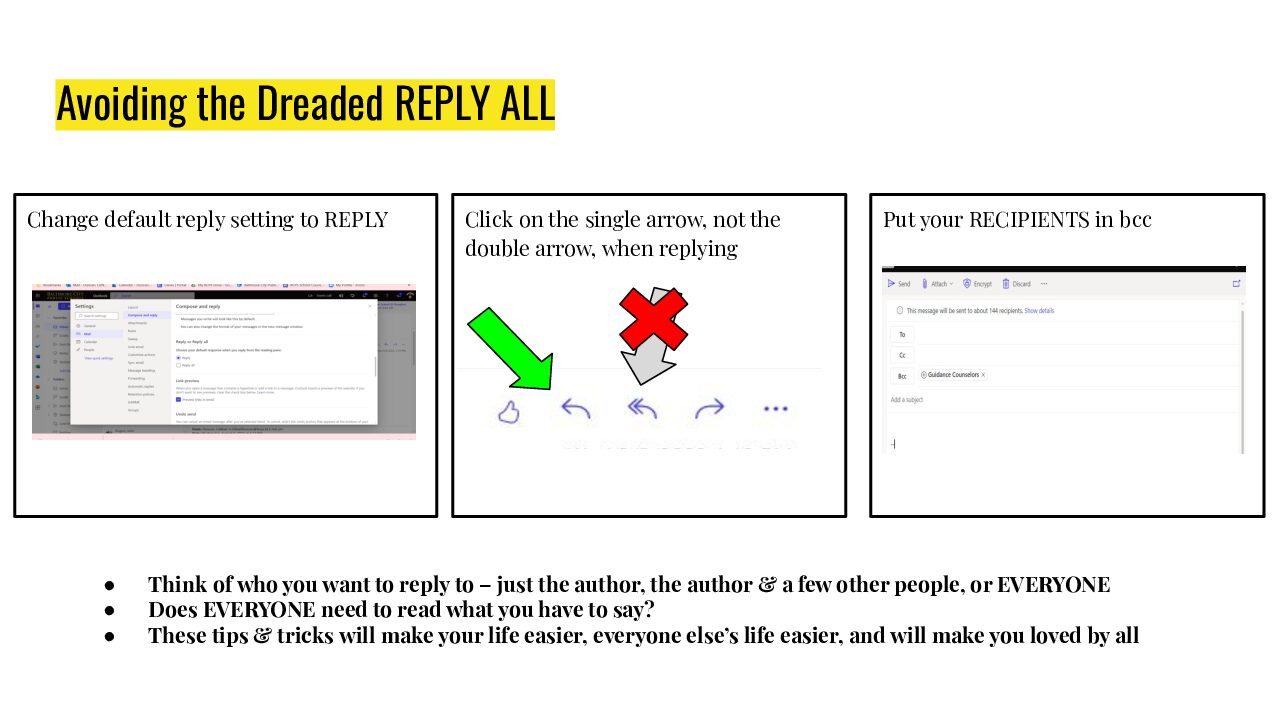
Avoiding the Dreaded Reply All

● Think of who you want to reply to – just the author, the author & a few other people, or EVERYONE
● Does EVERYONE need to read what you have to say?
● These tips & tricks will make your life easier, everyone else’s life easier, and will make you loved by all

Preparing Students for the Workforce: Resume & Interviewing Skills

Preparing high school students for “real-life” is one of the core purposes of your work as a high school counselor. You have the opportunity to help your students learn skills that will be necessary for the rest of their lives.

One vital area of learning that will serve them as professionals in the future is that of securing jobs via strong resume and interviewing skills. Helping students in these two areas can significantly increase their odds of obtaining and maintaining high-quality jobs throughout their lifetimes.

Sometimes it’s difficult to know where to start when trying to impart these two skills to your students. Here are a few no-nonsense tips and ideas for incorporating resume and/or interview learning with your high school students.

When Helping Your Students Crafting a Resume

Tailor Resumes to the Industry of Interest

Expectations and best practice for resumes vary from industry to industry. For instance, a resume that will get second looks for a digital communication or social media job won’t be relevant or strategic for a role in a different industry.

Because of this, it’s important to help your students understand how valuable it can be to skip generic advice and look for job- or industry-specific tips when writing or perfecting their resumes for a particular job opening.

Unless It’s a Theater Resume, Don’t Include a Headshot

The outdated advice to include a picture on your resume still seems to circulate even though adding a headshot is now widely regarded as ill-advised. For multiple reasons, putting a picture on a resume is not a good idea.

In addition, sometimes employers aren’t allowed to accept resumes with pictures because of privacy or anti-discrimination policy. Unless it’s for theater, don’t let your students do it.

The Details Matter

This advice has remained paramount since the invention of resumes. However, it’s still good advice because so many bright-eyed young candidates fail to do it. Have your students remember to double- and triple-check the minute details on their resumes before they send them in.

Formatting inconsistencies, spelling or grammatical errors, and run-on sentences will be noticed – and they could make the difference between being considered and being tossed into the rejection pile.

Know What Steps Can Be Taken as a Student to Get a Head Start

It’s never too early to start thinking about how current educational decisions might affect future professional opportunities. It is strategic to understand how AP classes, dual enrollment, and more translate meaningfully on future transcripts and resumes.

They can have different implications for a student’s educational pathway and they can also sometimes have implications in the job search process.

Helping Your Students with Their Interviewing Skills

Do the Homework

It is essential for a student to understand as much as he or she can about a prospective employer before he or she enters the interview.

Students might have a general understanding of this fact; however, many students (and many people in general) could benefit from understanding better what information might actually benefit them. Many students don’t know how to research in a way that translates that effort into a better interview.

When they research a company, they are interested in working for before going in for their interview, help students identify the things they should be familiar with before that conversation. Some interviewers will ask generic trivia questions about the company’s founder or year of inception just to quiz the interviewee. It’s worth looking at these details if they’re available.

However, there are a few other questions students should be prepared for that are more likely to be asked.

Questions like “Why do you want to work here?” trip up a surprising number of applicants and reveal a lack of understanding about the company’s purpose and ethos.

Questions like, “What kind of working environment do you thrive in?” are better answered with a bit of context about the size, structure, and type of company. And finally, it reveals true, intelligent research if the student can ask knowledgeable questions based on their understanding of the company or business at the end of the interview. Sometimes this is the best reason of all to research more strategically.

Smile

Though it seems like a given, help your students understand that their body language, facial expressions, tone, eye contact, and subtle nonverbal communications all paint a picture of their candidacy. This picture is usually loud and clear to prospective employers even (and especially) when a student is completely unaware. It’s important for students to become more aware of how they present themselves and interact with others before a big job opportunity is on the line.

Practice Makes Perfect

Mock interviews, practice questions, and “rehearsals” aren’t utilized nearly to the degree that they could be. Practicing interview situations is one of the best ways to raise a student’s comfort level with interviewing. It raises their chances of success considerably.

If you are able to help them create an environment where they can practice different interview skills (these include answering standard questions but should also include things like negotiations and brief presentations) in the safety of your office, their interviewing experiences will be fundamentally better when they do the real thing.

Incorporating these learning areas with your students as you help them prepare for the job search process will help them excel and land the jobs they are passionate about when it comes time to seek employment.


It Depends – A Typical Financial Aid Answer

Students, parents, and guardians regularly ask questions about the financial aid process. It begins with completing the FAFSA and continues for the entire time a student is enrolled in college and beyond. After graduation students are checking on upcoming student loan payments and potentially asking about graduate or professional school funding. Below are a list of typical financial aid questions and how those advising students can effectively answer them.

Typical Financial Aid Questions

Checking on Application Status

Question – What am I required to turn in for my financial aid application to be complete?

Answer – Outline what is required to be have a complete financial aid file, and emphasis this will allow their application to be reviewed.

Question – OK, when I turn all of this in, I’m done, right?

Answer – Remind the student the file has to be reviewed and outline the appropriate timeline within the financial aid office or scholarship program provides students with an answer of we need more information, yes you have been offered an award or you are not qualified for the funding involved.

Question – Emailing or calling to see if you have everything that is needed. Do you have everything?

Answer – Check the student’s file status, provide an update on where they are in the application process and what will take place next.

Question – Am I now done?

Answer – Depending upon the student’s file situation, provide a specific and detailed answer about where they stand, and any next steps involved.

Refund Status

Question – I heard that refund checks are going out next week. Is this true?

Answer – Review the student’s account to see if their account qualifies for a refund and then provide the correct answer.

Question – My friend received a refund check so calling to check on when mine will be disbursed?

Answer – Let the student know you will review their account; each student’s financial aid is different and then give the update for their situation.

Question – So, I am getting a direct deposit by this Friday?

Answer – Outline the established timeline for funds to be released to student bank accounts, the number of days the banks have to process the funds and for the student to check with their bank for more details.

Question – OK, it sounds like I will be getting the money this weekend, right?

Answer – Update the students about the entire disbursement process, the school part and then how their bank makes the decision involving when to make funds available.

As you can see none of the answers are yes or no because the real answer is it depends. Communicating with students in this manner cuts down on miscommunication and people having a sense of everything being complete when things are still being processed.

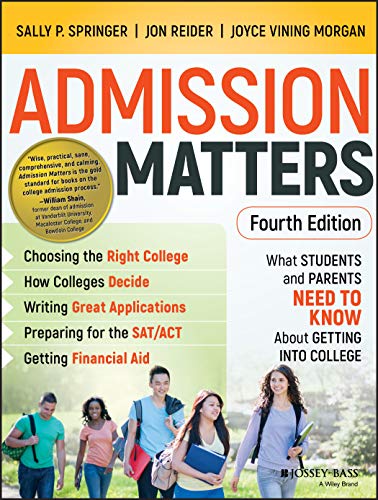
Book Recommendation: Admission Matters: What Students and Parents Need to Know About Getting into College

Are your students asking for material to help them as they begin exploring their college options? If so, this is a good book to put on your recommended list:

Admission Matters offers comprehensive, expert, and practical advice for parents and students to guide them through the college admissions process. From building a college list, to understanding standardized tests, to obtaining financial aid, to crafting personal statements, to making a final decision, this book guides you every step of the way with clear, sensible advice and practical tips. This new fourth edition has been completely updated to reflect the latest changes in college admissions. including new developments in standardized testing, applications, financial aid and more. Questionnaires, interactive forms, checklists, and other tools help you stay focused and organized throughout the process.. With the answers you need and a down-to-earth perspective, this book provides an invaluable resource for stressed-out students and parents everywhere.

Applying to college can be competitive and complex. Admission Matters offers real-world expert advice for all students, whether you’re aiming an Ivy or the state school close to home. It also includes much needed guidance for students with special circumstances, including students with disabilities, international students, and transfer students. In addition, athletes, artists and performers, and homeschoolers will find valuable guidance as they plan for and apply to college.

  • Understand how the admissions process works and what you can and cannot control
  • Learn how to build a strong list of good-fit colleges
  • Craft a strong application package with a compelling personal statement
  • Get expert advice on early admissions, financial aid, standardized testing, and much more
  • Make a final decision that is the right one for you

Whether you think you’ve got applying to college under control or don’t even know where to begin, Admission Matters is your expert guide throughout the college admissions process.

Here is the link to order on Amazon: https://www.amazon.com/Admission-Matters-Students-Parents-Getting/dp/111932839X/ref=pd_bxgy_sccl_1/133-5309034-0740107?pd_rd_w=zFUsJ&content-id=amzn1.sym.7757a8b5-874e-4a67-9d85-54ed32f01737&pf_rd_p=7757a8b5-874e-4a67-9d85-54ed32f01737&pf_rd_r=ZPMTQGESTZG4G8TDNQE7&pd_rd_wg=QoNM5&pd_rd_r=655e9fe3-29c3-4d8c-9b35-8a1792405c22&pd_rd_i=111932839X&psc=1

College & Career Readiness Slide Deck

Need some great slides to show your students in a presentation? Help your students understand their after-high-school options, whether college is worth it, how to pay for college, how to choose a career, how to choose a college, types of college degrees, types of colleges, job interviews, how to ask for a letter of recommendation, and how to apply to college with these 10 interactive Google Slides presentations with Pear Deck Add-on slides!

Slides include:

Options after High School

Is College Worth It?

How to Pay for College

How to Choose a Career

How to Choose a College

Types of College Degrees

Types of Colleges

Job Interview Tips and Mock Interview

How to Ask for a Letter of Recommendation

There is a nominal cost to download and use this deck but it may be worth it rather than having to create your own deck from scratch. Here is a link – https://www.teacherspayteachers.com/Product/College-and-Career-Readiness-Pear-Deck-BUNDLE-6024163?fbclid=IwAR14Airc24jIfgswsMl-YnfBgzadZ86mxhuQ_HDE6Me4gYPZfi7C-4ST5DM

FAFSA on the Web Worksheet

It is time for your students and their parents to begin thinking about completing the FAFSA this Fall and to being getting all their documents together.

The FAFSA on the Web Worksheet provides a preview of the questions
that you may be asked while completing the Free Application
for Federal Student Aid (FAFSA®) online at fafsa.gov or via the
myStudentAid mobile app.


You must complete and submit a FAFSA form to apply for federal student
aid and for most state and college aid. Write down notes to help you
easily complete your FAFSA form anytime on or after October 1, 2021.

Here is a link to the free worksheet which also includes deadlines for each state: https://studentaid.gov/sites/default/files/2022-23-fafsa-worksheet.pdf?fbclid=IwAR1sHGxkPeTrnRPQQcjHwlTQlYOZ2xOneKmrMg7OLknHIuilpxd7Dqn6aRk&fs=e&s=cl

College Expectations vs. Reality

As many of your students head off to college next year, they will have a number of preconceived notions about what they will see when they arrive on campus. College Options wrote a nice post about Expectation vs. Reality.

Roommates

Expectation

Many students go into college either assuming that they will be best friends with their roommate or that they will be randomly matched with the weirdest of the weird.

Reality

The truth is, you will likely come into contact with all kinds of roommates throughout your entire college career. You may have a cordial roommate that you rarely see. You may have a roommate you curse every time they refuse to take out the trash. As you make new friends, you will likely live with them in the years to come. In time, it is possible you will love the people you live with. If you have a negative experience with your first roommate, take solace in the fact that you are not tied to this person forever. It is only temporary! (And it may make a great story in the future).

Friends

Expectation

Whether it be people you met during orientation or those you befriend on your floor, you may expect your new squad to be best friends for life.

Reality

It’s easy to make fast friends your freshman year because everyone is starting on the same page and eager to make connections. However, it’s easy to forget that the lasting friendships you had in high school took years upon years to develop. In a sense, you are going back to kindergarten and socially starting from scratch. After a few months, you will see people for the way they truly are, and you may decide that those people aren’t for you. Try not to take it too personally if the individuals you meet by random aren’t the best match for friendship; you will find your people.

Parties

Expectation

All day, all the time, every night!

Reality

In actuality, students socialize in a ton of different ways including club meetings, sports events, on-campus affairs, and explorations of surrounding cities, museums, and so on. For students who do party, it’s more of a weekly thing. You will find that the party scene, though fun, is not as glamorous as media makes it out to be. (Welcome to sweaty basements littered with red solo cups).

Moving Away from Home

Expectation

You’ve been looking forward to having independence for months! There will be nothing to get in the way of your newfound freedom!

Reality

People transition differently, some adapting better than others. Be prepared to tackle responsibilities that you may not have had to think about before. This includes shopping for your own toothpaste, doing your own laundry, and taking care of yourself when you’re sick. It’s super common for first year students to feel homesick, so know that you’re not alone if these changes are tougher than you initially thought.

Maturity

Expectation

Everyone will be so much more mature than they were in high school. 

Reality

Sadly, one year between high school and college won’t change the maturity level of most students. That being said, people don’t care about the same things they cared about in high school. No one is going to ask you about your SAT score or the clique that you came from. No one will have preconceived notions about who you are, so your friends will only know you for the person you are in this very moment.

Dorm Life

Expectation

It will only take a couple of hours to settle in, and your room will look just like that Target ad you saw a couple weeks ago.

Reality

Dorm life isn’t as sophisticated as the way it is depicted on Pinterest or Instagram. In this small space, you will have mismatched furniture and it will take a lot of organization to make everything fit properly. You may not feel fully settled until you are living there for a few days or even a few weeks.

Attending Classes

Expectation

You can ditch class whenever you feel like it! As long as you do the readings (eventually), you will totally earn an A on your exams.

Reality

Yes, you can ditch class whenever you want if attendance isn’t mandatory. Should you? Not if you want to pass your classes or make the most of your money spent. In high school, you are required to show up everyday and your teachers are there to keep you focused, accountable, and reminded of upcoming due dates. In college, time management is all up to you. College is truly what you make of it; what you put in, you will get out. By going to class, staying organized, and doing your best, you will be successful!

Though your college experience may turn out differently than your expectations, you are still bound to have an incredible time making new friends, trying new things, learning about yourself, and forging your path for the future.

Here is a link to their original post and check out some of their other great blog posts on their site: https://myoptions.org/college-expectations-vs-reality/

Newer Posts
Older Posts

Link for Counselors

Current Publication

View Current Publication

Advertisements

LINK Newsletter for Counselors

Sign up to receive our bi-weekly e-newsletter.