Menu Sidebar
Menu

State Certification Requirements for High School Counselors

Each state has slightly different requirements for Counselors.

Most public school systems require advanced-degree courses that include the following topics:

  • Human growth and development
  • Theories
  • Individual counseling
  • Group counseling
  • Social and cultural foundations
  • Testing/appraisal
  • Research and program evaluation
  • Professional orientation
  • Career development
  • Supervised practicum
  • Supervised internship

The American School Counselor Association has published a summary of each states requirements in one place. Here is the link: https://www.schoolcounselor.org/About-School-Counseling/State-Requirements-Programs/State-Licensure-Requirements?fbclid=IwAR1GtFlOJjfQ26g8ZwU5YcqkfGhFKXeNfowRlMSSWWBag3iv4LpUFzguhkU

Often Overlooked College Preparation Steps

Studying, practicing and taking the ACT and/or SAT examinations, preparing college admission essays, reviewing scholarship applications and completing the Free Application for Federal Student Aid (FAFSA) are the standard steps students and the parents or guardians complete when they are preparing for college. Following are some additional ideas to consider while you are completing high school and getting ready for college.

Potential College Credit for Prior Learning and Experience (General Education) – Numerous students have work experience as a summer pool lifeguard or a childcare worker. It is common for First Aid and/or Cardiopulmonary Resuscitation (CPR) training to be required as part of the job application requirements. Some community colleges will award academic credit for showing proof of completing the required training. This college credit can then be applied towards a program of study. An example is elective college credit for a health course.

Potential College Credit for Prior Learning and Experience (A Specific Academic Major) You may have enrolled in career and technical courses and plan to continue this program of study in college. The high school classwork you have completed may count towards your college degree. Some examples are potential college credit for accounting, automotive, computer assisted drafting, IT programming, web design and construction technology programs. I have seen students eventually transfer these credit hours from a community college to a state university.

Also, for students considering health care college majors, that have already completed all the advanced math and science classes available at their high school, enrolling in a career and technical education course is something to consider. This could lead to practical volunteer or work experience in the field. This is something some nursing school applicants have successfully utilized to give themselves an advantage when applying for limited nursing school seats.

Scholarship Resume – What has the student been involved in since 9th grade at school and in their local community? The basic outline should include honors, activities/community service and awards. After completing the first draft the student should see which list has the most items and which list comes in second and third place. Based upon this review it is recommended that the longest list be displayed on the resume first, then the second and third place outline of events in this order. In addition to following all scholarship application requirements, this is an optional document that students can provide scholarship committees and college admissions officers to provide yet another way to outline their accomplishments.

By Kenneth McGhee, Director DC Tuition Assistance Grant Program (DCTAG) Kenneth.mcghee@dc.gov

How Visual Goal Tracking Can Help Your Students Achieve Their Goals

As a high school counselor, you’ve likely witnessed students struggling to meet the demands of their curriculum, keep up with college applications, or stay motivated throughout the school year. When the overwhelm hits, they turn to you for support and guidance. One excellent way you can help is by showing them how to visually track their goals. 

By helping students create a system they can rely on as they work towards reaching their goals, they can find a new source of momentum and confidence in their abilities and journey. Visual goal tracking creates accountability and structure when students feel stuck or unmotivated. When they have a visual reference of where they stand, what they’ve achieved so far and what they have left to go, they have something tangible to refer to to keep them moving forward. 

When creating a visual goal tracking system with students, it’s important to choose small, attainable goals. If they’re overwhelmed with college applications, instead of a goal like “apply to 10 colleges a week”, shift it to something more workable and achievable: “spend 1 hour on college essays per day.” When your students’ goals are something they know they can achieve, they find more confidence and momentum as they work towards them. This helps to avoid feelings of burnout or defeat when they inevitably stumble in the effort to attain larger than life goals that simply aren’t feasible. 

To help students stay on track, it can be helpful to encourage them to create a daily check-in routine to assess their progress. This forms the habit of ensuring your daily actions are in line with your goals, and prevents goals and habits from falling to the wayside. Equally as important as checking in on daily progress is reminding your students to go easy on themselves if they’re struggling. Feelings of failure won’t get them anywhere, and teaching them to speak positively to themselves and to avoid self-criticism or comparison will ultimately set them up for success. 

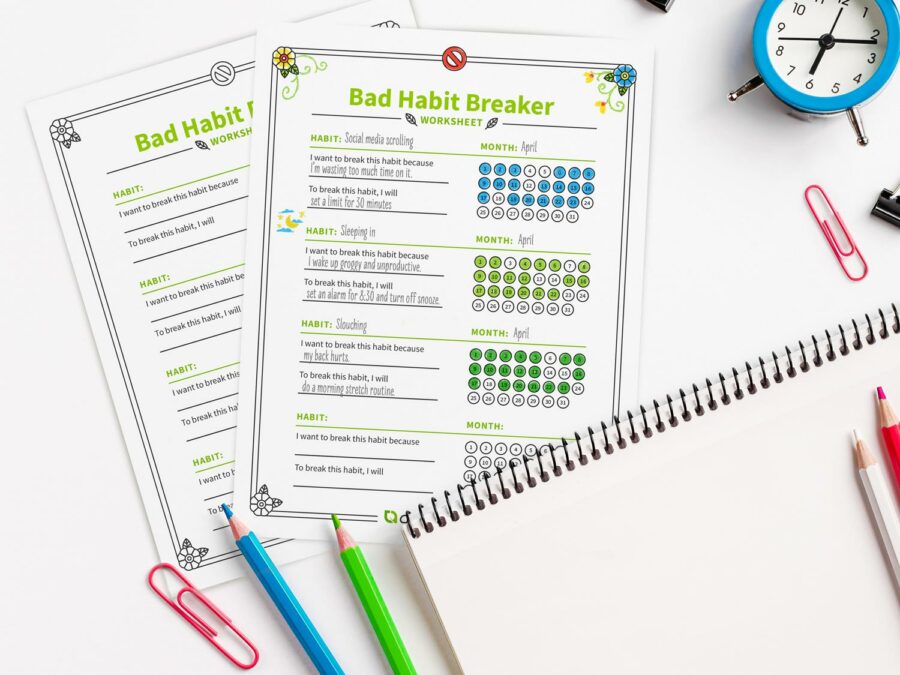
To help you get started introducing visual goal tracking to your students, these printable habit trackers were created to help students track their progress and create consistency in whatever goals matter most to them. Make sure to remind your students that achieving their goals and dreams doesn’t have to be intimidating, and that what matters most is that they continue to show up for themselves each day—and that you’re there to help them whenever they need support. 

List of Available Scholarships Available for your Graduating Seniors

Lets face it, searching for scholarships can be a tedious journey. There are thousands of sources and many scholarships are tied to a specific College/University which make applying for them a pain for your students that do not yet know where they are going to be attending College. We publish scholarships in LINK for Counselors each issue which aren’t tied to a specific school, but what other sources are out there that can help you?

We recently found a “Mega List of Scholarships” compiled and published by Colleges of Distinction which might be of interest to your students. They list scholarships from Foot Locker, Apple, Microsoft, Starbucks, Coca-Cola, BMW, Dr. Pepper, Intel and many more.

Here is a direct link to the complete list: https://collegesofdistinction.com/advice/the-mega-list-of-scholarships-you-should-apply-for-class-of-2020-2021/

Letters of Recommendation – can be the tipping factor

College applications don’t open until this summer or early fall, so why are we talking about Letters of Recommendation in May?

The reason is that now, yes in May, is the time to begin asking teachers if they’ll be able to write your letter. I’ve heard too many stories of top-notch students who wait until the fall to ask their teachers for recommendations for their college applications, only to be surprised and embarrassed when they are told that their favorite teachers are already full since students asked them last spring.

Letters of recommendation carry varying weight, depending on the perspective of the college or university and who writes them. The more selective colleges may ask for two or three recommendation letters. Questions abound: Who should you ask? What are they used for? Where do they go? When should you ask them? Why are they important? And, how do you prepare them to write the best letter possible?

Who?

Letters of recommendation are the most powerful when they are written by teachers, coaches, club or internship advisors, youth group advisors or employers who know you well. The people you ask should be able to describe your skills and your accomplishments as well as your personality. Colleges prefer letters from junior year teachers since they are the most familiar with your most recent work. Read instructions carefully since some colleges may specifically request a science or math teacher, especially if you’re applying to an engineering program.

What?

Since most letters of recommendation are glowing  and full of praise for the applicant, colleges who take them seriously are trying to get beneath the surface of who you are. The letters that share personal anecdotes about you reveal the less tangible qualities that a college can’t deduce from grades and test scores. A well-written letter of recommendation will showcase your abilities and make you a compelling candidate.

Where?

Colleges accept letters of recommendation electronically through the Common Application. Follow directions carefully and don’t send more than a college requests. Colleges who participate in the Common Application detail how many letters of recommendation they require and how many they allow.

When?

It is best to ask teachers in the spring of junior year if they are willing and able to write a letter on your behalf. If they say “yes”, then ask them about their preferred timelines. Some teachers prefer to take care of the letters over the summer and others want a true summer vacation. If you have colleges with early deadlines (October 15 and November 1), make sure you provide your recommenders with at least a month’s time to write the letters.

Why?

Letters of recommendation can often be the critical tipping factor when two candidates present similarly and colleges can pick just one.

How?

There’s a good chance that the more information you provide your recommender, the better the letter will be. I suggest that all students prepare an Activity Resume or a Brag Sheet that details the following items: extracurricular activities; community service involvement; leadership positions; honors, scholarship and awards; employment; internships and job shadowing experiences and what you’ve done during your last three summers.

Must do’s:

  • Be certain to waive your right to view recommendation letters on your application forms. Admission officers will trust them more if you haven’t seen them.
  • Send a confirmation email to your recommenders thanking them and being specific about next steps.
  • Send thank you notes once you know the colleges have received the letters of recommendation.

Lee Bierer is an independent college adviser based in Charlotte. She can be reached at: lee@collegeadmissionsstrategies.com; www.collegeadmissionsstrategies.com

5 Perfect Books for School Counselors

School counselors are at the heart of schools as the moral compass. Therefore, it’s important for counselors to be on their game, when it comes to the students. From life advice to calming fears to helping students confront other challenges (i.e., bullying, trauma, etc.), counselors are a resource that schools should never take for granted.

With that in mind, here are 5 books to help school counselors do their best at positively impacting students’ lives.

  1. The 7 Habits Of Happy Kids – Sean Covey

“This illustrated book is a testament of how balance can be effective in a child’s life,” says Nathan Boutin, a writer at Simplegrad and Resumention. “With fun and lovable characters, kids can learn that fun activities can bring joy and positivity in their lives. The book includes seven stories that demonstrate the seven habits that counselors should teach to students to practice balanced living.”

  • The School Counselor’s Book Of Lists – Dorothy J. Blum And Tamara E. Davis

If you’re looking for a simple format in school counseling, then The School Counselor’s Book of Lists is for you!

This book serves as a definitive guide on the various topics that affect school counselors. From thorough student assessments to running meetings to handling and preventing crises, this book (with a second edition the most effective thus far) helps counselors assess and implement effective strategies to help keep students’ mental health in check.

  • Lost At School: Why Our Kids With Behavioral Challenges Are Falling Through The Cracks And How We Can Help Them – Ross W. Greene

Ross W. Greene, a licensed and distinguished clinician, explores the behavioral challenges that children face, especially in school. Following up from his critically-acclaimed book The Explosive Child, Lost at School dives deeper into how schools can understand and help kids in certain situations without having to automatically resort to disciplining them. While disciplining with detentions and expulsions are one thing, those punishments can only scratch at the surface of the problem. Greene offers a modified, if not different, solution.

Greene suggests that by punishing students by taking them out of school will only disrupt their learning, rather than enhance it. In his book, he calls for an alternative that effectively disciplines students while still getting straight to the source of the problem(s) that children may be facing. With Greene’s ideas, students can learn to face obstacles, learn from their experiences and – most importantly – keep them in school.

  • Schools Where Everyone Belongs – Stan Davis And Julia Davis

“Stan Davis and Julia Davis tackle the subject of bullying in school in Schools Where Everyone Belongs,” says Amber Thomas, a journalist at Studydemic and Huffpost. “While there are countless efforts to combat bullying and its tragic consequences, there’s still a need for counselors to intervene, and to get to the heart of the problem. The book explores various situations of bullying, and how counselors can spot the signs, implement the right strategies, and learn to treat the underlying causes of bullying.”

  • How Children Succeed: Grit, Curiosity, And The Hidden Power Of Character – Paul Tough

Finally, Paul Tough explores character in How Children Succeed. Here, Tough shows a different perspective – one that’s often ignored in the established norms of schools and institutions: student character. Character, Tough believes, is the pinnacle of how students perform in school.

In his book, he explores the following areas in character:

  • Curiosity
  • Optimism
  • Perseverance, AND
  • Self-control

Tough argues that these areas in character are essential in student performance, when it comes to testing, admissions, and overall learning. Plus, he peels back the layers of character, and how each of the areas are (and should be) effective in a child’s learning process. Whether or not parents are preparing their children for adulthood, or if children are learning things on their own, Tough gets to the bottom of things by looking at character.

This book is told through the eyes of a new generation of researchers and educators. It’s through their stories—and those from children that have met the challenges in school—that make this real and inspiring book.

Conclusion

As you can see, books continue to be excellent sources of guidance for school counselors no matter the student grade level. Since students are to be the future of this world, it’s important for counselors to guide them in the right ways, rather than leave anything to chance.

These 5 books are great resources for school counselors, especially when it comes to hot topics like bullying prevention, positivity, and inspiration. By giving these books a read, counselors can continue to be advisors and resources of encourage to students everywhere.

Happy reading!

Lauren Groff is a writer and editor at Assignment Service and Academized. She is also a blogger at English Literature Writing Service. As an educational writer, she specializes in counseling, testing, and library science.


College Freshman Academic Advice

Congratulations on your upcoming high school graduation and planning for your first year in college. This is an exciting time. Soon you will be on a college campus attending Freshman Orientation to learn how to get around campus or completing the session online and selecting your classes. Below are a few things to keep in mind before you make those choices.

Take the Pressure off Yourself – It is more important to have a good first and second semester in college than to rush and take too many classes due to the pressure to graduate in four years. Research from collegeresults.org shows that more students graduate in five years than they do in four years. College is not like high school and classes require more work. Taking 12 credit hours, which is the minimum full schedule at many semester schools, is less pressure than taking 15 to 18 credits hours for your first and second terms in college. At the most taking 15 credit hours per semester should be considered.

Math – Before making a final college class schedule decision, check to see what math classes are required for your potential academic major. Experienced academic advisors know that math classes are a major reason many students change their major. If you are in a major that does not require a lot of math, consider not taking a math class for your first semester. The goal is to get off to a good start in college. If your major requires a lot of math courses properly balance out your schedule to allow enough time to do well.

Definition and Term Heavy Classes – Some classes tend to have a significant number of definitions and terms you will be required to memorize. In addition, the terms may be the same or similar. These classes also tend to have a lot of reading to complete. Examples are Introduction to Psychology and Introduction to Sociology. These two classes are not ideal to take during the same semester. It is better to take one of these types of classes and balance out your schedule with other kinds of courses.

Typical Freshman Courses – Many colleges require similar classes for college freshman. Taking this type of coursework gives you options and should be considered for your first two college semesters. Below are some examples, which usually count towards numerous academic majors. Be sure to check with your college for specific details.

Introduction to College/College Seminar – One Course

Computer Applications – One Course

English – Two Courses

Speech/Public Speaking – One or Two Courses

Social Sciences – Two Courses or More

Humanities and/or Literature – One or Two Courses

Math and Science – The courses are different depending upon your major.

By Kenneth McGhee, Director DC Tuition Assistance Grant Program (DCTAG) Kenneth.mcghee@dc.gov

How to help your students ace the Why College X essay

We’ve given you a lot of resources tips about writing personal statements over the years. Before the school year ends, we’d like to leave you with some sound advice to help you guide your students on the one supplement that poses challenges for all sorts of students.

I am talking about the Why College X, or Why Us, essay.

Several years ago, I moderated a panel discussion about the college essay for high school counselors at the New York State Association for College Admission Counseling annual meeting.  
 
We had counselors from New York and reps from Columbia and Barnard, and we spoke at length about supplements, mainly the Why College X essay.  

During the Q and A, Christina Lopez, at the time Barnard College’s Director of Admissions (she is now the Dean), called the Why College X essay the dating essay.  

The term stuck. It made so much sense. Still does. Because this essay is the one that can really help colleges determine if your student is a match.  

Lopez offered a lot of great insight that day:  

The supplements separate a good applicant from a great applicant.  

The more you can espouse why you are a match in the short answer question genuinely (without regurgitating our website to us because we wrote it!), the more you will stand out to us.

It is a great place to let a college know if we are the first choice, and why you love us.


No matter how the Why College X prompt is written, colleges want to know why applicants want to be there, and what they plan to do on campus.

The best way to help your students answer this question is to help them understand what the prompt is asking before brainstorming ideas with them.  

Then we assign pre-work, with these types of questions (in writing):

  • What is the prompt really asking?
  • What attracts me to this college or program?
  • What do I want readers to know about me?
  • How does what I know about the program mesh with what I want readers to know about me? How can I illustrate this intersection?

If you want to see how we do it, here’s a sample of our pre-work guide for preparing to write the Why College X essay.

Kim Lifton is President and Co-founder of Wow Writing Workshop, which teaches students and educational professionals a simple, step-by-step process for writing effective college essays, so students can stand out and tell their stories. Kim leads a team of writers and teachers who understand the writing process inside and out. Since 2009, Wow has been leading the college admissions industry with our unique approach to communicating messages effectively through application essays, including personal statements, activity and short answer essays and supplements.  We teach students – and we train professionals.

Coming Up 

We cover a new topic in our Pro Chats each month – Wednesdays at 1:00 Eastern! Click here to register!

May 12: Should my students write about depression, politics or Covid-19?

June 16: Brainstorming with students who think they have nothing to write

Let your students know we have a free class for them, too!

If you wants to help students with the basics, encourage them to sign up for our monthly free student class, or listen to the recording. Next up: Wednesday, May 12, at 7 p.m. ET! You are welcome to sign up, too.

Beyond College: 2021 Webinar Series

Wells Fargo (through their CollegeSTEPS program) has put out a nice series of webinars that contain some great information that should be of interest to your students.

Here are links to each of the videos that are archived:

Charting a path to graduate school….Successfully!

Defining and building a strong leadership brand

Creating a rock-solid resume

Preparing for success in your job interview

Budgeting and money management 101

Here are the links to register and dates for the upcoming ones:

May 20, 2021, 4:00-5:30 p.m. ET – Entrepreneurship and the gig economy.
Find out if you are ready to start your own business, and learn about tools and resources to help.


June 17, 2021, 4:00-5:00 p.m. ET – Salary vs. value: How to determine which role is perfect for you.
Know what to consider when evaluating job offers and what you can negotiate.


July 29, 2021, 4:00-5:30 p.m. ET – Wells Fargo careers and internships.
Recruiters from Wells Fargo share information about internships and full-time career opportunities, including how to apply.


August 26, 2021, 4:00-5:30 p.m. ET – Digital Native: Social media smarts.
Join a discussion about how social media can promote or destroy your personal brand.


September 23, 2021, 4:00-5:30 p.m. ET – Success strategies for managing student debt.
Learn new ways to manage student debt and real-world budgets.


October 21, 2021, 4:00-5:30 p.m. ET – Building responsible credit: Why your credit matters.
Gain tools and resources to take charge of your own finances and reach your financial goals with tips on building credit.


November 4, 2021, 4:00-5:00 p.m. ET – Mentors and sponsors: Your personal board of directors.
Many believe that to be successful in your career you must build your own personal board of directors. Learn about mentorships and sponsorships, including how to leverage each successfully.

Please share these links to any students that might have an interest.

School Counselor: Guidance 2.0

When your refer to us by our new school counselor title, it is a vote of confidence that we appreciate.

We come from a long line of service. Did you know that guidance was advocating for child employment reform in the 1900’s? Or that guidance was a key point of focus in the National Defense Education Act of 1958 that helped the United States put a man on the moon in 1969?

Guidance in the 21st century has led us to a new professional framework and title: school counselor. We now work to implement data-informed comprehensive programs that promote prevention and address multiple challenges that include advancing technology, mental health concerns and access to college and career options.

We thank you for your continued trust and support as we continue to make new contributions and advancements under the banner of school counselor.

Publishers note – LINK for Counselors made the decision a few years ago to use the term “school counselor” rather than “guidance counselor” in all our published articles. The above definition/piece was posted by Bob Tyra in the High School Counselors Network Group on Facebook.

Newer Posts
Older Posts

Link for Counselors

Current Publication

View Current Publication

Advertisements

LINK Newsletter for Counselors

Sign up to receive our bi-weekly e-newsletter.