Menu Sidebar
Menu

Fall 2025 LINK for Counselors Line-Up

These articles are scheduled to run in the Fall 2025 issue of LINK for Counselors. It’s going to be a dynamite issue! Reserve space now to reach the readers of this issue.

Choose a Major, Intelligently – By Louis E. Newman, the former Dean of Academic Advising and Associate Vice Provost for Undergraduate Education at Stanford University, as well as a Professor of Religious Studies, Emeritus at Carleton College. He now works as a private College Success Coach.

Helping Students Through Emotional Crises – By Elizabeth Drucker

The 3 Pillars of College Admissions Success – By Brian Safdari, the founder and CEO of College Planning Experts and a Certified College Planning Specialist

College Essay Coaching – Make Sure Students Understand the Prompt – By Susan Knoppow, CEO, Wow Writing Workshop

How to Help Students Create a College Application Résumé – By Carolyn Kost, a teacher in high school and university classrooms and a college counselor for over 20 years.

From Compliance to Connection: How My College Counseling Approach Evolved – By Sonja Montiel, the co-founder of PEQ Performance Consulting, with over 40 years of experience in education, training, and speaking.

Early College Planning for Freshman and Sophomore High School Students – By Gina Gerrato Greenhaus, the founder of Greenhaus College Consulting

Guiding Your Students Toward Choosing Their “Best” College – By Nancy Regas, is the author of The Art of Being a School Counselor.

Helping Students Who Don’t Get into Their Early Decision College – By Elizabeth Drucker

Keep Your College-Bound Juniors on Track: Using Meetings Proactively – By Nina Berler, the founder of unCommon Apps and past college counselor at The Hudson School (Hoboken, NJ). 

The Benefits of Immersive Learning in College: More Job Offers, Higher Salaries – By Dr. Jeffrey T. Gates

Tips and Strategies for a Successful College Admission Interview – By Dawn Marie Barhyte

Top 10 Dos and Don’ts for Counselors on College Fly-Ins – By Paula Cooper, a college counselor and IBCP coordinator at The British International School of Houston in Houston, Texas and Kate Trott, the director of College Counseling/Inclusion Awareness and IB coordinator at The Calverton School in Huntingtown, Maryland.

What Must Be Done: Meeting the Moment in Higher Education By Rev. James J. Maher, C.M., President, Niagara University

TRANSFER – How can Attending a Community/Junior College prior to Transferring to a 4-Year School be Beneficial to Your Students – By Elizabeth Drucker

NACAC Fairs List – September – December 2025

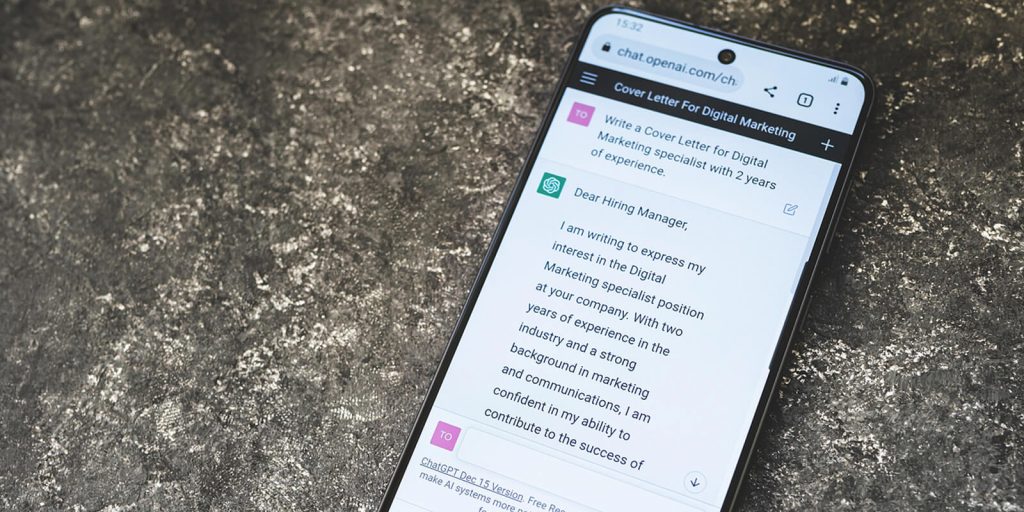
The “write” way to use AI in college essays

Writing a college admissions essay is a little bit like going through a job interview. The prompts sound roughly like this: Tell us about a situation or task you encountered, what you did and what the results were. Situation or task (ST), action (A), result (R). Do a good job, and you’re a STAR!

This kind of formulaic writing is perfect for artificial intelligence (AI), and when a student is writing a series of three to five admissions essays and revising them multiple times, you can see why they’re tempted to use AI. In a recent survey, about 20% of college applicants said they used AI to produce their essays.

AI is useful in the college admissions process. It can, for example, help students and their families sift through the thousands of college options and identify the best-fit schools. There are AI tools that match students to scholarship opportunities among the thousands out there.

Yes, AI is good at many things, but one thing it’s not good at is authenticity. The reason a college asks students to write essays in the first place is that they want to hear the student’s voice, understand their experience and see how their mind works – all in an effort to decide whether that student is a good fit for their institution. Grades and test scores tell, but stories “sell.”

Admissions officers have tools at their disposal to uncover AI-generated content. So if your student is considering using AI to write their essays for them, let them know it’s not a good idea.

When the Common App released its 2025-26 essay prompts earlier this year, they did indeed sound like job interview questions. The Common App is used by 1,000 colleges nationwide, either exclusively or alongside a proprietary application, so these prompts are important. And it may be difficult for students to come up with responses that put their best foot forward. In previous years, a family may have hired an essay coach or even an essay writer to help their student respond.

AI can play that role, but it’s important to use it intelligently and ethically. While admissions officers may be able to identify whether AI wrote a student response, they’re less able to see whether the student used AI to generate ideas or polish a killer essay.

Here are a few tips:

Start early.  The Common App published its 2025-26 essay prompts, which remained the same from 2024-25, in February. Colleges that use the Common App may not use all of the prompts, but they will likely select from them. By establishing an account on the Common App, a student can stay up to date and have the opportunity to start thinking about their responses over the summer, before their senior year begins.

Look for supplemental essay prompts and short answers. About two-thirds of Common App colleges have supplemental applications, and these may have additional essay prompts and short answers. Once the student has narrowed down their choices, it’s a good idea to explore what kinds of additional writing may be required.

Do your own thinking. There’s a fundamental “why” colleges require essays: They want you to think on your own. They want to know if this student is being authentic, or will they be admitting someone they don’t even know.

Use AI to assist, not generate. Artificial intelligence is just Google on steroids. AI may help you through writer’s block or spark ideas. Use a variety of platforms, and write as much of your own story as you can so that you maintain your own voice. Use AI to review your final essay before submission.

Make a video “essay.” More colleges are trying to get around the AI problem by offering applicants the chance to submit a brief video introduction. A lot of these are optional right now, but if you have the chance, it’s a good way to demonstrate your authenticity.

Don’t stress. Essays count for perhaps 25% of an admissions decision, give or take. Admissions officers generally take a holistic approach, looking at the whole student, not just test scores, grades or essays.

One problem is that colleges are not clear about their AI policies. They know it’s not going away, and, indeed, admissions offices are increasingly using AI to sort through applications. Efforts to ban it outright have largely failed, so they’re trying to find a reasonable middle ground.

In general, though, if AI is used to brainstorm, research and polish, that’s really no different from doing internet research and having mom read the essay over before submitting it.

Brian Safdari, who founded College Planning Experts in 2004, is a Certified College Planning Specialist™. He and his team have assisted more than 7,500 students nationwide on their college journey using their exclusive My College Fit System. For more information, call 818-201-4847 or visit collegeplanningexperts.com.

Your Expertise Needed: Is College Broken?

Across the next several months I’m conducting 100 one‑hour interviews with leaders who shape how colleges present their value to the world, including school and independent counselors.

The study explores a question at the heart of our work:

Has the business model of American higher education eroded audience trust, and, if so, what messaging or structural shifts can restore confidence?

Your expertise working with students is essential. Conversations center on three prompts, framed for a marketing lens:

  • In your view, is higher ed’s underlying business model “broken” from a marketplace standpoint?
  • If so, which stakeholder decisions (pricing, positioning, rankings, discounting, etc.) have most damaged brand trust, and why?
  • If not, which elements are resonating with prospective students and families, and how might we scale or re‑frame those successes?

Confidentiality

Interviews are recorded solely for my reference. Neither you nor your organization will ever be quoted, cited, or identified without your written consent.

Next steps

If you’d be willing to contribute, please choose any available slot here.

For additional background, a short project brief is available: Is College Broken?

Thank you for considering this request. Your insight will help map actionable paths to rebuild public confidence in higher education.

Looking forward,


Teege Mettille

Author & Researcher

Helping Students Find Fast-Paced Paths Into Health and Leadership Careers

Higher education is many things, but fast is not one of them. That’s a problem for people who are hoping to pivot into a new career or take on an advanced position within their current professional focus.

You want to move up the ladder, but you know that it could take three to five years of education to do it. Is there a quicker way to health care leadership? There can be.

If you are a high school guidance counselor working with people interested in health care careers, there are tons of ways they can get rewarding jobs. In this article, we take a look at the various paths toward public health leadership.

What Does Leadership Look Like in Healthcare?

Before we get too far into the weeds, it’s important to keep in mind that leadership doesn’t mean the same thing across the board.

It could mean organizational leadership—in other words, healthcare professionals that oversee the work of other healthcare professionals. It could also mean community leadership—people who play an important role in the lives of patients. Both jobs are important. Both also typically require a willingness to continue one’s education beyond merely getting an undergraduate degree.

Naturally, any job that requires grad school isn’t exactly a quick job. Most of the jobs described below will take more than four years for even high-achieving students to get. However, it is worth keeping in mind that high school students who already know they are interested in healthcare leadership are in a very good position to accelerate the timeline and get a jump start on their careers.

Bundling Degrees

If you have a senior who knows for certain that they want to go into a nursing career, they may be well positioned to bundle their credentials.

Some universities will allow high-performing students to essentially work on their graduate and undergraduate degrees at the same time.

In this case, instead of spending four years just getting a BSN, the student might be able to get both their bachelor’s and their master’s in five years. Naturally, this is an intensive line of studying and not suited for everyone.

However, driven students who know they want a leadership role will benefit from the accelerated timeline. They’ll also most likely save money on their overall education.

How worthwhile is it to work ahead? Well, for one thing, it can save the student tens of thousands of dollars in the long run. It will also increase their earning potential considerably. Almost from the start of their career, they’ll be making six-figure salaries, which is a major benefit that few healthcare professionals experience.

Pharmacists

Not a ton of 17-year-olds say, “I want to be a pharmacist when I grow up.” Those that do, however, are well-positioned to play an important leadership role in their healthcare community.

Many of us mistake pharmacists for clerks. Aren’t they, after all, the person who rings up your transaction and hands you a prepackaged bottle of pills? Well, actually, the people you interact with at the pharmacy are most often technicians, not necessarily the pharmacists themselves. Their job is more complicated than many of us assume based only on what we see.

For one thing, they are many people’s first point of contact with the healthcare system. An older patient with many medications to manage might speak every day with their pharmacist about potential side effects or drug interactions.

For another, the work they do is much more complicated than we in line at Walgreens see. What is the fastest way to become a pharmacist?

The quickest way to become a pharmacist is through a direct entry program that allows them to get the skills they need in about six years.

Absent a direct entry pathway, the process takes about eight years, so this is a great way for them to begin working a little earlier.

Administrative Roles

Healthcare administrators don’t get as much attention as doctors and nurses—maybe because the average patient will never meet one.

However, the leadership they provide their healthcare systems has a direct role on everyone living within the community. Though they don’t interact with patients at the bedside, they do make choices that influence thousands of lives.

You can get administrative jobs with a four-year degree, but most high-level administrators will have a master’s or even a Ph.D.

The timeline is generally four years of education for an entry-level position, but graduate school can add three to five years to that timeline, assuming a traditional course load.

Conclusion

We know. Getting high school juniors and seniors to start thinking about not only their undergraduate degrees, but graduate programs and career trajectories is hard. We live in an age where college completion timelines are ticking upward, and students are more likely than ever to change their majors. Rare is the high school senior who will be able to map out their future before they even have been accepted into a university.

Is it even worth pushing these programs? For the right student, it can be. Knowing what you want might be rare, but it is an enormous advantage for the right person. These programs accelerate degree completion timelines, save people money, and maximize their early earning potential. Anytime you have the chance to double your starting salary, it’s an opportunity that at least deserves serious consideration, isn’t it?

That’s what’s on offer with many of the programs we’ve described above. Keep an eye out for students who could stand to benefit from just a little bit of forward thinking.


Let Go of the Imperfect Essay

Do you ever catch yourself saying these things after reading a student’s essay?

  • He could have …
  • If she would only …
  • I saw such potential …

At Wow, we find ourselves there too, but we quickly recover. Do what we do:

  1. Stop and Ask Yourself: Whose essay is this, anyway?
  2. Reflect: Remember that the final essay reflects the student’s willingness and ability to complete the task; it does not reflect on the counselor who guided them.
  3. Remind yourself: The student made editorial choices. It’s ok if we don’t agree with all of them.

Here’s what Shannon, one of our writing coaches, said during a recent discussion about when to let go of imperfect essays:

“I remind myself that I am accountable to the student, more than I am to the essay. The essay is not a product. My job as a coach is different from being an editor. An editor is accountable to the essay. But as a coach, we’re accountable to the student and their learning process. I ask myself, ‘Is this next draft to support the student or is this next draft to support what I think should be their final essay?’ That question helps me determine when and how to keep moving.”

I share Shannon’s feedback because she has only been with Wow for two years, after many years of experience using different methods as an independent essay coach. Shannon is a beautiful writer and a talented teacher. I hope her advice helps you too.

My parting advice to you: Follow a process. Whether it’s the ten-step Wow Method or something you’ve developed on your own. Trust the process. Trust yourself. And trust your students.

Susan Knoppow is CEO of Wow Writing Workshop. She can be reached at susan@wowwritingworkshop.com

New Report Reveals the Top 10 Traits That Set CEOs Apart

Have any of your students expressed their goal is to run their own business some day? A new report from Zety and SIGMA Assessment Systems looked at assessments from 700+ CEO’s which revealed 10 traits where CEOs consistently outperform the general population.

They are:

  1. Assertive — Comfortable leading, voicing ideas, and taking initiative.
  2. Persistent — Push through setbacks and stay focused on long-term goals.
  3. Self-Assured — Trust their judgment and project composure under pressure.
  4. Achievement-Oriented — Relentlessly pursue excellence and measurable success.
  5. Intellectually Curious — Seek new ideas, challenge assumptions, and embrace innovation.
  6. Organized — Excel at prioritization, planning, and execution.
  7. Responsible — Own decisions and uphold high ethical and strategic standards.
  8. Open-Minded — Receptive to diverse perspectives and consider unconventional solutions.
  9. Friendly — Build strong relationships while remaining professional and direct.
  10. Emotionally Detached — Remain calm and objective in high-stakes situations.

These results suggest CEOs are confident decision-makers who value learning, plan carefully, and can handle pressure without becoming emotionally overextended.

Some good info to share with those students. Here is a link to the full report: http://url6794.sg3.bold.com/ls/click?upn=u001.dyfL90yqFPqi9T1aDZHvzg6eLOCTevD870l3CWBXGeKMzDj9u5KYjcx6-2FpP-2Bs-2FCqhIRiyLnEhHdbDvxmxh44VA-3D-3DoyHd_4heOROhDACqCXta7uz4bWu6ph7RZ7TunSFZvY3R0NIuT6vLmrBivwofMMAlifRwFAEb9-2FN79vp-2FcI2QZ-2F5iQaAeO-2FnIcXF-2FZnATLgzdMETdIkYBvJfpGvIG2fK7XI1D8eqgvjD3-2Flx7KIjr1zH0Vwg8qzzvFEnWpEEDLO4aqDYOkbhYCAcAYpqQSjtCDxDnE2dQzndVOwWao-2FFmdOVdJmARJoS7JNZ9vqjRf9VO-2Bq-2F0-3D

Paying for College without Sabotaging the Parents’ Future Retirement

When their student is in 10th or 11th grade and beginning to look more seriously at what they want to study and which colleges interest them, many families get sticker shock when they realize what this might cost over four years.

The sticker price on even a state university might be $30,000 to $40,000 a year with room and board, and a private school may be $300,000 to $350,000 if the parents are paying the  full freight. How can they possibly have enough money to pay for college and still be able to retire in 10, 15 or to 20 years? How much longer will they work after the last child has finished college?

It’s not overstating it to say that panic often sets in for middle-income families.

The first bit of good news is that hardly anyone pays the sticker price, but it takes a couple of years of planning and exploration to ensure three important outcomes:

·       The student will choose their best-fit college based not only on cost but also on how well the college suits their needs and prepares them for a career;

·       The student and their family will maximize free money in the form of grants and scholarships to reduce the cost; and

·       The family will retain the resources they will need in retirement.

The first step, though, is to acknowledge what they’re really facing. We must first look at the resources they have in the form of 529 college savings accounts and other savings. Let’s say they have $50,000 in savings; we subtract that from the anticipated cost, and that gives us the gap they have to bridge.

The next thing to look at is how much free money is available to start closing that gap. Here’s another bit of good news: By starting in 10th grade, or even 9th grade, families have two to three years to maximize need-based aid by repositioning assets and strategically applying for grants, scholarships, merit-based aid and institutional aid.

Most families don’t realize that a private college with a sticker price of $95,000 a year might offer very generous institutional aid to bring that cost in line with a state university, or even less.

The expected cost minus savings minus free money will likely still leave a gap. Once we have that number, we can start figuring out how to fund it over four years, while minimizing student debt and leaving enough money to retire.

There are basically five different ways of funding college.

1) Pay as you go.

Say there’s a $30,000 gap; most colleges will let the parents break that up into 10 monthly payments of $3,000. The upside of this approach is that the student graduates debt-free.

But there are significant downsides. If the school gave the family $20,000 in the form of a grant or institutional aid, but they see that the parents can cut a check for $3,000 each month, they may well reduce that grant aid in subsequent years.

Families also have to consider whether paying cash is feasible in case their income changes – a parent dies or loses their job. A plan to pay cash has to have an income-based  stress-test.

Finally, paying cash means they are using after-tax dollars, and there’s no tax advantage in that.

2. Private loans. If a loan is part of the college’s financial aid offer, it will also send along its preferred lender list. Families want to be very careful in considering this for a couple of reasons: Colleges make money on these loans, and there’s usually a 5% origination fee. An example of a lender is Sallie Mae, which started life as a government entity, but went private and began offering private student loans.

3. Retirement loans. Some parents opt to borrow from a 401(k) or IRA. The money still has to be paid back, but what people like about this is that the interest rate is lower and you’re your own lender.

But if the loans aren’t paid back within five years, the family will pay (depending on their tax bracket) 30% to 40% in taxes on the balance, in addition to a 10% penalty.

There’s also an opportunity cost. The money that is taken out of the accounts is money that can’t be invested, so any potential market gains are lost.

4. Home equity loans: A home equity loan or home equity line of credit is an option for those who have substantial equity in their properties. It’s important to secure a fixed interest rate because we don’t know what interest rates and inflation will do in the future. The loans have a longer term, and the interest is potentially tax deductible.

However, if the family wants to pay off the house before they retire, this becomes another loan that has to be paid back. The terms may be better, but a loan is still a loan.

5. Federal loans. Students apply for federal loans using the FAFSA (Free Application for Federal Student Aid), and they’re responsible for paying back the loans after they graduate. Another type of federal loan is the Parent Plus Loan, which is taken out by the parent or guardian and has no borrowing limit.

The benefit of a federal loan is that it preserves retirement savings and doesn’t create an additional obstacle to paying off a mortgage. Money can stay in the IRA or 401(k) and continue to grow. Even though we have a $1.8 trillion student debt burden right now, used wisely, a federal loan can be a good solution if the student completes their education in four years and then is able to pay it back from their income.

Plus, a student or Parent Plus loan won’t jeopardize other financial aid, such as institutional aid, merit aid or scholarships. The loan also provides flexibility. If a parent dies, for example, the loan is forgiven.

It’s important to role play all of these options to design a funding plan that gets the most in grants, retains those grants over four years, provides flexibility with cash flow and lets the family stay in control of the money.

Finally, the family should have a coach to help them reach their goals of paying for college, paying off the house and retiring when they’re ready. With a plan and a coach to hold them accountable, they are more likely to succeed.

Brian Safdari, who founded College Planning Experts in 2004, is a Certified College Planning Specialist™. He and his team have assisted more than 7,500 students nationwide on their college journey using their exclusive My College Fit System. For more information, call 818-201-4847 or visit collegeplanningexperts.com.

Are Your Students Considering Taking a Gap Year Off Before College?

Higher education opens doors to life-changing opportunities, but for some, it’s a moonshot dream. Last year, 56% of students’ college decisions were impacted by FAFSA application delays. Low-income and first-generation college students are especially feeling the barrier as lack of financial aid continue to make higher education out of their reach.

These challenges, coupled with the fact that many are reassessing the value of a college education, are pushing students to take a gap year for a variety of reasons: saving money, prioritizing family responsibilities, or simply reconsidering their career pathway.

If you have any of these students at your school, this guide will show them how to turn a setback into an opportunity—their low-cost, flexible college launchpad framework—so they can bounce back stronger come next enrollment season.

Here are 5 ways your students can turn a gap year into a college launchpad year:

1. Earn Transferable College Credits

Do your students know they can start taking courses even before they officially begin college? Universities and colleges now partner with online platforms to offer low-cost, transferable college credits to students so they can get a head start on your degree, save money on tuition, and ease your transition into college.

Here are a few examples of how taking online college credits can be helpful:

  • Your student can enroll in general education courses that meet the requirements of their desired program in the future and help them graduate faster. Choose from classes such as Intro to Psychology, College Algebra, and more.
  • Taking courses can be an opportunity to prepare for the academic rigors of a university.
  • They will also get a feel for whether the programs they are applying to are the right fit for them. Try out courses in their major of interest to see if they like it—try taking up Intro to Web Development if they are into Computer Science or an Intro to Criminal Justice course if they want to take up Criminology.

Before choosing classes, they should take the time to research and understand the transfer credit policies of their target universities and colleges. These are often available on their websites or application packets—or they can contact the admissions office directly.

2. Gain Skills That Boost College & Career Success

A gap year is also a chance to build skills that can set them up for success not only in college but even after graduating and into employability.

Target Skills That Align With Their Degree Path

Start by identifying skills commonly expected in their intended major. For example:

Remember—they don’t need to overload their gap year. Check flexible options that allow them to still be in control of their schedule and ensure they are gaining the right skills aligned with their goals.

Showcase What They Learn Through Real Work

Learning is more powerful when they apply it. On top of learning, their gap year classes may include guided projects that will help showcase their new skills—seize those opportunities.

Or this could be a great time to pursue their passion and build your digital portfolio. They can:

  • Launch a blog that covers topics in their field of interest and showcases their writing skills.
  • Start a self-directed research project and showcase their theoretical and practical understanding of concepts.
  • Develop a website or an app that highlights their technical skills.

This output will provide admission teams with something concrete to evaluate. As a result, they will increase their chances of being accepted into their target institution. More than that, this will build their confidence to undertake big projects that can impress future employers.

3. Work or Intern Strategically

Exploring and building real-world experiences don’t need to be expensive. As they are preparing for university life, work and internships can turn their “gap” into a growth story—while they are earning money.

Start with Jobs That Teach Transferable Skills

They should look around them to see what job opportunities are available. They can start with roles such as:

  • An office worker tasked to assist in general office maintenance, such as organizing files, answering customer queries, or communicating and maintaining schedules.
  • A tutor providing academic support to younger students in a variety of subjects.
  • A library assistant helping out with organizing academic resources, helping find study materials, and supporting research efforts.

These roles may not be big at first sight, but they will teach them how to build transferable skills such as communication, adaptability and flexibility, time management, conflict resolution, and accountability. These workplace skills are some of what colleges and employers value.

Pursue Internships and Gap Year Programs That Align with Their Interests

They can also apply for paid internships to strengthen their college application. It can even open doors to after-graduation employment offers!

Aside from the traditional company internships, virtual internships are also becoming widely accessible—these can help them save more time and costs.

Lastly, there are paid gap year programs that they can sign up to where they can take the whole gap year to focus on building a specific skill or work on a specific role as they continue saving up for college.

4. Build Their Network

For those starting out, networking is less about selling yourself. It’s more about being genuinely curious and being open to learning—asking smart questions, listening actively, and expressing appreciation.

Start with people they already have access to: local educators, community leaders, recent grads, or even friends of family. Surrounding themselves with mentors, peers, and professionals can make a difference in shaping their future opportunities.

Use LinkedIn to Start Building Networks Early

Professional social media platforms like LinkedIn can be effective portals to grow your professional relationships even as a student.

They can use these platforms not only to expand their network but also to publish their portfolio and gain recognition for their skills and talents. These are powerful tools that can help kickstart their online presence in the academic and professional space.

Engage in College Events and Online Communities

If they are nervous about college, they can join relevant events and communities that help them gain more clarity about their target campus, degree programs, and college life expectations.

Attend student meetups or free webinars through platforms such as Facebook, Reddit, or Discord. Make each attendance meaningful by introducing themselves, asking questions, and following up after the events.

5. Level Up Their College Application Game

With more time to reflect, plan, and act with intention, they can then strengthen their college application and refine their goals to set them up for success well beyond freshman year.

Start FAFSA Prep Now to Avoid the Crunch Later

The 2025-26 FAFSA rollout includes simplified questions and a new Student Aid Index (SAI), but that doesn’t mean it’s stress-free. Start preparing by:

Filing early maximizes their chances of receiving need-based aid, work-study opportunities, and institutional grants.

Set Academic and Personal Goals with Intention

Revisit their initial goals and strengthen them with better structure. Tools like Notion’s College Plan template provide them with an easy way to track weekly and monthly progress.

Some goal ideas:

  • Weekly: Finish a task related to a project, write a journal, or study a module for a certification.
  • Monthly: Complete a self-paced course, revise their personal essay, or accomplish a college requirement.

These small goals will help them build a rhythm and establish a better work ethic. And by diligently documenting them, they will gather valuable insights and content towards the end of their gap year that are perfect for interviews and applications.

Write an Essay That’s Personal—Not Performative

A polished college essay is one thing, but a personal statement that accurately reflects their voice will attract admission officers. The most compelling essays are specific, honest, and genuine.

Thanks to their gap year, they can write from real experience. Consider:

  • A problem at work that they have solved and how they gained new skills from it.
  • A significant moment during their internship that changed their mindset or goals.
  • A “montage” of daily or weekly lessons across their projects, classes, or jobs that captures them as a whole.

Don’t wait for inspiration. Draft imperfect journal entries every day, revisit them for nuggets of wisdom, and refine them into a memorable essay.

Prepare Financially by Learning How to Budget

Getting into college isn’t the end goal—it’s only the start. Learning how to be financially smart will help as they adjust to college life.

Whether they saved up from their gap year work or are expecting financial aid, knowing how to budget properly as a student can help them ease their college costs as they are working towards their degree.

See Study.com’s original blog post here which includes some great graphics too: https://study.com/resources/college-gap-year-guide.html

Summer structure is important for high schoolers

For high school students, summer can be a time without the rigors and responsibilities of school. Your student may be looking forward to three months without any demands on their time, other than sleep, punctuated with some gaming or time with friends.

Don’t let it happen.

Some of the structure that’s built into the school year needs to be maintained during the summer to ensure  young adults spend their time productively and avoid the pitfalls of having too much time on their hands.

This can have serious consequences such as isolation, which can become problematic., causing depression or sleep problems. During the summer, a young person needs at least 15 to 20 hours a week of structured time; in other words, they should have a reason to get up in the morning. This can take a variety of forms, but at the outset it’s up to the parent to set boundaries.

Boundaries can look very different from individual to individual and family to family.

An initial reasonable expectation is that your child attends classes, works or volunteers on a regular basis. It may also include responsibilities at home by participating in cleaning, shopping and preparing meals a couple of times a week.

Family time, such as family dinner a few times a week, can also be included in the structure. It helps you see firsthand how your kids are doing and provides a set time to connect with one another and share interests. As our children are becoming adults, we need to treat them as contributing members of the family.

The first family meal or conversation should occur before school ends for the summer. If you’ve missed this opportunity, no worries. Just start speaking with your kids now. One great opener is: What are your plans for the summer? If the answers are vague or nonexistent, it’s time to explore the many alternatives out there.

Here are just a few ideas:

●        Your entering college student can take a course or two at the local community college to get their general education classes out of the way.

●        Everyone is hiring! Whether it’s Starbucks, Target, Home Depot, Lowe’s or some other chain, many offer tuition assistance. And even if your student is slinging cappuccinos or pushing a warehouse cart, they’ll be learning intrinsic skills such as communication, adaptability and critical thinking. If they received an allowance during the school year because school is their job, offer to match their take-home pay as an incentive.

●        Organizations need volunteers, and students need community service hours. Animal shelters need dog walkers. Libraries may be looking for older teens to listen to younger children read. A political candidate may need someone to stuff envelopes. A person in a senior living facility may love to have someone to play bingo with, or read to them. Your student will learn empathy and just how good it feels when they give to others.

●        If you can afford it, your student may benefit from taking a course at a different f school, or spending the summer in a study-abroad program.

One more point I’d like to make: Families frequently have a primary parent – you know, the one who plans everything from dinner to medical appointments to signing everyone up for activities. They seem to take on a lot of these structural responsibilities.

Summers are a good time to share the load. Whether you have a two-parent household, joint custody or are the noncustodial parent, it’s important for both parents, even those not living with their child full time, to be involved in these plans and activities so they get to know their kids as people.

Some kids are good at finding their own structure, and I’ve noticed that those who’ve had a successful year are more likely to come home motivated. Kids less successful start summer with fewer plans.

Use this summer to assess what kind of support your child may need before the school year resumes. Start with doctor, dentist and vision appointments, which we don’t have time for during the school year. If you think therapy may help your child, don’t wait until classes resume. Most of all, try to make memories with your families this summer, and wear sunscreen!

Bonnie Lane, M.S., is principal consultant with Family Support Services in Northbrook, Illinois, specializing in supporting families whose loved ones suffer from severe mental illness or substance addiction. Contact her at 847-651-1554 or bonnielane@thefamilysupportservices.com.

Newer Posts
Older Posts

Link for Counselors

Current Publication

View Current Publication

Advertisements

LINK Newsletter for Counselors

Sign up to receive our bi-weekly e-newsletter.