Menu Sidebar
Menu

The FAFSA is available October 1st, Only 20% of Parents are Aware of this

A new study conducted by Discover Student Loans related to the FAFSA found the following facts:

     Nearly 1-in-3 parents have never talked to their child about the FAFSA, and another 22% have discussed it just once or twice.  

o    30% of parents said applying for scholarships, grants, loans and other forms of financial aid is causing their child anxiety. 

·         Just 20% of parents know the FAFSA becomes available in October 

o    Slightly more than half (51%), think the FAFSA is available year-round – something that’s been relatively consistent over the last three years.  

·         More than a third (36%) of parents, believe it takes 1 to 3 hours to complete the FAFSA, when in reality, most families complete it in less than 1 hour.  

·         More than 4 in 10 families who do not plan to complete the FAFSA, say it’s because they don’t believe they’ll qualify for federal aid. However, 86% of first-time, full-time students at public 4-year colleges were granted aid.  

Given the FAFSA offers access to the largest source of financial aid to help pay for college, these misconceptions are important to address. This is a great reminder that letting your students and their parents know about the pending October 1st date when the FAFSA will be be open is a great practice.

Sleep Anxiety: What It Is and How to Reduce It

When our minds race at night, it can be difficult to get enough sleep. Especially for high school students under significant stress, winding down can be even more of a challenge. Trying out effective time management strategies can help reduce some of the stress. However, if getting sleep is still a struggle, there may be a deeper issue under the surface.

For those who can’t seem to control worrying at night, it may be a sign of sleep anxiety. Sleep anxiety refers to the cycle of nervous thought patterns that keep some people up at night. As a result, people who suffer from sleep anxiety may even start to dread bedtime altogether.

To help yourself and others who may be experiencing sleep anxiety, there are several ways you can raise awareness and fight it. From common symptoms to soothing tips, keep reading to learn everything you need to know about sleep anxiety.

Sleep Anxiety Symptoms

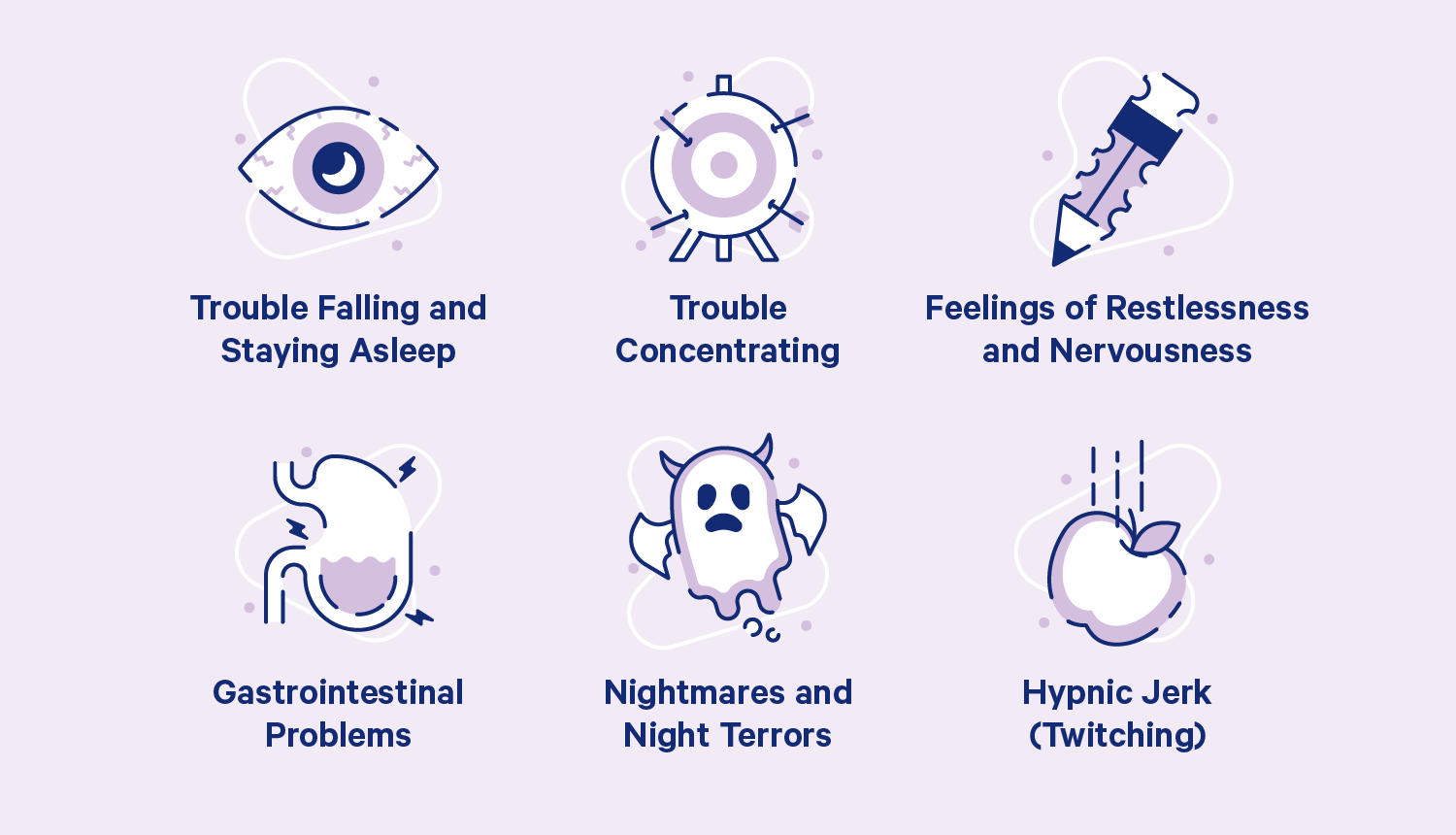
The signs of sleep anxiety vary for each person, but there are a range of common symptoms to keep in mind. These symptoms include the following:

  • Difficulty falling or staying asleep
  • Trouble focusing
  • Restlessness and nervousness
  • Digestive troubles
  • Nightmares or night terrors
  • Hypnic jerk (twitching)
  • Panic attacks

Sleep Anxiety Causes

Wondering why some people suffer from sleep anxiety? Depending on the person, nervous thoughts before bed could be a result of a unique set of factors. Here are some possible causes:

  • Too much work, relationship, or other stress during the day
  • Fear, sadness, or worries causing a nighttime adrenaline rush
  • Fast-moving thought patterns at night
  • Pattern of poor sleep quality or difficulty falling asleep
  • Psychiatric and anxiety disorders

Sleep Anxiety Effects

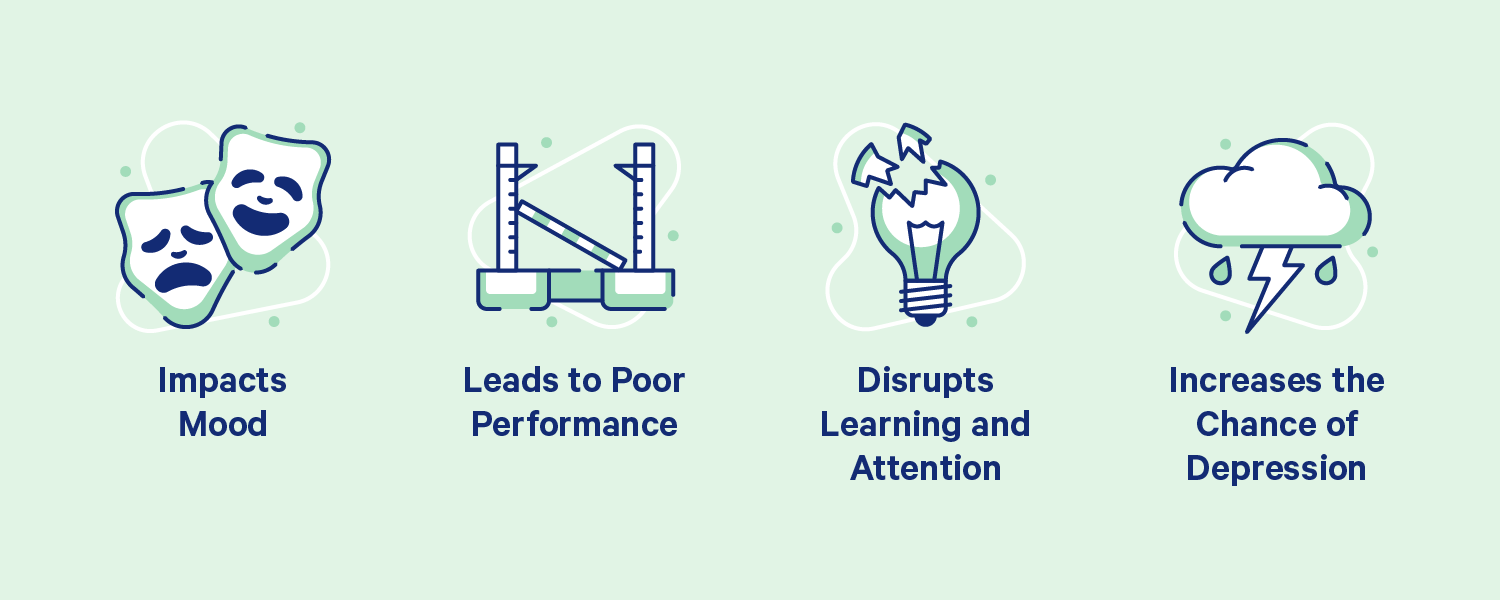
Since sleep anxiety may lead to a vicious cycle of sleep deprivation and bedtime dread, it can have a significant impact on one’s health. Take a look at some potential effects of sleep anxiety:

  • Down moods
  • Poor performance at work or school
  • Difficulty concentrating
  • Higher chance of depression
  • Reduced cognitive reaction times

Sleep Anxiety Tips

Sleep anxiety can have a profoundly negative impact on one’s well-being, but there are a variety of ways to manage it. Check out these helpful tips:

  • Limit screen time before bed
  • Avoid napping during the day
  • Practice nighttime meditation or relaxing yoga
  • Exercise lightly before bed
  • Set aside 30 minutes to wind down before bed
  • Stay away from stressful situations or activities at bedtime
  • Use a journal to express your worries
  • Get up and do something else if you can’t fall asleep
  • Keep your room dark and cool
  • Purchase a better bed for your sleeping needs

Sleep anxiety can affect not only one’s ability to get enough rest, but also their ability to go through daily life. For students suffering from sleep anxiety, their academic performance, mental health, and relationships may also suffer as a result. 

However, sleep anxiety doesn’t have to have as strong of a hold on our lives. By spreading information about the issue and taking steps to address it, you can help yourself and others ease sleep anxiety and finally get some rest.

For an in-depth guide to sleep anxiety, take a look at the infographic below.

The Best Ways to Manage Money as a College Student

Most college students are financially limited and adult life is starting to become their new norm. You just graduated high school, not yet working on your dream career, and still learning who you want to become. 

As you build your adult life, good finances will be a common denominator in how far you go. Use your college years to learn how to manage your money. Follow money management habits and you’ll be sure to endure better outcomes post-graduation. 

1. Cutting down on school supply costs 

College is a multi-year commitment which means school supplies should be a part of your budget for roughly 2 to 4 years or more. Therefore, there is no real need to overspend in this area. A few good frugal choices could save you hundreds of dollars if not thousands.

Renting used textbooks

Never buy a brand new college textbook unless you have exhausted all other options. If renting a used textbook is not an option in the college bookstore, then consider renting from Amazon. The cheapest option out there would be renting the eBook version of any college textbook.

Avoid overpriced supplies

While fancy planners and writing utensils may spark your interest, don’t fall for the hype of buying them. A $15 notebook with a trendy design on the cover does not exceed much value or functionality than a $3 notebook.

The latest tech isn’t an immediate need

It can be tempting to want the latest laptop, tablet, and more when completing work on them. Most likely the existing tech you have is sufficient enough to complete your studies. Be mindful that features to help with productivity and work completion are what matters.

2. Keeping food costs lower

Creating the right budget for food can provide better results of your college finances. The best advice is to tailor your food budget to your exact needs.

Get the right meal plan at your college

Meal plans are purchased passes to get food in a college cafeteria. They vary based on frequency and method of redemption such as points or swipes. However, plans should be bought based on how much food you’ll need for the cafeteria versus what you cook yourself or order elsewhere.

A commuting college student may need a one meal per day plan versus the full-time on-campus student needing two to three meals per day.

Avoid going out to eat so much

As convenient as it seems, ordering food will significantly increase monthly spending especially if done frequently. Visit a grocery store and pre-plan what you’ll be eating at least a week at a time. Cooking more, especially if not living in a small college dorm, could save you thousands on ordered food and snacks.

3. Having financially reasonable housing

Living arrangements are likely the biggest expense you have other than college tuition. Therefore, frugal options while in college can promote better money management.

Staying at home during college

While many students love the independence of not being under your parents’ roof, it can endure some costs you should avoid for now. If you attend a college within an hour from home, there is no need to save thousands on dorm living. Have an understanding with your parents or guardians on staying at home during college and your plan post-graduation.

On-campus housing

At most colleges, there are always people attending that particular school who are from another state or another area of the state. If you fall in that category, it may be cheaper to stay in a dorm on-campus versus renting off-campus. Apartment costs are significantly rising so there is more potential to save thousands of dollars.

Having roommates 

Maybe staying off-campus is a preference of yours while attending college. Renting an apartment or house with roommates would make this easier to achieve financially. Depending on the cost of the place and your number of roommates, it could be the most frugal option if not staying at home.

4. Finding ways to increase income

Income can be quite low for college students as most of their time is spent towards their studies. However, students should determine the best ways for them to improve their money management by increasing how much they bring in. An increased income will be always helpful to manage your debt issues per month, which is the prime reason for low savings.

Working a typical job

It is not uncommon to see a college student with a part-time job. Part-time working is still reasonable even while handling college courses. Look for opportunities that may offer benefits to some degree even if you are a part-time employee.

Paid internships

Some college students rely on internships while in school to complete their degree or have an easier time seeking opportunities once graduated. If an internship program doesn’t collide with your school schedule, a paid internship can prove it’s value long-term.

Gaining a side hustle

The biggest advantage in developing a side hustle is the time flexibility. If you have a demanding school schedule, entering the gig economy can allow you to increase income more on your own terms. Determine what your skills are or what skills you are going to learn, to work as a freelancer. Even a part-time commitment to freelancing could increase your income substantially.

Whatever option you choose, remember that working within the field of your degree while in college can have its advantages. With a higher income, money management will be considerably easier.

Proper habits yield positive results

College students will learn the importance of finances as they experience some limitations. Financial decisions could put you on the right or wrong path at a young age. In addition to actions to save or make more money, there are other suggestions to manage money well.

Pay on your student loans while still enrolled in school for good rapport. Use resourceful apps like Mint to track expenses and budget accordingly with every categorized transaction. Cut unnecessary expenses out to avoid higher monthly costs. And most importantly, always save for a rainy day and be disciplined with how it’s spent.

Document to use for College Week

Does your school have a College Week? Many schools do and Ashley Wick, a Counselor at Royal Valley ISD in Kansas has created a document she uses in her school that you can adapt and share at your school. This can be shared with teachers, students and parents/guardians. Her goal is for the teachers to start discussions during their seminars and that those discussions continue later at home.

Here is a link to the document: https://docs.google.com/document/d/1xh-yb24Ri_2lYb9ZYnbtUfy-EA7wFdTquQAtrujTJws/edit?fbclid=IwAR1UxPyblrWYboMJhjUwh668j3YkrjZwQwmWEZ8Gf3vNnEbhQj8AIxKsMGs

Suicide: Signs to Look Out for

Suicide continues to be a problem in society. I was reminded of this recently when I saw a post on Facebook from a mother who’s daughter had committed suicide in her room several years prior. She made a post on the date two years later as a warning to other parents on some of the signs she missed. Her daughter was a great student with many friends, but some of the signs were there and she wanted to make sure all parents recognized them in their own children.

The American Association of Suicidology advocates asking a person directly if they exhibit warning signs of suicide. The following is a list of behaviors that may necessitate this action, whether or not communicated directly or outwardly:

  • Threatening to hurt or kill themselves, or talking or wanting to hurt or kill themselves
  • Looking for ways to kill themselves by seeking access to firearms, pills, or other means
  • Talking or writing about death, dying, or suicide, when these actions are out of the ordinary
  • Increased substance (alcohol or drug) use
  • No reason for living; no sense of purpose in life
  • Anxiety, agitation, unable to sleep or sleeping all of the time
  • Feeling trapped, like there’s no way out
  • Hopelessness
  • Withdrawal from friends, family, and society
  • Rage, uncontrolled anger, seeking revenge
  • Acting reckless or engaging in risky activities, seemingly without thinking
  • Dramatic mood changes
  • Giving away prized possessions or seeking long-term care for pets

Suicide Prevention is Everyone’s Business

“Suicide Prevention is Everyone’s Business” is this year’s campaign by the American Association of Suicidology in observance of National Suicide Prevention Month.  

Know the signs, be aware, ask questions, be kind, and seek professional help for you or for others. Learn more and get involved in advocating by checking out resources from groups like the American Association of Suicidology and the American Foundation for Suicide Prevention. 

  • National Suicide Prevention Lifeline: 800-273-8255
  • Crisis Text Line: Text HOME to 741 741

Counseling Schools has put together a National Suicide Prevention Month Advocacy Guide. Here is a link to it for more information: https://www.counselingschools.com/blog/national-suicide-prevention-month-advocacy-guide

6 Steps to Help Your Students Create a Final College List

The following steps will help your students learn more about the colleges on their initial list so they can eliminate those that don’t fit and hone down to a balanced, strategic selection of approximately 8 to 12 schools that if admitted, they would be delighted to attend. Here are the steps they should take:

  1. Get Organized:

Start by creating a spreadsheet or Google doc (or both!) to organize all the information about the colleges on your list. We love the idea of shareable files so your parents or college counselors can also add notes.

What goes in these files? Some suggestions would be school size, location, majors of interest to you, SAT/ACT and GPA requirements, social life, cost, and anything you can think of that’s important to you in your decision-making process. Later, once you’ve finalized your list, you’ll create a more detailed spreadsheet with each school’s requirements and deadlines. For now, it’s about compiling your information in one place so you can compare and contrast each school.

Make sure to leave yourself plenty of room for notes. As you begin the next steps of investigating and touring, the information can begin to overlap and blur. Record memorable details as you go!

2. Dig Deeper in Your Research:

You’ve done some general research to get to this point. Now it’s time to dig in. The best place to begin, of course, is the college’s website. Spend some time there exploring more than the home page. Watch the videos, scroll through their clubs and organizations, read the online news articles. Then visit the school’s social media sites to get a feel for the issues and activities the school focuses on. Beyond that, these additional sites can shed light on more aspects of the college:

3. Visit Campuses:

These days you can visit most universities without leaving home. Thanks to 2020’s events, “virtual visits” became a necessity and schools have upped their games in this department. Take advantage of every online opportunity you can, including student panels, faculty panels, info sessions, and campus tours.

Still, we think there is no substitute for an in-person visit (information session, campus tour, on-campus meal, and perhaps even attending a class) if your schedule and budget allow for it. Many students tell a similar story about visits: “When I stepped foot on that campus, I just knew it was where I belonged.” It’s the best way to really feel the campus “vibe” and know for sure if it’s for you or not.

Whether you visit virtually or in person, don’t forget to log your notes during or immediately afterward. Did you love the special pizza party nights they discussed? Were you turned off by the seriousness of the students? Could you imagine yourself hanging out with friends in the quad? Write down all of your thoughts. Those notes will come in handy later, too, when you’re writing your “Why this college?” essays.

4. Talk to Students:

Current or recently graduated students are some of your best resources for honest, relatable feedback that can help you determine if a college is right for you or not. On in-person campus tours, you’ll likely get a chance to interact with current students. Don’t be shy. This is a big decision for you so think of everything you’d want to know and ask away. Then listen to the answers objectively, understanding that everyone has a unique experience and this student may have different pros and cons than you. Talking to students can help you get the real-life picture of day-to-day campus life, including how difficult or easy classes are and how much interaction you can expect with faculty.

Again, talking with students is something you can do from home. Maybe a family member, friend, or neighbor knows a student you can connect with. Or you may find opportunities to speak with students through the website or by emailing your admissions officer at the college. You’d be surprised how many students are willing to FaceTime or Zoom with you and answer your questions. Or check out CollegeT, a website that facilitates (for a small fee) private conversations between current students and potential students.

5. Be Open to Suggestions:

Yes, your goal is to narrow down your choices. But as you fine tune, you may also come across some colleges you hadn’t considered in your initial searches. In fact, as you find schools that you like, it’s a great idea to ask students there what other schools they applied to or considered. Or perhaps do a Google search for “schools similar to” that college. In addition, as you discover more about what you want in a college, teachers, counselors, and peers may have additional suggestions that are worth investigating. Keep asking questions, listening, and being open to new ideas that might arise.

6. Whittle it Down:

As you research, you’ll undoubtedly eliminate some schools from your initial list. Your aim is to get down to about 8 to 12 schools at the most, with most being in your target range, meaning you fall somewhere in the middle of a college’s mid-50% GPA and SAT/ACT ranges for admitted students. You should also have several “likely” schools and a few of those “reach” schools you’d love to attend. If you’re struggling to weed out colleges, review your notes, prioritize your favorites, and when you’ve reached 8 to 10 put the rest on an overflow list that you can come back to if you want.

What we know from over 30 years of experience is that every college application and its accompanying admission essays take time and effort. With an effective list that you’ve created by finding your best-fit schools, researching, and touring, you’ll have less time stressing and more time to enjoy your senior year.

This post is from a blog posted at Judi Robinovitz Associates Educational Consulting. For over 30 years, they have provided an integrated array of academic support and guidance services to students of all ages. Check them out here: https://www.jraeducationalconsulting.com/


Scholarship Specifically for your Students that are Planning to be Doctors

Do you have any high school students that have told you their ultimate plans are to become Doctors and attend Medical School after College? If yes, there is a scholarship available they should apply for.

Future Medical Doctors of America can apply to the Dr. Philip Sobash Scholarship for $1,000 to a single university or high school student that plans to attend medical school in route to become a doctor.

Scholarship Overview

Dr. Sobash has spent years in the medical field and wants to give back to the future medical doctors of America.

The Dr. Philip Sobash Scholarship is an annual scholarship geared to university or high school students in the United States with an interest in becoming a medical doctor.

Criteria

In order to apply, be a current undergraduate student at a university or high school student  that will attend university in the United States on the path to a medical degree.

One winner will be chosen based on an essay competition.  A winner will be selected based on an essay of 1000 words or under giving an answer to the following:

“Describe a problem in the world that needs drastic improvement and how you would use your medical degree to help solve this problem”

Scholarship Amount

 A one time award of $1,000

Deadline To Apply

The deadline to apply for the scholarship is December 16, 2021.

Winner Announcement

The Dr. Philip Sobash Scholarship winner will be announced on January 16, 2022.

How Do They Apply?

The prospective student should email their response to the essay question “Describe a problem in the world that needs drastic improvement and how you would use your medical degree to help solve this problem” in Word Doc format to drsobash@drphilipsobashscholarship.com.

Please also provide the following information along with the essay:

  • Full Name
  • Phone Number
  • Bio
  • Address
  • Email Address
  • Projected Graduation Date
  • The School That You Currently Attend.
  • Cumulative GPA

Senior Bulletin for Your Students

Have you ever considered putting together one document for your seniors that includes all post-secondary information they will need for their college planning as well as a list of available scholarships? If yes, where do you start to go and find a template you can use to compile this information? Search no farther! A Counselor at Hannibal High School in Missouri, JoAnn Mumma McCollum, has put together a PDF for her students which contains this information and she has agreed to share with you.

It includes:

  • Information on their school, who to contact and links to their social media and website with college planning information.
  • Information regarding career and job services in their area.
  • Military options and information for those students that might be interested in that career path.
  • Information on Colleges, Two-Year Schools and Technical Colleges in their area
  • College Admissions Test Information (SAT & ACT)
  • Information for college athletes looking to play sports in college
  • Financial Aid Information
  • Recommendation Letters with Template
  • Links to college resource websites
  • Scholarship Information (with local scholarships)

It’s very comprehensive and a great template to use to craft something customized for your students. Here is a link to it: https://www.linkforcounselors.com/wp-content/uploads/2021/09/2021-Senior-Bulletin-PDF-1.pdf

How to Help Your Students Get to the Finish Line

By now, many of your students have probably written multiple drafts of at least one application essay.

But how do you get to the finish line with minimal stress?

Step away from that proverbial red pen.  

At Wow, we don’t edit. Rather, we review. We respond to first drafts with detailed questions, not marked-up essays. We don’t look for perfect grammar and spelling after first drafts because we don’t know if the words from the first draft will even make it into the final product.

A first draft is not supposed to be ready to submit. Your job is to guide and ask questions.  

Throughout the process, think review, rather than edit! Keep this in mind: the best way to move the essay along is to read with a few questions in mind:

  • Is anything missing?
  • Is the essay’s purpose clear?
  • Does the essay answer the prompt?

When you and your students understand that revision involves “re-seeing” an essay, it feels less like fixing something that is broken and more like a process of discovery.  

And when that happens, it’s not so daunting. Sounds good, right?!

You’ll know your students have made it to the final draft once the content is in place, the structure has emerged organically, the essay clearly responds to the prompt, and the writing flows from beginning to end.  

That’s your cue that it’s time to polish, which does not mean aiming for perfection. Just check to see if they crossed every t and dotted every i. Don’t try to fix all of the spelling and grammar either. Rather, circle errors and make a note for the students to fix them.

Here is our checklist to evaluate a traditional personal statement, such as the Common Application essay, the Coalition application, the University of California personal insight questions, ApplyTexas or any primary prompt from schools that use their own applications.  

We hope it helps!

Content Review (after the first draft)

  • Does the essay answer the prompt?
  • Can you tell why the writer chose this topic?
  • Is the essay about the student, or is it really about the place, person or experience featured in the essay?
  • Does it illustrate a trait or traits the student wants to share with colleges?
  • Does it tell colleges something meaningful about the writer that is not clear from the rest of the application package?
  • Does the essay sound like the person who wrote it?

Structure Review (after the second draft)

  • Does the first paragraph make you want to keep reading?
  • Does the essay move smoothly from beginning to end?

Polish Review (after the final draft)

  • Does the essay use the same verb tense throughout? 
  • Has the writer avoided sentence fragments and run-on sentences?
  • Is the punctuation correct and consistent?
  • Is every word spelled correctly?
  • Does the student feel confident and proud of the work?

That’s it. No magic. No special tricks. If you give your students time and space to write, then recognize that your role is to coach as much as time and resources allow, you will be able to step back.  

When that happens, your students will be well on their way to writing effective essays that represent them well.

ABOUT THE AUTHOR

Kim Lifton is a MACAC Board Member and President and Co-founder of Wow Writing Workshop, which teaches students and educational professionals a simple, step-by-step process for writing effective college essays, so students can stand out and tell their stories. Kim leads a team of writers and teachers who understand the writing process inside and out. Since 2009, Wow has been leading the college admissions industry with our unique approach to communicating messages effectively through application essays, including personal statements, activity and short answer essays and supplements.  We teach students – and we train professionals.

Coming Up 

We cover a new topic in our Pro Chats each month – Wednesdays at 1:00 p.m. Eastern! Click here to register!

September      9/15/21 (3rd week)    Everyone’s an expert: Helping students manage unwelcome advice

October           10/13/21         University of California Personal Insight Questions

November       11/10/21         Manage student procrastination without stressing out

December       12/8/21           2021 wrap-up: Take a deep breath! What we can do at the end of the season, and what we need to let go of

Let your students know we have a free class for them, too!

If you wants to help students with the basics, encourage them to sign up for our monthly free student class, or listen to the recording.

Guide to Educational Acronyms and Abbreviations

Bothered by pesky acronyms and other abbreviations? Here’s a list to help you out!

  • ELA (English & Language Arts):  Refers to reading, literature, writing, speaking and listening in the world of English coursework.
  • FAFSA (Free Application for Federal Student Aid): This is  form completed yearly by current and prospective college students in the United States to determine their eligibility for student financial aid, including the amount of scholarships, grants, loans, and out of pocket expenses needed to pay for college.
  • IEP (Individualized Education Plan):  A written statement (for a student with a disability) developed by a team of knowledgeable professionals with input from parents.  The IEP describes student strengths as well as how the student will be served and what goals she/he should be meeting.
  • STEM (Science, Technology, Engineering, and Mathematics):  A STEM curriculum attempts to integrate these four subjects by cultivating creativity and developing skills that drive innovation.

Here are some brief explanations regarding testing abbreviations:

  • SAT (Scholastic Assessment Test):  A test that assesses a student’s verbal, mathematical and writing skills for college
  • PSAT (Pre-Scholastic Assessment Test):  A practice test for the SAT, usually taken by juniors in the fall.  High scorers can qualify for scholarships.
  • ACT (American College Test):  An assessment test that covers English, Math, Reading and Science
  • Pre-ACT (Pre American College Test): A practice test for the ACT, usually taken junior year in the fall. High scorers can qualify for scholarships. 
  • ASVAB (Armed Services Vocational Aptitude Battery):  That assessment is administered by the U.S. Military.  It includes 8 individual tests covering verbal and math skills, science, word knowledge, paragraph comprehension, and electronics, auto/shop and mechanical familiarity.  It is designed to help students learn more about potentially satisfying occupations and predict future academic and occupational success in the military.  All sophomores are welcome to explore their aptitude for various skills to help assist in career exploration.

Compiled by the Long Lake Central School District in NY from their Counseling Page

Newer Posts
Older Posts

Link for Counselors

Current Publication

View Current Publication

Advertisements

LINK Newsletter for Counselors

Sign up to receive our bi-weekly e-newsletter.