Menu Sidebar
Menu

Webinar: Student Debt Impact

A webinar on Financing Education & Economic Opportunity will take place virtually on February 25th on 12:30 PM EST. Student Debt Impact explores how unprecedented borrowing disproportionately burdens BIPOC students and their families, how it exacerbates the racial wealth gap, and how to create models of higher education financing that provide pathways to economic opportunity.

The webinar will be hosted by Helaine Owen, Opinion Writer for the Washington Post and the panelists will include Naomi Zewde, Associate Professor of Public Policy, CUNY & Ashwini (Asha) Srikantiah, VP of Product, Head of Student Debt Program, Fidelity Investments.

Here is a link to register for the free webinar: https://uaspire.zoom.us/meeting/register/tJAlc-iqpzspE9XL7huCmXmVHIDgN2okF8c2

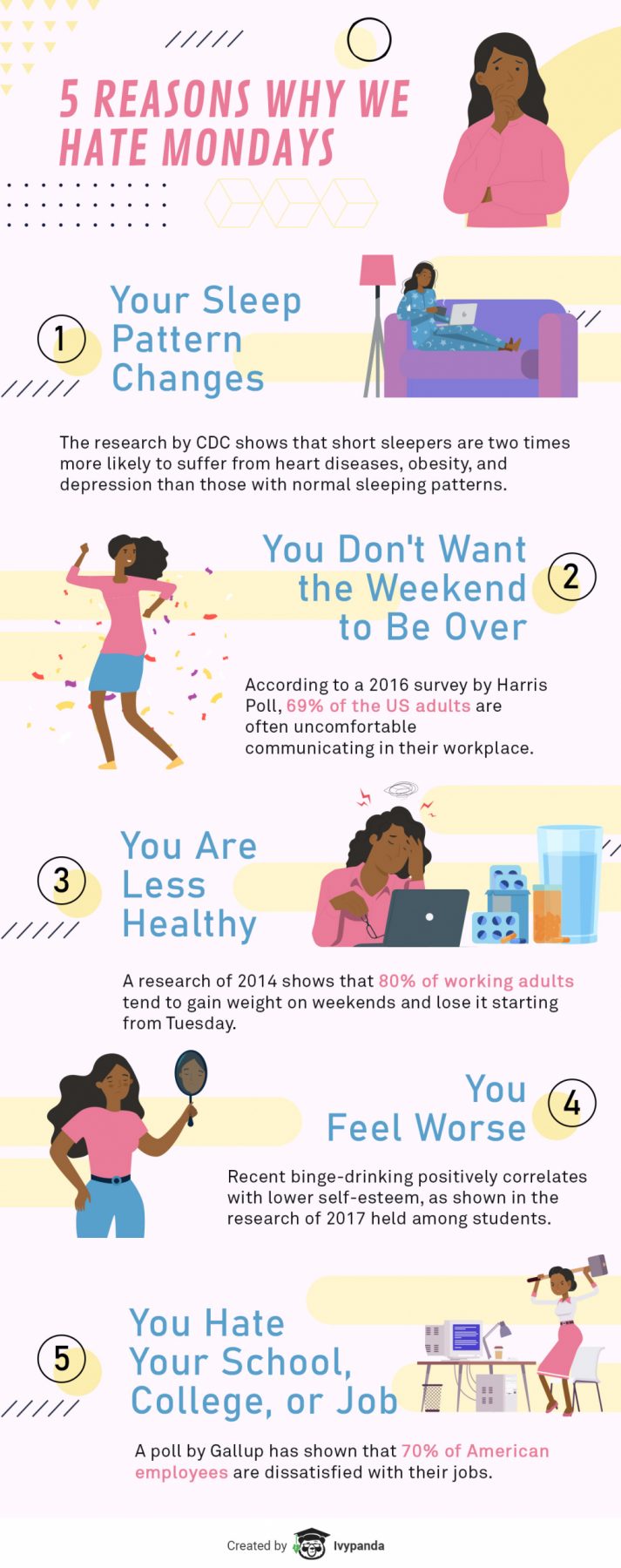
The Monday Blues

It is estimated that more than 17 million people will call in sick today after watching the Super Bowl yesterday. So there is no better time than today to discuss the Monday Blues. If you feel depressed, annoyed, overwhelmed, sluggish, and tense at the beginning of a working week, you are probably dealing with a case of the Monday blues.

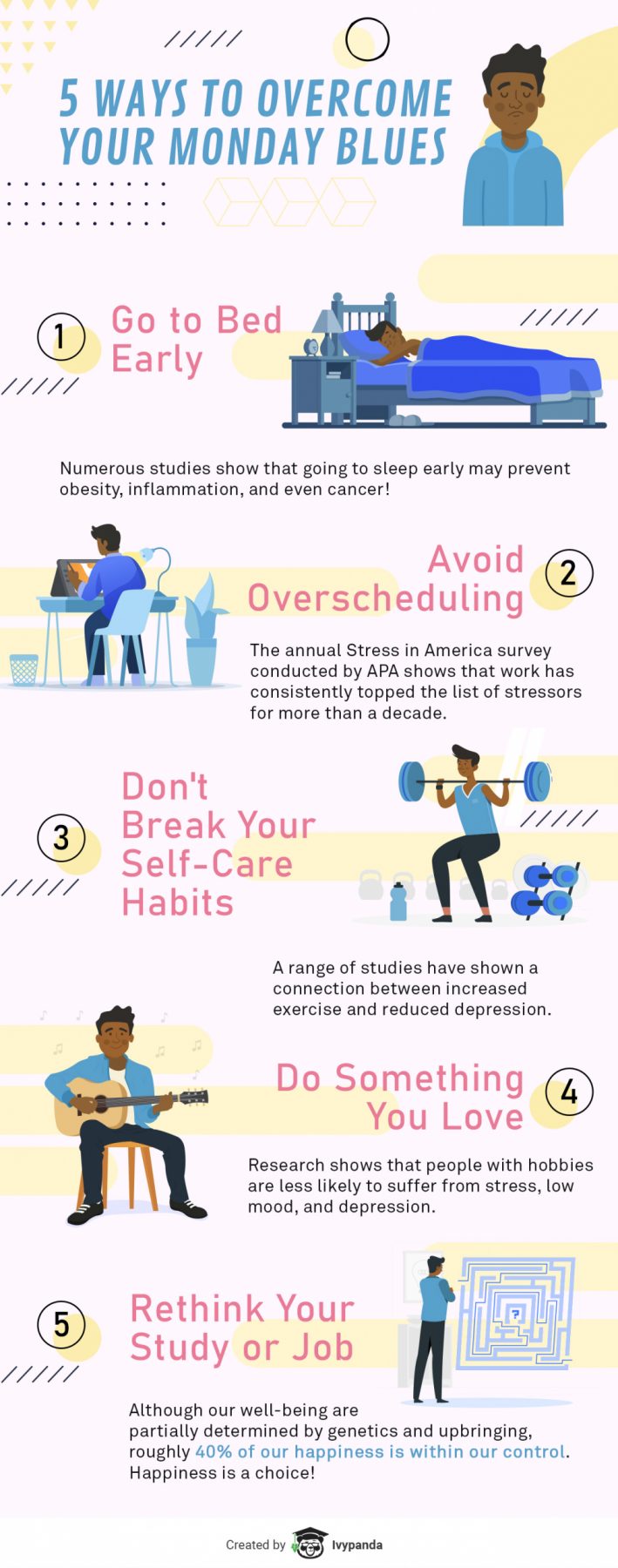
Here are 5 Ways You can Overcome Your Monday Blues

Although it may require some time, effort, or changes to your habitual lifestyle, these problems can be resolved. The next five points provide a comprehensive solution to the Monday blues to ensure enjoyable mornings throughout the working week.

All in all, Monday is just another day. You are the one who makes it enjoyable or daunting. Spend 15 minutes every Monday morning thinking about your overarching goals and writing down where you are at accomplishing them. You will get a bird’ s-eye view of your life. It is a highly motivating practice, especially at the beginning of the week, when we feel that we have six more days in reserve.

6 Tips to Help Your Students Make a Better College List

If you want to make a better college list, don’t limit your potential list of colleges to just schools you have heard of. There are over 1,600 four-year US colleges-there is no reason to start off with a short list of five institutions. Having a larger list of colleges opens up opportunities you haven’t even considered at prices you didn’t think possible.

You need to think about having two college lists. The first is the list you start with. The second is the list of colleges you end up with and actually apply to. Your start list should contain at least 20 schools, more if you have the time to research them. When you’re just starting, your college list should include colleges that you haven’t considered or heard of before you started creating the list.

So how do you find colleges you have never heard of?

Start with your “dream school”. What characteristics are you looking for? Big/small school, public/private, based in a city or rural location, specific programs to study, etc. Once you come up with that list look at these 6 things:

  1. Ignore Geography: By this I mean both location, such as state, and place, such as rural. There are a lot of preconceived notions about colleges based on geography alone. Ultimately, geography may be an important consideration for narrowing your list of colleges. But by keeping geography out of the equation to begin with, you may discover other factors that more than make up for being in a place you had thought was less than desirable.
  2. Don’t use rankings to keep colleges off your list: Rankings are arbitrary, one person’s top ten may not make it to another person’s top 50. If and when you do use rankings to narrow your college list, be sure to understand the basis for the rankings. Most rankings are based on inputs, including what the students bring to the college. Ideally, families should be evaluating colleges based on what they will do for students.
  3. Look up similar Colleges: Use sites such as collegeresults.org. If you know of a school that you really like, look it up to see 25 other schools that collegeresults.org considers similar. As when using the rankings, it is a good idea to see how they determine similar colleges. However, it’s a fast and easy way to expand your horizons.
  4. Look at net cost rather than tuition.: Few people pay full price. You can get an even better idea of net price by income level by using the College Navigator. Make sure you have already calculated an estimated EFC and use the colleges net price college calculators. Be careful about using the information on the highest income category. Data is only available for those that receive some form of federal aid, including student loans. Note we also include net price college calculator links for many colleges on linkforcounselors.com here.
  5. Instead of acceptance rates, look at the 75th percentile test scores: For example, there are 97 institutions where the 75th percentile ACT scores is between 30 and 31. The acceptance rates range from 15% to 95%. There are 68 colleges with acceptance rates between 30 and 40 percent and the 75th percentile ACT scores range from 16 to 33. Admission rates often reflect a lot of self-selection not to mention rankings popularity so try a different approach.
  6. Don’t use college size in making your preliminary list: This is another area where many students have assumptions that they haven’t really tested. Make sure students visit colleges of all kinds of sizes before setting any size requirements. Ultimately, it’s simply a matter of numbers since there are just a lot more smaller colleges than bigger ones. Begin by looking at the percentage of classes by class size or the number or type of classes available for specific majors.

This information was provided by DIY College Rankings. Information on geography, size, graduation rates, acceptance rates, test scores, majors, and more are available in the DIY College Rankings College Search Spreadsheet.

Advantages of Taking a Gap Year

Taking a year off after high school or a “gap year”  has become an increasingly popular and accepted decision here in the United States. In Europe, Australia and New Zealand, gap year experiences have long been considered one of many traditional options.

I was unsuccessful in my efforts to convince my own children of the benefits of a taking a gap year. I wanted them to “want” to go to college for the right reasons, rather than just following everyone else lock-step. Some parents are afraid that if their child doesn’t head off to college immediately after high school that they may never go. They fear they’ll lose the momentum and are worried they won’t find a satisfying career.

Research on gap year experiences has actually shown that not to be true. A recent study found that over 90 percent of gap year students do in fact head to college within 12 months. Other research has repeatedly demonstrated that “gappers” earn higher grades than their traditional counterparts. Gap students are often quick to share that they grew up a lot during their gap year and that they headed off to college a year later feeling refreshed,  reinvigorated, more mature and more intellectually curious. According to the American Gap Association, “students who take a gap year and go on to college are 75 percent more likely to describe being happy or extremely satisfied with their careers after they complete their universities studies.”

Gappers enter college life ready to study; they’ve outgrown much of the freshman antics that can prove so damaging to a student’s GPA. Colleges and universities have come to appreciate the contributions that gap year students bring to the campus and many are now encouraging students to take a year off. UNC Chapel Hill (www.unc.edu) has been a pioneer in the supporting students interested in taking a gap year with its “Global Gap Year Fellowship which allows students the opportunity to plan their own gap year experience. Princeton (www.princeton.edu) has created a tuition-free “Bridge Year Program” where selected students participate in a nine-month service program at one of five international sites. Tufts University (www.tufts.edu)  has recently designed a “1+4 Bridge Year Service Learning Program” where students complete a year of service before they enter the classroom.

What do students do on a gap year?

When I’m working with a student who is considering taking a gap year, I suggest they think about creating a patchwork quilt of different life experiences. Some of these might include travel, foreign language immersion, internships/job shadowing, gainful employment and community service and very often there is a combination of international travel with community service or a career focus. Students and families can provide as much structure as they want; basically there are no rules to follow. If a student has a defined career interest in something like medicine or architecture; there are plenty of opportunities to gain exposure and experience both domestically and internationally.

Gap Year Resources

www.americangap.org

www.leapnow.org

www.globalvolunteers.org

www.usagapyearfairs.org

www.interimprograms.com

Lee Bierer is an independent college adviser based in Charlotte. Send questions to: lee@collegeadmissionsstrategies.com; www.collegeadmissionsstrategies.com

Note from the Publisher – If you liked this blog and have students interested in taking a Gap Year look for an article on Gap Year’s in our Spring 2021 issue which will be release next month

Many schools plan to continue online learning options even as they reopen for in-class learning

Education Dive recently provided some insight regarding online learning as we move forward in a future post-COVID world. Here is their recent Dive Insight on the subject:

Districts have invested millions of dollars during the pandemic to deliver distance learning to students. Now that the infrastructure is in place, stakeholders realize it would be wasteful to throw out the lessons learned from the emergency transition and not take advantage of what works as an additional option for families to choose. While many students report missing their friends, teachers and extracurricular activities during pandemic shutdowns, others say they enjoy working at their own pace without the distractions of the physical classroom.

The virtual learning infrastructure put in place to adapt to the COVID-19 crisis also creates a built-in “school choice” option many districts previously didn’t have the funds to offer. Now that much of the groundwork has been laid, it makes sense for districts to continue taking advantage of new possibilities — whether that means offering fully online programs for students who thrive in that environment or elective high school courses in subjects where local experts aren’t available to teach.

Based on estimates from the Learning Policy Institute, the American Federation of Teachers suggested in a document released last summer it would cost $41 billion for schools to address the digital divide, provide nutrition and expand learning time for students. The Association of School Business Officials International and AASA, The School Superintendents Association, have also suggested the additional costs of reopening for an average district with around 3,659 students would be around $1.8 million to cover safety measures, protective equipment, transportation and childcare. 

Open House for STEM Program for HS Students with Disabilities on Feb. 20

Do you work with rising 9-12 graders who are interested in STEM careers? If so, they may be interested in participating in an award-winning national program called Catalyst. Catalyst Virtual Open House for Summer 2021 and School Year 2021-2022 Saturday, February 20th at 10 a.m. RSVP at: https://forms.gle/naVg9yPkZFXJw8n39

More About Catalyst

Catalyst was founded five years ago and is located at The Science House on N.C. State’s Centennial Campus. Students pay only $50 to attend weeklong institutes in the summer and Saturday Sessions throughout the school year. Rising 9th-12th graders with any disability are eligible to participate. Students can be in regular education classes (AP, honors, regular level) or in the OCS program. Catalyst is designed specifically for students interested in STEM and who want to pursue a STEM Career following high school. Program features include:

  • Paid STEM Internships
  • Field Trips, Research Projects
  • Project-Based Learning
  • Engineering Design
  • Mentoring, and
  • Workforce Readiness Skills

Catalyst is funded by North Carolina Vocational Rehabilitation. Catalyst also has many community partners including N.C. State, Wake Tech, N.C. Museum of Natural Sciences, Biogen, Duke Energy, IBM, Fidelity, SAS, EPA, NASA, and Bank of America. This program would not exist without the generosity of our funders and partners.

Awards for Catalyst

  • 2021 STEM Program of Excellence Award from the International Technology and Engineering Educators Association
  • Winners of National 2017 Lemelson-MIT InvenTeam Competition. (Students invented a mat that screens for lameness in cows and an app that notifies farmers. This device costs less than $1,000, and the current one on the market is over $100,000. They also won the technical award and were the only team in the country with all students with disabilities. All participants presented at MIT and received a $10,000 grant to build their invention, which we hope to patent.)
  • Winners of National Energy Education Development Project: Special Project Award, 2020
  • Invited to the US Patent Office, June 2018 for a special program.
  • Letter of Commendation from President Obama
  • All graduating Catalyst Seniors have gone on to STEM Educational Pathways in College.

Perfecting the Craft Scholarship

The Perfecting The Craft scholarship is an annual $500 scholarship designed to help propel students to become masters of their craft.

Red Label is asking students to give them a glimpse of their craft. To show them what it is you’re passionate about and how you’re working to perfect it. Submissions can be in any media format (photo, video, audio, slideshow, etc.). Regardless of the format used, submissions should include an explanation on how the student plans to perfect their craft. Written explanations can accompany other submissions such as images if needed. 

Scholarship Eligibility & Requirements

The scholarship is open to all U.S. citizens entering or attending a college or university, or trade school in the United States as a full-time student. Applicants must maintain a GPA of 3.0 or above. Students must submit a scholarship application form in addition to submitting a piece on their passion. The following materials should be submitted to outreach@fintechabrasives.com by August 15th: 

Scholarship Award

  • The recipient of the annual Perfecting The Craft Scholarship will receive $500 to be used only for college, university, or trade school tuition and related educational expenses. 
  • The $500 check will be made payable to the recipient’s school.
  • The application period for the scholarship ends August 15th. The award recipient will be notified by September 7th. 
  • Students retain full ownership of their submissions. Red Label Abrasives will ask for permission to use submission content, the student’s name, the student’s school and/or pictures on the company’s website and social media pages. 

Scholarship Deadline

The deadline for the submission period is August 15th. All completed scholarship materials need to be emailed to outreach@fintechabrasives.com before the end of the day on August 15th.

Here is a link to apply for the scholarship – https://www.redlabelabrasives.com/blogs/news/perfecting-the-craft-annual-scholarship

Funky Sentences and Big Words Won’t Make or Break Your Students’ College Essays

Last month, I had an interesting conversation with our intern, Sammy, a bright and delightful University of Michigan junior and English major. He’s a voracious reader who likes to write, too. (Full disclosure: He’s also the son of my business partner, Susan Knoppow).
 
As part of his job, Sammy – who was a Wow student when he applied to college – read several dozen essays. And when he was done, I asked him what he noticed.
 
Without pause, he said, “Funky sentences with big words…thesaurus words.” He also noted that those sentences, while funky, were grammatically correct.
 
I was so happy. Sammy observed something that is key to our approach to the college essay, something I hope will give you reason to pause if you decide you don’t like the way your students write and feel the urge to change things a bit. At Wow, we are student-focused, which means both high-touch and hands-off.
 
What do I mean by that? We meet students where they are. We provide lots of support, but we don’t change their words, and we don’t tell them what to write. If we notice a lot of thesaurus words, we encourage them to tone it down a bit, but we don’t insist.

Some students go deep. Others don’t. That’s okay.

Some are exceptional writers. Others are not. That’s okay, too!
 
We believe that every student can write an essay to the best of their ability, which is why we encourage them to make the important editorial decisions as we guide them through our process.
 
And guess what? Our students write beautiful essays that they are proud of – even with occasional funky sentences or big thesaurus words. We have learned when to push and when to let go, so they can write effective essays with less stress.
 
It’s all okay, as long as they answer the prompt, reflect a little and share something meaningful.
 
Our job, and yours, is to balance each student’s innate ability with their willingness to reflect, meet deadlines and focus. An occasional big word won’t keep them out college! Nor will a funky sentence.
 
Kim Lifton is President and Co-founder of Wow Writing Workshop a premier college application essay coaching and professional training company, offering private, virtual writing coaching services to professionals and students throughout the world.  Since 2009, Wow has been leading the college admissions industry with our unique approach to communicating messages effectively through application essays, including personal statements, activity and short answer essays and supplements.  Kim leads a team of writers and teachers who understand the writing process inside and out. Kim blogs regularly about the college essay’s role in the admission process for multiple industry publications and websites.  

We’ll be talking about willingness and ability a lot this year. If you’re curious, you can watch this Pro Chat, where Susan Knoppow discussed the concept in some depth.   MONTHLY FREE WEBINARS FOR STUDENTS AND PROS
  Pro Chats: Every month we record a new College Essay Pro Chat. Check out the last recording, or sign up for next month’s webinar. Wow CEO Susan Knoppow will answer your questions live for 30 minutes.

Free Student Classes starting in February: If you’re a school counselor who wants to help students with the basics, encourage them to sign up for my next free student class, or listen to the recording. You are welcome to sign up too.

New FAFSA Changes – Winners and Losers

The Free Application for Federal Student Aid will be undergoing significant changes soon and families, who hope to obtain financial aid, need to prepare for the FAFSA changes.

Tucked into federal pandemic relief legislation that Congress passed during the Christmas holidays, was a dramatic overhaul to the FAFSA and financial aid rules.

Last week, I talked to Mark Kantrowitz, a nationally prominent financial aid expert, who has an encyclopedic knowledge of the federal financial aid system.

I’d urge you to listen to my conversation with Mark, who knows more about the upcoming FAFSA changes than just about anybody in the nation. Here is a link to my blog page with the full video: https://www.thecollegesolution.com/new-fafsa-changes-winners-and-losers/

The changes will kick in for the 2023-2024 school year. This means parents filling out the FAFSA as early as Oct. 1, 2022 will be impacted by the changes.

You’ll learn more by watching the 42-minute video, but here are highlights of some FAFSA changes:

FAFSA simplification

One of the changes that has attracted the most attention initially is the simplification of the FASFA.

The current FAFSA has a maximum of 108 questions and that’s being shrunk down to roughly three dozen. That will reduce the FAFSA from the equivalent of six pages down to two pages.

Among the questions that will be eliminated are those that less than one percent of filers answered. One of the eliminated questions, which I’ll address shortly, will impact grandparents and others outside the nuclear family who want to help a student with college costs without hurting financial aid chances.

The aim was to simplify the FAFSA by aligning it more closely with the Internal Revenue Service’s income tax regulations. More answers will be able to be pulled from household income tax returns, which can make it easier for a family to complete the financial aid application.

When filling out the FAFSA, many parents are already using the federal Data Retrieval Tool that is embedded into the online FAFSA. Families use the DRT to access their tax return information on the IRS site and automatically transfer the relevant IRS information onto their FAFSA. With the FAFSA changes, the DRT will be able to populate more questions automatically.

Is the new FAFSA really going to be simpler?

Unfortunately, aligning the FAFSA with IRS tax rules will also make the application more complicated for millions of families. Because the FAFSA will now have to align with IRS rules and abandon some of their own federal formula rules, there will be winners and losers for these changes.

FAFSA changes:  divorce and separation

This is an area that will experience a great deal of upheaval. “In attempting to simplify the FAFSA,” Kantrowitz said, “Congress made parenthood on the FAFSA more complicated. “

For instance, one of the FAFSA’s rather quirky rules about who fills out the FAFSA will be upended for the 2023-2024 FAFSA.

Example:

Currently, who files the FAFSA as the custodial parent in cases of divorce and separation depends on where the student has lived during the majority of the year ending on the day the FAFSA is filed. So if the FAFSA is to be filed on Oct. 1, 2021 for the 2022-2023 school year, you’d look back and see where the child lived from that date back to Oct. 1 2020. If financial aid is a possibility, it makes sense that the parent who makes the least amount of money would be the custodial parent.

FAFSA change: who will be the custodial parent

However, when the new FAFSA rules kick in, where the child has lived will be irrelevant. What will matter is who claims the child on the tax return, which is currently irrelevant.

Under the new rules, the parent who provides the most financial support to the child in the prior-prior tax year is the one who should file the FAFSA. If this isn’t definitive, Kantrowitz thinks that the U.S. Department of Education will issue guidance basing the determination of the custodial parent on whichever parent has the greater adjusted gross income (AGI).

At this point, the new rules regarding separated couples are not clear. Separated couples currently follow the same rules as divorced couples regarding who completes the FAFSA, but with the legislative changes an important question remains to be answered definitely.

It is unclear right now whether parents need to be legally separated, as opposed to having an informal separation, to continue the practice of having only one parent share financial information on the FAFSA. If a legal separation is required (and it’s not even available in some states), parents no longer living together would both still have to share their financial information on the FAFSA.

FAFSA change: Ditching Expected Family Contribution

The new FAFSA rules will also eliminate the term Expected Family Contribution from the financial aid application. This represents what the federal formula determines a household should be expected to pay, at a minimum, for one year of college. The new law will replace the EFC with a new term – Student Aid Index.

A school will subtract a household’s Student Aid Index from the cost of attending its institution to figure out how much financial aid a student would be eligible for. This is what institutions do now with the Expected Family Contribution figure.

Two takes on EFC elimination

Ron Lieber, a personal finance columnist at The New York Times, celebrated the eventual banishment of the term Expected Family Contribution in a column on Dec. 30. Among Lieber’s arguments was that the term EFC shamed parents who wouldn’t be able to come up with that amount of money to pay for college. He also argued that the term EFC was confusing.

I suspect that most people don’t even know that the term EFC exists, which is an indictment of the federal government, colleges and universities and high school counselors who fail to explain what the EFC is and why it’s so important. This isn’t going to change when the term is replaced with another one.

So now we will be replacing the EFC with the SAI and we will see if that makes parents, who rarely are able to save enough for college, feel any better.  I have serious doubts.

FAFSA change: grandparent giving

Making sure grandparent generosity doesn’t impact financial aid has always been tricky. Do it wrong and it can hurt a household’s chances for need-based financial aid.

The FAFSA overhaul will make it easy for grandparents or others outside the nuclear family to pay for college costs without jeopardizing aid. The FAFSA overhaul will ignore whether grandparents or other well-wishers have given money to a child to pay for college costs. The FAFSA will no longer ask this question.

When grandparents, aunts and uncles, friends or others outside the immediate family help with college costs currently, this money is treated as the child’s untaxed income which is assessed at up to 50% by the FAFSA formula. That is an outrageous penalty to pay.

This FAFSA change will be big deal for many generous grandparents!

FAFSA change: multiple child benefit disappearing

While this has nothing to do with aligning the IRS with the FAFSA formula, the new FAFSA will no longer give households with multiple children in college simultaneously a significant break on their financial aid eligibility.

Parents who have more than one child in college at the same time have traditionally enjoyed a break from the FAFSA formula. For families with multiple college students, the Expected Family Contribution declines significantly for each child. As mentioned earlier, the EFC represents a dollar figure indicating what a family should expect to pay, at a minimum, for one year of a child’s college education.

EFC Example:

Let’s say a household’s EFC when only one child is attending college is $30,000. The next year, a second child enters college and the EFC for each child will drop 50%. So each child will have an EFC of $15,000. With the lower EFCs, the children would be eligible for more need-based aid.

If parents have three children in college at once, the federal EFC drops by 66%. With four children attending college, the EFC drops by 75%.

According to Kantrowitz, the new provision was inserted into the legislation due to retiring U.S. Senator Lamar Alexander (R-TN), who felt strongly that parents who spaced their children closer together should not get a significant EFC break versus other families.

FAFSA changes and CSS Profile

Many of the schools that offer the best financial aid use the CSS Profile to determine who gets their own institutional need-based aid. The Profile schools, which include nearly all of the most prestigious ones, only use the FAFSA to determine who is eligible for federal and state aid. In contrast, nearly all state schools and many private colleges use the FAFSA to determine eligibility for federal, state and institutional aid.

I reached out last week to the College Board, which created the CSS Profile, to ask what changes, if any, it anticipates based on the future FAFSA changes. The organization released a statement that said the College Board is “closely monitoring” the legislation and the potential impacts of the financial aid application process.

The College Board anticipates receiving federal student aid implementation guidance from the Department of Education in coming weeks and months. The College Board said it doesn’t have a time table on what if anything it will do in reaction to the FAFSA changes.

Learn more:

To make the best college choices and cut the price of a bachelor’s degree, you need to become an educated college consumer.

The best way to do that is to take my online course, The College Cost Lab.

Consider joining the thousands of parents, high school counselors and college consultants, who have taken the course, which provides lifetime access.

If you are a high school counselor, contact me at Lynn@TheCollegeSolution.com, mention this blog post and you can enroll for free.


The College Board announces the SAT will drop Essay and Subject Tests

The main SAT, taken by generations of high school students applying to college, consists of two sections, one for math and the other for reading and writing. But since at least the 1960s, students have also had the option of taking subject tests to show their mastery of subjects like history, languages and chemistry. Colleges often use the tests to determine where to place students for freshman courses, especially in the sciences and languages.

But the College Board said the subject tests have been eclipsed by the rise of Advanced Placement exams. At one point, A.P. courses were seen as the province of elite schools, but the board said on Tuesday that “the expanded reach of A.P. and its widespread availability for low-income students and students of color means the subject tests are no longer necessary.”

More than 22,000 schools offered A.P. courses in the 2019-20 school year, up from more than 13,000 two decades earlier, according to the College Board. There are some 24,000 public high schools in America.

The College Board said it would discontinue the essay section on the main SAT test because “there are other ways for students to demonstrate their mastery of essay writing,” including, it said, the test’s reading and writing portion. The essay section was introduced in 2005, and was considered among the most drastic changes to the SAT in decades. It came amid a broader overhaul of the test, which included eliminating verbal analogies that were a mainstay of SAT-prep courses.

Admissions officers hoped the essay would give them a way to look at original samples of students’ writing, to better evaluate their skills. It came to be criticized, however, for promoting an overly formulaic approach to writing, and was made optional in 2016 as part of another redesign.

In recent years, the SAT has come under increasing fire from critics who say that standardized testing exacerbates inequities across class and racial lines. Some studies have shown that high school grades are an equal or better predictor of college success.

More than 1,000 four-year colleges did not require applicants to submit standardized test scores before the pandemic, and the number rose — at least temporarily — as the coronavirus forced testing centers to close and made it difficult for many students to safely take the test.

Perhaps the biggest hit came in May, when, following a lawsuit from a group of Black and Hispanic students who said the tests discriminated against them, the influential University of California system decided to phase out SAT and ACT requirements for its 10 schools, which include some of the nation’s most popular campuses.

The College Board acknowledged that the coronavirus had played a role in the changes announced on Tuesday, saying in a statement that the pandemic had “accelerated a process already underway at the College Board to simplify our work and reduce the demands on students.”

In addition to dropping the essay and subject tests, the College Board said it would continue to develop a version of the SAT test that could be administered digitally — something it tried and failed to do quickly with an at-home version last year after the pandemic shut down testing centers. The board gave no time frame for when a digital version of the SAT might be introduced, but said it would be given at testing centers by live proctors.

There were about 2.2 million registrations for weekend SAT tests in 2020 (some students take it more than once), but because of the pandemic, only 900,000 such tests were taken.

This post was taken from information published by The New York Times. See the complete article here: https://www.nytimes.com/2021/01/19/us/sat-essay-subject-tests.html

Newer Posts
Older Posts

Link for Counselors

Current Publication

View Current Publication

Advertisements

LINK Newsletter for Counselors

Sign up to receive our bi-weekly e-newsletter.