Menu Sidebar
Menu

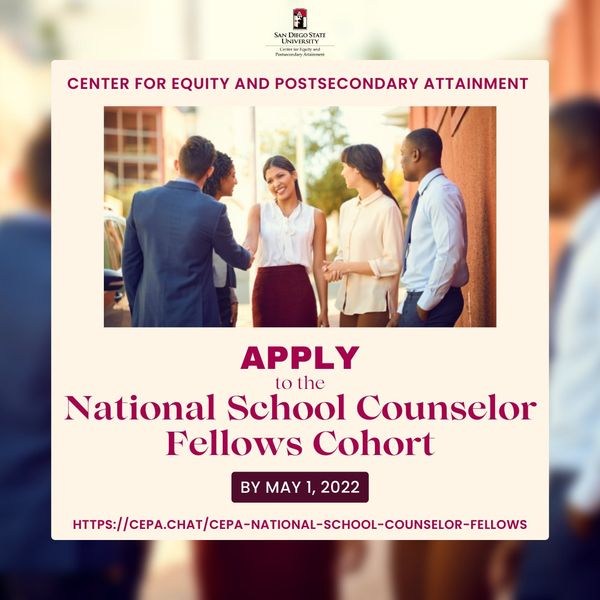
Inaugural National School Counselor Fellows (NSCF) Program

Are you interested in being part of the Inaugural National School Counselor Fellows (NSCF) Program? Applications are open now and the fellowship will begin Fall 2022.

NSCF will comprise a diverse group of school counselors who represent communities throughout the country. Fellows will be selected based on an application review and interviews. SC Fellows will receive ongoing mentorship and training centered in leadership and advocacy development. They will utilize a community of practice approach tailored to meet the ever-changing educational landscape and focused on solutions that address the pandemic’s impact on student’s educational pathways. School counselors are well positioned to take a leadership role as they inform and guide the postsecondary trajectories of all students by ensuring that students are socially, academically, logistically, and financially prepared for life beyond high school.

The school counselor fellows will share ideas, pose questions, digest evidence-based research, review school and district policies, and discuss interventions that support college and career readiness and postsecondary planning. Fellows will receive professional development, supervision and training that embrace equity driven leadership and advocacy practices.

Additionally, through the exploration of ways systems of oppression, implicit bias, and internalized racism impacts postsecondary access, SC Fellows will develop their understanding of anti-racist postsecondary advising, enrollment, and persistence.


SC Fellows agree to:
1. Make a two-year fellowship commitment. Year 1 (2022-2023) as a participating fellow and Year 2 (2023-2024) as a mentor to new fellows.
2. Attend monthly school counselor fellow meetings (via Zoom) – 2 hours per month, beginning October 2022.
3. Participate in one hour of monthly peer consultation.
4. Dedicate an average of 10 hours a month toward meetings, research and scholarship, leadership development, and advocacy projects.

SC Fellows will:
1. Engage in postsecondary research; including student/parent survey administration and focus groups.
2. Establish and facilitate a parent and student advisory board.
3. Complete monthly assignments, readings and reflections.
4. Complete a postsecondary related leadership and advocacy project each year.
5. Engage in reflection regarding professional development and growth.

Their model recognizes major areas of need related to postsecondary advising, access, and attainment. Selected fellows will work collaboratively to prioritize areas of the most urgent need that will help to outline the selected advocacy projects and activities.

Apply at https://cepa.chat/CEPA-National-School-Counselor-Fellows

For questions about the application or program contact them at cepa@sdsu.edu

How Do You Brainstorm Essay Topics with Your Students?

Just as we were about to start brainstorming ideas for her essay, an independent counselor enrolled in our College Essay Experience professional training program made a confession: “I am really nervous,” she said.
 
“Why?” I asked.
 
“I don’t think my ideas are good enough.”
 
We ask our students, professional and college applicants, to make a list of ideas to respond to a prompt on the Common App before we meet to discuss the topics.

The ideas she submitted as part of her brainstorming prework looked good to me.

But she was not convinced. 

“The ideas on your list are conversation starters,” I said. “Your idea will emerge out of the process of brainstorming. I will guide the conversation.”
 
I had to ask myself, why she was so focused on good enough?
 
She was looking for a best topic. She seemed to be shooting for the moon. And that’s not the point of a college essay topic.

I explained there’s no such thing as a best or unique or even good enough essay topic. What she was trying to convey about herself was more important than any topic. She understood. And we moved on.

As you prepare in earnest to guide the next class – the Class of 2023 – through this journey to college, it’s important that you understand what’s really important in a college essay, and what’s not.
 
We help students write effective essays, not great, perfect, outstanding, or unique ones. We use a 10-step process that makes it super easy for students to succeed — the same process we model to pros.
 
Step 2 is brainstorming. To start, we ask students to determine which trait or characteristic they want to highlight in their essay.
 
Then, we brainstorm story ideas that demonstrate that characteristic.
 
Does the topic need to be impressive? Nope.
 
Does it need to be big? Not at all.

Do your students need to showcase specific traits? Absolutely not (just the traits that are important to them, the ones they want to share with colleges).
 
Does it need to be meaningful? Absolutely. That’s critical. 

Any topic that answers the prompt, shares insight, and showcases a positive trait or characteristic can become the basis of an effective essay. That’s the goal.
 
It’s our job, and yours, to guide, not judge. How? Be curious and willing to be surprised. Ask questions, and lower the stakes.

***************************


 Kim Lifton, of Farmington Hills, MI, is President and Co-founder of Wow Writing Workshop, which teaches students and educational professionals a simple, step-by-step process for writing effective college essays, so students can stand out and tell their stories. Kim leads a team of writers and teachers who understand the writing process inside and out. Since 2009, Wow has been leading the college admissions industry with our unique approach to communicating messages effectively through application essays, including personal statements, activity and short answer essays and supplements. Kim is also an executive board member of Michigan ACAC and a national delegate. When she is not teaching students or training professionals, Kim likes to write her own stuff, do yoga at her synagogue, drink coffee, and swim laps (slowly but steadily) a few mornings a week at the high school she attended a very, very long time ago.

Photo provided by Sam Sarkis

Video- Mental Illness: Asking for Help

This video can be shared with students to help them see past the surface. Keith Deltano uses comedy to help students really think about mental health, their appearance, bullying and other issues they deal with on a daily basis in a fun way. Check his video out here: https://www.youtube.com/watch?v=SsxTCKT5hCw

00:00 I Don’t Want to be “Drugged” or “Locked Up”

01:19 I’m OCD and Bi Polar

02:35 You Will Get a Team

03:20 What is Therapy?

04:18 You Are Not Weak!

06:19 You Will Still Be You

08:20 Form Your Team and Fight!

National Suicide Prevention Hotline – 1-800-273-8255

Keith Deltano has served and worked with youth and families as a public school teacher, academic coach, parent coach, and international touring educational comedian. He is the winner of the Teacher Excellence Award for his work with at risk youth and the creator of the SEL video curriculum, https://charactervideo.org/

Book Review: How to College: What to Know Before You Go (and When You are There)

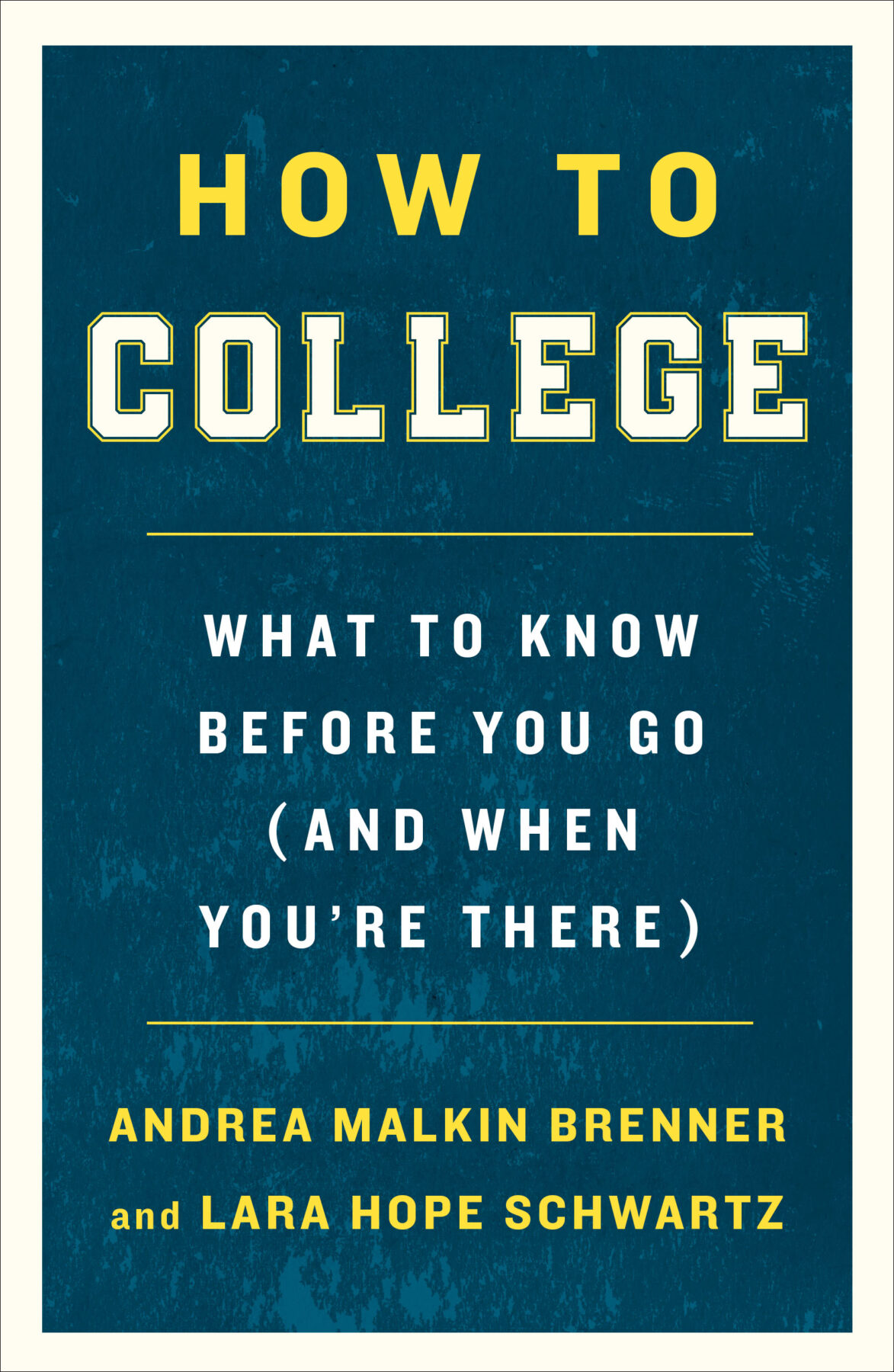
Here is a great book that I recommend to your students as they prepare for taking that next step in life: College. How to College: What to Know Before You Go (and When You’re There) will help your students make the transition to college and be ready to succeed once they are there.

How to College doesn’t just tell students what they should know before they get to college and then after they arrive, it is filled with practical things they need to get done to prepare. Students will actually use this book because it is filled with clear things to do and to get done to make the transition.  Students will especially appreciate the four checklists at the end of the book that sum up what they have learned:

  • Do this. Now. Seriously – A list of essential documents you must submit to your school this summer.
  • Know and do before you go – A checklist of all the tasks and exercises found throughout this book.
  • Make your smartphone smarter – A checklist of apps, information, and contact information to install on your phone.
  • Boost your browser – A list of important websites you should bookmark on your browser.

Chapters – covering topics such as identity, academics, health and safety, resources, money and extracurriculars and career – are filled with “pro tips,” things to discuss, things to do before college, and things to do when students arrive at school.  Many of the topics covered are ones that most students and their parents might not think about but can make the difference between a chaotic end of summer and beginning of college and a smooth transition.

Students should read this book before they go to college. They should read it again once they are at school and feeling overwhelmed. Parents should read this along with their child – and may want their own copy for reference later. It is a comprehensive guide to college transition and success.

About the authors:

Dr. Andrea Malkin Brenner is a college transition educator and author who speaks frequently with high school students and parents on the challenges related to college transitions. She draws on her 25 years of experience as a sociology professor and college administrator, as the creator and director of American University’s first-year experience program, and as the faculty director of the college’s University College program. Andrea is the creator of the Talking College™ Card Deck, the original card deck of discussion prompts for college-bound students and their parents, and co-author of How to College: What to Know Before You Go (and When You’re There),a leading guide for college-bound high school students. See AMBrenner.comfor more information.

Lara Hope Schwartz teaches law and government in the Department of Government at American University School of Public Affairs and is the founding director of the Project on Civil Discourse. Drawing on her experience as a legislative lawyer, lobbyist, and communications strategist, Lara brings an advocate’s-eye view to her teaching. She is a graduate of Harvard Law School and Brown University.

What the authors have to say about the book:

For parents –

“[This book] is an eye-opening recognition that your student is on the path to adulthood. It’s time for them to learn what you’ve already learned: that in adulthood, we must build a healthy and productive network of support and mentorship that includes people beyond the family.

This book is addressed to your student for a reason: at its core, How to College is a subset of “How to Be an Adult.” And that means we’re speaking to your student as the adult you want them to be, and the adult they will be expected to be when college begins. You might have bought this book for your student and if so, we know you share our belief that there’s a lot to learn, and that preparation matters.”

“This book is about adulting, and that includes honest conversations between you and your emerging adult about how to prepare. It should include your concerns and priorities as well. The “Discuss Before You Go” exercises in this book are very important. These include prompts for conversations that current college students have told us they wished they’d had with their parents and families before leaving home. These exercises also include prompts for conversations that parents and families have told us they wish they’d had with their kids before those kids left for college. . . The transition to college from home and high school is a significant one, and we all want it to go as smoothly as possible.”

For students –

“This book will take the mystery out of what college is all about (“adulting”) and recommend simple, important, and practical steps you should take to set yourself up for success. How to College covers the whole campus experience: living and learning with peers; college-level academics; taking care of yourself; finding and using resources; handling your finances; and getting around (and involved) on and off campus.”

“You’ll notice that the tone of this guide is both serious and fun. That’s what college and adulting are like, too. You’ll experience pride in your accomplishments and in learning from your mistakes and mishaps. Some things will be difficult, and the stakes are also high; that’s something to take seriously. But we want you to know that college should be a joyful time of new experiences, friends learning, questioning, and freedoms.”

What others have to say about the book:

“Brenner and Schwartz offer practical tools for stepping outside of your comfort zone. An excellent resource for anyone entering college.”

–Todd A. Olson, Ph.D., vice president for Student Affairs, Georgetown University

How to College gives high school students the edge in making a smooth and successful transition to college, and should be required reading for all high school students (and those who support them) planning to go to college!”

―Robert Hradsky, Ed.D., Senior Associate Vice President for the Student Experience and Dean of Students, Syracuse University

“Offers valuable insight for students and families choosing to embark on higher education and entering their first year. How to College provides a beneficial guide full of important resources and information to set the foundation for success at the collegiate level for both the student and their families alike.”

―Jonathan A. McElderry, Ph.D., Assistant Dean of Students, Wake Forest University

“This is required reading for every college bound student and their families. Drawing from their own vast experiences, the authors clearly map the path to flourishing in college, offering rich and accessible exercises that promote best practices for success. The first of its kind, this book will not only prepare students for their first year, but will also equip them to excel throughout their college career and beyond.”

―Jennifer Rothchild, PhD, Associate Professor of Sociology, University of Minnesota Morris

The 10 Most Important Pre-college Conversations Parents Should Have With Their Children

Raising children involves preparing them for what’s to come. Practicing new routines and discussing unfamiliar and potentially challenging scenarios offers teens reassurance that the unknown isn’t totally out of their control. Thoughtful preparation shouldn’t stop when teens graduate from high school and make plans to transition to college.

Discussing important “adulting” topics is essential for you and your college-bound student. The pre-college conversations below are suggested prompts to initiate discussions with your child, not parental lectures. These resulting conversations enable parents to share their opinions, provide guidance, discuss expectations, and communicate their support of their teen’s ability to thrive in the transition ahead. They also offer college-bound students the opportunity to share their ideas, concerns, and expectations before they begin handling many of these issues on their own. Here are 10 topics they should talk to their children about.

1. The Big Picture

Why have this conversation? Sometimes parents overlook the most obvious questions in their conversations with their college-bound students. Big-picture discussions will help ground future conversations about the big transition ahead.

Prompts to start the dialogue: Why does the student want to go to college? Why do you want your child to go to college? What decisions does the student want to make independently in college? What decisions do you want your child to make independently in college? What do you each consider to be a successful college experience academically? Socially? Emotionally?

2. Family Expectations

Why have this conversation? Parents and teens often have differing expectations about how their relationship will change once college begins.

Prompts to start the dialogue: How often and by what means do you expect to communicate with each other once college begins? What are your expectations regarding your child’s responding to texts and phone calls? Staying in touch with siblings and extended family? What is most important for you to know about how your child is managing their first weeks in college? What is most important for your student to know about life at home when they are away?

3. Money

Why have this conversation? College costs continue to rise, and families are struggling to pay for their children’s undergraduate education. Simultaneously, most incoming college students lack experience with budgeting, saving, loaning, and using credit.

Prompts to start the dialogue: How much does the student’s college (or the colleges they are considering) cost annually including tuition, room, and board? What will the family/student contribute? Does the family/student anticipate taking out loans? Who will be responsible for repaying these loans? Will the student find part-time work in college? How will expenses be handled such as food off the meal plan, entertainment, or online purchases? Does the student know how to keep a weekly/monthly budget?

4. Safety

Why have this conversation? Student safety is a priority for every college, but with so many people living in close proximity, even the safest campuses experience their share of crimes, burglaries, and assaults. Discussions about emergency preparedness and safety precautions are important to discuss with students before they leave home.

Prompts to start the dialogue: What are some ways for the student to protect themself while walking alone? What is their plan if a valuable item, such as a wallet or laptop, is lost or stolen on campus? What are some ways the student can stay safe and keep their friends safe while attending college parties? How can students keep their personal information safe while using credit cards or using unsecured Wi-Fi connections in college?

5. Health

Why have this conversation? Parents have until now been responsible for preventative healthcare and caretaking their sick kids, but college students will begin to manage all aspects of their own healthcare (and illnesses spread rapidly in residence halls!)

Prompts to start the dialogue: What is the health insurance plan the student will have in college and how does it work? Is the student able to narrate their personal health history to a medical provider? What are the names and dosages of the medications the student takes and why do they take them? Does the student make their own appointments for medical and dental visits yet? Do they refill their own prescriptions?

6. Academics

Why have this conversation? Ultimately, college is school, but the differences between high school and college academic standards take a lot of new college students by surprise. These differences include time management, personal responsibility, finding and using academic resources, and more heavily weighted assignments. 

Prompts to start the dialogue: What are the differences between how academic success is defined in high school versus in college? What are the student’s time management challenges? What are the student’s/family’s expectations for the chosen academic course of study? What are the expectations for sharing grades now that parents will not have direct access to them? What are the specific advantages of attending professors’ and TAs’ office hours? How will the student know if they should consider dropping a class? 

7. Relationships

Why have this conversation? Healthy relationships with roommates, friends, romantic partners, mentors, and educators are a key factor in whether or not a first-year student will return to college for their sophomore year.

Prompts to start the dialogue: How will the student respond if they just can’t get along with their roommate? How might the student approach a situation where a new college friend cannot afford things that they can afford or where they cannot afford things that others can? How might someone recognize an unhealthy or toxic relationship with a mentor? An employer? A romantic partner? When speaking to new college friends, what topics might make the student feel uncomfortable at first?

8. Drugs and Alcohol

Why have this conversation? The availability of drugs and alcohol + the absence of parents + the desire to fit in = potentially risky decisions regarding college partying.

Prompts to start the dialogue: What role does the student think alcohol and drugs will have in their college experience? What are your expectations for your student’s behavior regarding substance use in college? How should the student care for a peer who is very drunk or has passed out? What are the known dangers specific to college binge drinking? How is consuming edibles different from smoking marijuana? How does substance use affect a person’s ability to consent to a sexual experience?

9. Getting Involved

Why? Studies show that involvement in campus clubs and organizations offers significant benefits for college students, such as finding a community of friends and expanding their organizational and leadership skills.

Prompts to start the dialogue: Which clubs, organizations, or affinity groups does the student want to explore in college? When the student pictures getting involved in college, do they think they’ll want to hone existing skills and passions or try something completely new? If they are interested in Greek life, what is the best way to handle the time commitment, social pressures, and financial responsibility of joining?

10. Self-Care

Why? Across the country, colleges and universities are facing a huge increase in the number of students needing mental health care and wellness support. New college students must learn to balance their daily self-care with all the newness of an already stressful college life.

Prompts to start the dialogue: How much sleep does the student need to function well? What are some ways to develop a healthy sleep routine in college, given all the distractions? Are there foods the student should eat regularly or limit? What are the student’s plans for following a healthy exercise routine in college? Will the student use the counseling services offered at their new college? What are some healthy ways for the student to relieve stress?

These discussion prompts are just the beginning. If you are interested in more check out the Talking College™ cards, created by Dr. Brenner and built on the experiences of college faculty, staff, and families. The cards provide prompts for the most important pre-college discussions about “adulting.” The deck includes 279 discussion prompts covering 11 different themes.

This post was written by Andrea Malkin-Brenner and posted at Grown & Flown
Scholarships for Students Pursuing a Teaching Career

There are a couple of new scholarships available for your students that are planning to pursue Teaching Careers.

TeacherCertification.com Scholarship for Teaching Majors

Award Description

$500 Academic Award available to any student pursuing a teaching major/career.

General Scholarship Information

Scholarship Amount: $500

One Scholarship Awarded Annually

Application Deadline: June 1, 2022

Selection & Eligibility Criteria

The winner of this award will be chosen based on academic history and extracurricular activities. Financial need will not be considered. To be eligible to receive this award, you must:

  • Be a U.S. Citizen or Permanent U.S. Resident.
  • Be enrolled or accepted to an accredited college or university and plan on attending in the following year.
  • Be pursuing an undergraduate or graduate degree in a teaching major.
  • Have a minimum of 30 semester or 45 quarter hours still to be completed in your degree.
  • Agree to provide a digital photograph of yourself and a quote for display on TeacherCertification.com if chosen as the award winner by our selection committee.
  • High school seniors who are graduating and meet the above-mentioned criteria may apply.

Funds

Following the deadline, the winner will be notified, and the award will be sent by check directly to the recipient’s permanent mailing address noted in the application.

For more information or to apply: https://teachercertification.com/teaching-major-scholarship/

TeacherCertification.com Early Childhood Education Scholarship

Award Description

$500 academic award to any student pursuing their undergraduate or graduate degree in order to become an early childhood education teacher.

General Scholarship Information

Scholarship Amount: $500

One Scholarship Awarded Annually

Application Deadline: June 1, 2022

Selection & Eligibility Criteria

The winner of this award will be chosen based on academic history and extracurricular activities. Financial need will not be considered. To be eligible to receive this award, you must:

  • Be a U.S. Citizen or Permanent U.S. Resident.
  • Be enrolled or accepted to an accredited college or university and plan on attending in the following year.
  • Be pursuing an undergraduate or graduate degree and are planning on becoming an early education teacher.
  • Have a minimum of 30 semester or 45 quarter hours still to be completed in your degree.
  • Agree to provide a digital photograph of yourself and a quote for display on TeacherCertification.com if chosen as the award winner by our selection committee.
  • High school seniors who are graduating and meet the above-mentioned criteria may apply.

Funds

Following the deadline, the winner will be notified, and the award will be sent by check directly to the recipient’s permanent mailing address noted in the application.

For more information or to apply: https://teachercertification.com/early-childhood-education-scholarship/

Scholarships for Immigrants and Undocumented Students

Here is a document created by Ashley Sievers a Counselor in TN with some scholarships available specifically for Immigrants and Undocumented Students:

Scholarships:

La Plaza Scholarship Fund: https://www.laplazaindy.org/portfolio-item/scholarship-fund/

DREAMer’s Roadmap: https://www.dreamersroadmap.org

Equal Chance for Education: https://www.equalchanceforeducation.org

MALDEF Scholarship Resources: https://www.maldef.org/resources/scholarship-resources/

The Dream US: https://www.thedream.us/

Scholarships A-Z: https://www.scholarshipsaz.org/

Jack Kent Cooke Foundation Scholarships: https://www.jkcf.org/our-scholarships/college-scholarship-program/

Immigrants Rising Scholarship Fund: https://immigrantsrising.org/financial-support/scholarship-fund/

National Immigration Law Center’s Access to Postsecondary Education Scholarships https://www.nilc.org/issues/education/estimates-of-eligible-students/aid-scholarships-groups/

Look tomorrow for a blog with some helpful websites for Immigrant and Undocumented Students

College Application Choices

The Common Application is the big kahuna in the college application world. Their numbers have soared in the last decade, more than doubling to over 900 colleges and universities that accept their application nationally and internationally.

There is another player in the field – The Coalition Application.

Both platforms:

  • offer students a way to apply to colleges and track their applications
  • are free to use
  • have students pay the fees for each of the colleges where they’re submitting applications.
  • require an essay

What are the differences between the two applications: 

The single biggest difference is the size of the membership: Common App (CA), which was created in 1975, has 980 members and Coalition(C), created in 2015, has 150 members.

CA permits students to rollover their information from one year to the next. C encourages students to maintain a “locker” with items such as essays they’ve written for school, their resumes, research, artwork, videos and projects that they anticipate will be part of their college application.

Guidance counselors and teachers are more comfortable with the CA and are learning about the mechanics of the Coalition application.

The Coalition was envisioned as one way to increase diversity in the applicant pool. Its mission is to make it easier for students from underrepresented backgrounds to apply to college. It emphasizes affordability.  Currently, Coalition only partners with institutions that offer generous financial aid and makes a valiant effort to help students graduate with little to no debt. As an example, rather than just listing their activities,  students can select “Family Responsibilities” —which allows working-class families to describe the commitments that may prevent them from participating in more traditional extracurriculars and clubs.

The Coalition offers students a “collaborative space” where they can invite teachers, counselors, recommenders, and family members to review their applications.

Since the CA has been around for nearly 50 years, they’ve tweaked and fine-tuned their technical support, so it is typically responsive. However, with over 3 million users each year, things can get bottlenecked in the week or so before major deadlines. The safest bet is always to try and submit your applications two or more weeks prior to the deadline, in case there are challenges or tech issues.

One of the biggest differences you’ll find is in the Activity List. CA provides a max of 10 activities which students rank in their importance but they are limited to a description of 150 characters for each one. The Coalition offers eight spots with 255 characters for describing your responsibilities and accomplishments.

In the course listings section of the applications, Coalition applicants are required to list all grades and courses throughout high school whereas CA applicants need only list their senior courses with no grades – transcripts must be sent. How to decide which platform to use:

Students should research their own college lists to see which ones accept neither, one or both of the platforms:

Common App: www.commonapp.org;

Coalition: www.coalitionforcollegeaccess.org/ 

Lee Bierer, Bierer College Consulting, has been an independent educational consultant since 2006. www.leebierer.com; leesbierer@gmail.com, 704-907-5685.

NACAC is looking for member feedback – $100 Amazon gift card if you would like to participate

The National Association for College Admission Counseling (NACAC) has just begun an in-depth effort to improve its membership experience and service to the college admission counseling profession, and they are actively looking for your ideas in order to make that experience as professionally and personally satisfying as possible.  Your feedback can help enhance the services and benefits NACAC provides and to reveal the best ways to encourage your colleagues to join or renew their membership.

They will be hosting an online Bulletin Board Focus Group (BBFG) to improve the value of membership and elevate their offerings to the college admission and counseling communities. Members who take part in the focus group will receive a $100 Amazon Gift Card.  This research is being conducted by their partner, Marketing General Incorporated (MGI).

The BBFG will take place from Tuesday, April 12, 2022 through Thursday, April 14, 2022. Participants will be asked to log into the online research discussion for a brief period once a day on each of these three days.

You will be asked a set of questions that should only take about 20 minutes to complete, but you may log in as often as you want and also respond to the comments that other participants have made. Occasionally, the group moderator may ask a follow-up question for clarification, and you also may receive an email asking you to rejoin the discussion to answer any follow-up questions.

If you are interested in sharing your opinions in this online discussion, please complete this contact form. All information collected, and all information provided in the discussion will remain completely confidential. They will randomly select individuals to participate. All those selected will be notified and will be sent login/password information to participate.  

To express their gratitude for your time, NACAC will send you a $100 Amazon Gift Card. Only those who complete the discussion will be eligible for this incentive.

Newer Posts
Older Posts

Link for Counselors

Current Publication

View Current Publication

Advertisements

LINK Newsletter for Counselors

Sign up to receive our bi-weekly e-newsletter.