NACAC has set up a Knowledge Center where they host a lot of their assets they have put out for the Counselor Community. Here is a summary of the available reports/documents with direct links:
College Rankings Report of the Ad Hoc Committee– Released in 2011, this report includes recommendations from NACAC’s Ad Hoc Committee on U.S. News and World Report Rankings. The committee’s recommendations focused on ensuring that students and families have the ability to form their own impressions about which college is the best fit for them.
NACAC’s report on standardized testing is a much-needed call on colleges and universities to examine their ACT and SAT policies and practices. As NACAC CEO Angel B. Pérez noted, “As a profession, we must find the courage to examine our habits and policies, and we must adapt if we are to continue to fulfill our duty to the public good.”
The 2020 report is the result of a years’ worth of discussion and deliberation among an expert group of NACAC members who formed our Task Force on Standardized Admission Testing for International and US Students. The report examines the inequities associated with standardized testing for college-bound students and calls for solutions that can help bring about needed change to the admission process.
“This is a year to reexamine any mandatory use of testing as part of enrollment operations, for both practical but also ethical reasons,” said John Latting, chair of the task force. “It is a year to be reminded of appropriate uses, and potential misuses, of standardized tests.”
As costs continue to rise, planning how to finance a four-year degree has become a more prominent part of the college application process.
These three handouts are designed to highlight the value of a college degree, showcase the true cost of college, and break down borrowing options.
Share them with your students as you discuss college affordability and college options.
Download the individual handouts:
College Value Extends Beyond Financial Gain The benefits of college aren’t just in future earnings. A college education opens doors to opportunities that wouldn’t otherwise be available.
Students Often Overestimate the Price of College Sticker price is the published tuition price, whereas net price is the amount a student actually pays to attend an institution after subtracting federal, state, and institutional grant aid that doesn’t need to be repaid. The difference between the published price and the actual price a student pays can be significant and varies by institution type.
Talking About Borrowing Doesn’t Have to be Hard There are many ways for students and families to consider the “right” amount of borrowing to finance their college education. Your school counselor can be an invaluable resource as you search for right-fit programs.
Choosing to pursue postsecondary education is one of the most important decisions a young person can make.
As a school counselor, college counselor, college adviser, or admission rep you are uniquely qualified to help applicants navigate the admission process. And increasingly, students and parents also turn to you as they sort through complex questions about financial aid, college affordability, and the value of a degree. What’s an admission professional to do?
No, you don’t need to become a financial adviser to the families you serve. But good information can go a long way when helping students make the right college choice, especially when counseling applicants whose understandable confusion about the financial aid process threatens to derail their college dreams.
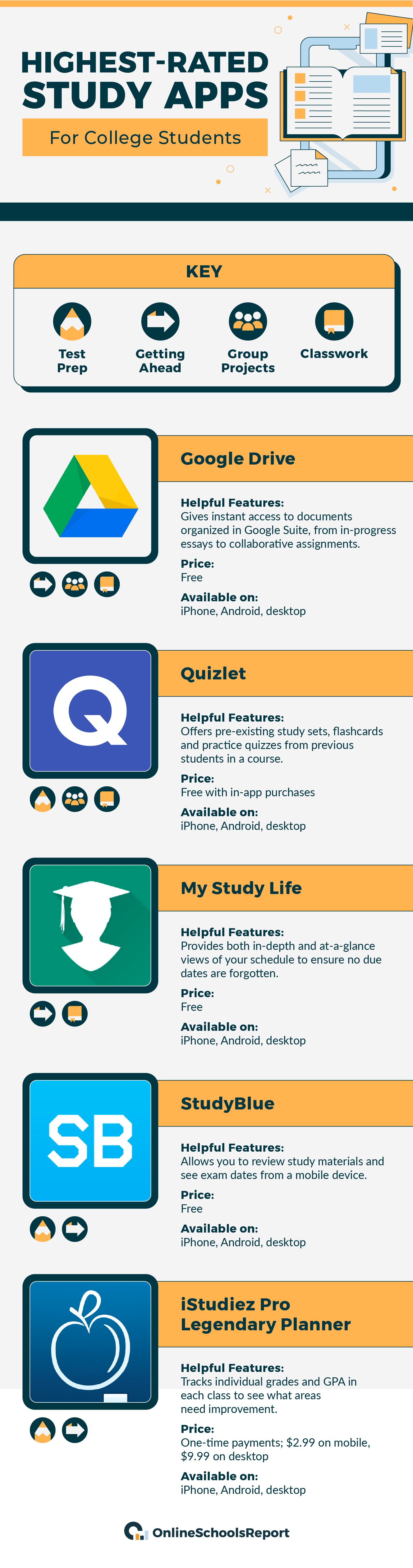
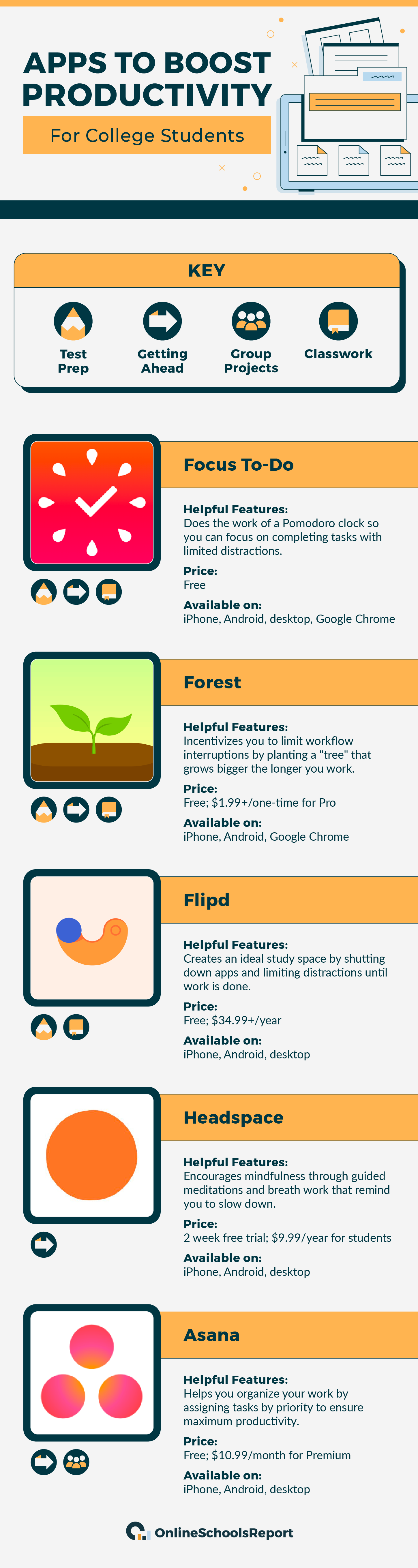
Your students now use apps for everything from catching a ride (Uber) to checking their social media accounts (Facebook, Twitter, etc.) to ordering food (GrubHub, Uber Eats, etc.). Why shouldn’t they be searching out apps to help them be more successful students? Onlineschoolsreport.com put out a nice list of 25 great apps for students that they can use for organization, note-taking, brainstorming and to be more productive.
Top Rated Apps
1. Google Drive
Price: Free
Available on: iPhone, Android, desktop
Average rating: 4.75 stars; 9.2 million ratings
Google Drive is an organizational tool that can sync with other Google tools, like Docs and Sheets, for easy access. If you’re looking for a way to stay organized and have instant access to all of your classwork, this app should be on your phone. With over 9 million positive reviews, Google Drive speaks for itself in terms of user friendliness and design.
2. Quizlet
Price: Free for basic; $19.99/year for Pro
Available on: iPhone, Android, desktop
Average rating: 4.75 stars; 741k reviews
Quizlet offers different ways for you to study, including pre-existing flashcards created by other users. From test-day prep to learning a new language, this app offers learning tools, practice tests, matching games and other creative ways to learn virtually with classmates or by yourself.
3. My Study Life
Price: Free
Available on: iPhone, Android, desktop
Average rating: 4.5 stars; 55k reviews
Designed to be a modern-day student planner, this app is top tier when it comes to keeping you organized. With scheduling, calendar views, to-do lists, event reminders and more, My Study Life will keep you on top of responsibilities and help you be successful, both in and out of the classroom.
4. StudyBlue
Price: Free for basic; $3+/month for Pro
Available on: iPhone, Android, desktop
Average rating: 4.5 stars; 15.6k reviews
Featuring over 500 million flashcards from 10 million student users, this app is designed to make studying easy and eliminate the need for piles of books and notes. StudyBlue allows you to create and quiz yourself with flashcards, set study reminders, customize your study materials and more. With over five million downloads, this app is sure to help you prepare for any test.
5. iStudiez Pro Legendary Planner
Price: Free for one semester, $2.99/one-time purchase on mobile, $9.99/one-time purchase on computer
Available on: iPhone, Android
Average rating: 4 stars; 858 ratings
This planning and organizational app can take your studies to the next level. Not only can you see daily, weekly and monthly calendar views, but you can also track your grades and GPA in each class so you know what areas to focus on. Among other features, you can also upload your professor’s office hours, emails and schedules — making this a true one-stop shop for all things college productivity.
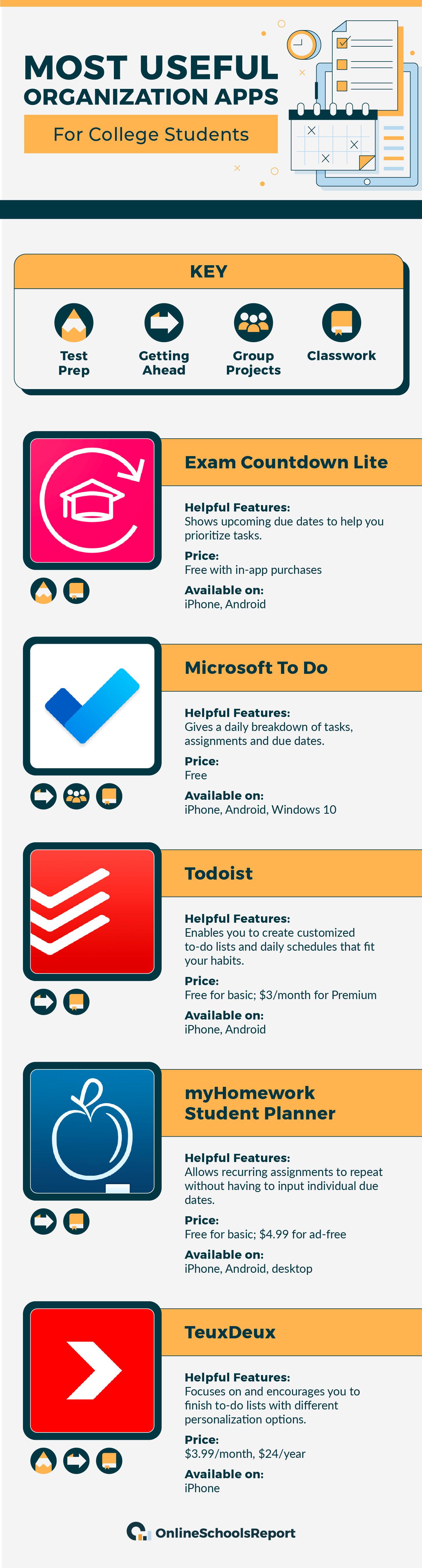
You may start each semester with the intention to stay organized, only to find yourself drowning in due dates, assignments and projects that “just snuck up.” Bid those days goodbye with these five apps that will help you get control of your schedule, instead of feeling controlled by it.
Organizational Apps
6. Exam Countdown Lite
Price: Free with in-app purchases
Available on: iPhone, Android
Average rating: 4.5 stars; 2,414 ratings
With a simple and easy-to-use interface, this app does exactly what it says: keeps track of exam and assignment due dates. You can choose from different icons and colors to keep track of assignments and tests for different classes, and can include notes on each upload for your reference. If you’re in need of a no-frills countdown app that can help you stay on top of due dates, this is the one for you.
7. Microsoft To Do
Price: Free
Available on: iPhone, Android, Windows 10
Average rating: 4.5 stars; 164.4k ratings
This app strives to be an all-in-one organizational tool, housing every list, task and to-do in one easily accessible place. You get a breakdown of your day every morning, and can plan events, see upcoming tasks or due dates, and even start a shopping list. If you’re the type of student who misplaces every piece of paper and list, this is the solution you need.
8. Todoist
Price: Free for basic; $3/month for Premium
Available on: iPhone, Android
Average rating: 4.5 stars; 250k ratings
Used by over 25 million people, this app is an all-in-one productivity solution to help you keep things streamlined. With tools to track important dates, set up recurring reminders, track your progress, and assign tasks a priority level, this app allows you to create the organizational system that works best for you.
9. myHomework Student Planner
Price: Free for basic; $4.99/year for ad-free
Available on: iPhone, Android, desktop
Average rating: 4 stars; 32k ratings
This organizational app has almost everything you could want. myHomework allows you to see schedules at a glance, track due dates, keep a running to-do list and sync devices, making it the perfect app for replacing a pen-and-paper planner.
10. TeuxDeux
Price: $3.99/month, $24/year
Available on: iPhone; Tehda for TeuxDeux available on Android
Average rating: 4 stars; 113 reviews
Designed based on the simplicity of a scrap paper to-do list, this app has a minimalistic Swiss interface that lets you focus on what matters: finishing your to-do list. You can create recurring to-dos, color code tasks, and drag and drop tasks to different days. Among other capabilities, like voice-to-text options, these make TeuxDeux a great option for anyone who always misplaces to-do lists.
Note Taking Apps
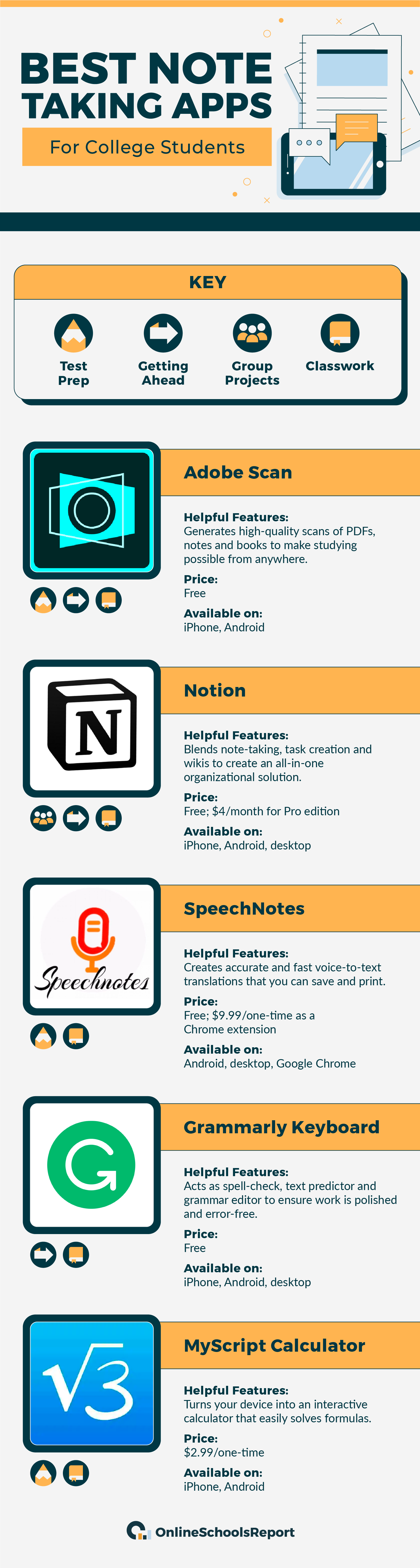
11. Adobe Scan
Price: Free
Available on: iPhone, Android
Average rating: 4.5 stars; 1 million+ reviews
The minds behind Illustrator, PhotoShop and InDesign designed this easy-to-use app to do exactly what it says: turns your mobile device into a scanner that converts any document to an online PDF. Adobe Scan is the perfect app to help you learn on the go: now all you need to study is your phone and a scan of your notes.
12. Notion
Price: Free for basic edition, $4/monthly for Pro edition
Available on: iPhone, Android, desktop
Average rating: 4 stars; 12.3k reviews
More than just a note-taking app, Notion was designed to be an all-in-one solution for editing and projects. Blending notes, tasks and wikis all in one place, you can easily see your projects, collaborate with others and quickly access your organized notes at the touch of a button.
13. SpeechNotes
Price: Free; $9.99/one-time payment for Chrome extension
Available on: Android, desktops, Google Chrome
Average rating: 4 stars; 23.1k reviews
Designed to make voice-to-text translations fast and easy, SpeechNotes incorporates Google’s speech recognition service for accurate notes. This app is multilingual, helps catch typos and spelling errors, and allows you to export or print your notes from the app’s homepage. If you’re hard of hearing or just prefer digital notes, this is the app you’ve been looking for.
14. Grammarly Keyboard
Price: Free; $11.66+ for Premium versions
Available on: iPhone, Android, desktop
Average rating: 4 stars; 104.6k reviews
If you struggle with grammar, spelling or professionalism when crafting your notes, essays or emails, Grammarly is the app for you. With built-in spell-check, grammar suggestions and general writing tips, Grammarly is a must-have if you could use some writing pointers.
15. MyScript Calculator
Price: $2.99/one-time payment
Available on: iPhone, Android
Average rating: 4.5 stars; 4,415 reviews
If you’re a math or science major who scribbles formulas and equations out on scrap paper, those days are over. This app turns your device into an interactive calculator, where you draw out a formula or equation with your finger or stylus and the calculator helps you solve. With the ability to solve basic operations like multiplication and advanced operators like inverse trigonometry, this calculator is a must-have.
Brainstorming Apps
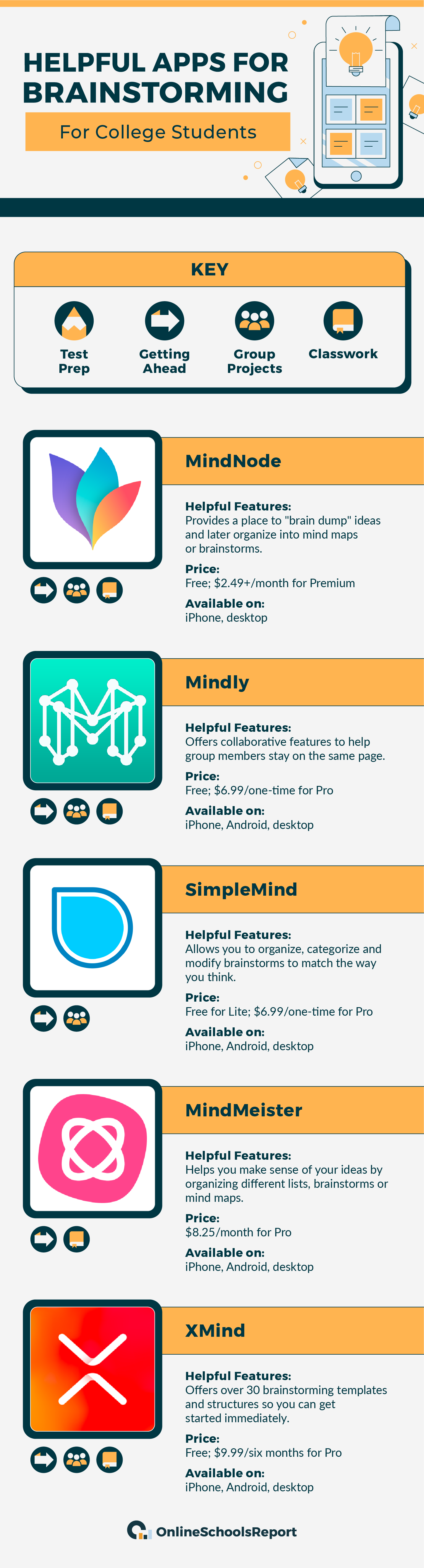
16. MindNode
Price: Free for basic version; $2.49+/month for Pro editions
Available on: iPhone, desktop
Average rating: 4.5 stars; 641 reviews
Recognized as Apple’s “App of the Day” and “Editor’s Choice” for brainstorming apps, MindNode is a powerful brainstorming and visualization tool. Perfect if your brain goes faster than your fingers, this app allows you to jot down all of your ideas and organize them later in a way that makes sense for you. Not just for mind mapping, MindNode allows you to organize your thoughts into lists, bubbles or anything else that matches the way you think.
17. Mindly
Price: Free with in app purchases; $6.99/one-time payment for Pro version
Available on: iPhone, Android, desktop
Average rating: 4.5 stars; 33.7k reviews
Created to “help organize your inner universe,” this app is perfect for if you’re a visual learner who needs to organize your thoughts. If you’re planning a group project, organizing your thoughts or just brainstorming, this app helps create mind maps, lists or any other visual representation of the way your brain works.
18. SimpleMind
Price: Free for Lite edition; $7.99/one-time for Pro version
Available on: iPhone, Android, desktop
Average rating: 4 stars; 43k reviews
This mind-mapping app is as simple or complicated as you make it — the beauty of SimpleMind is that it’s totally customizable. Whether you’re using this to chart out your master’s thesis or keep a group project on the same page, this app will help you visualize your ideas in a way that makes sense to you.
19. MindMeister
Price: Free for basic plan, $8.25/month for Pro edition
Available on: iPhone, Android, desktop
Average rating: 4 stars; 11.2k reviews
With over 14 million users and thousands of positive reviews, this mind mapping and brainstorm app was designed to help you create, prioritize and organize ideas. It’s ideal if you have an upcoming presentation or simply want to organize your thoughts.
20. XMind
Price: Free for basic edition; $9.99/six months for Pro
Available on: iPhone, Android, desktop
Average rating: 4.5 stars; 6,032 reviews
With over 30 built-in mind mapping templates and different structures to choose from, this brainstorming and mind mapping app allows you to jump right in. You can draw, outline and link different topics and ideas to one another to create maps that are as intricate or simple as you need. You can even print your mind map if you need to put pencil to paper.
Productivity Apps
21. Focus To-Do
Price: Free
Available on: iPhone, Android, desktop, Google Chrome
Average rating: 4.5 stars; 73.3k reviews
The Pomodoro technique is a simple yet effective time management tool, where you set a timer, work until the timer goes off, then take a short break and repeat. Said to boost productivity and optimize brain power, Focus To-Do takes the work out of the Pomodoro technique and does it for you. You can view daily reports to see how much time was spent on a project vs. taking a break, and can even set up due dates so you know exactly how much time you have to work on something.
22. Forest
Price: Free for basic edition; $1.99/one-time payment for Pro versions
Available on: iPhone, Android, Google Chrome
Average rating: 4.5 stars; 250.2k reviews
This is the ideal app for anyone who needs an extra incentive to stay in the zone. When you want to focus, you plant a “seed” in the app. The longer you go without picking up your phone, the more the seed grows, eventually blooming into a tree. If you pick up your phone or go into a different page in your browser, the tree dies. The Pro edition plants real trees for each virtual one that is grown, giving you even more of a reason to stay distraction-free.
23. Flipd
Price: Free for basic edition; $34.99/year
Available on: iPhone, Android, desktop
Average rating: 4 stars; 6.5k reviews
If you find yourself constantly tempted or distracted by your phone while studying or in class, this is the app for you. Flipd shuts down access to all of your apps when you turn on a session, making it nearly impossible to procrastinate with usual time-wasters like social media. You can see how much distraction-free work you’ve completed with a timer, and can even set timers to “Flip Off” while in class or studying.
24. Headspace
Price: 2-week free trial; $9.99/year for students
Available on: iPhone, Android, desktop
Average rating: 4 stars; 811.5k reviews
Between studying, classwork, assignments and homework, college can be overwhelming, and Headspace knows that. This is a guided meditation and mindfulness app that guides you through 10 minutes of breathing and thought exercises to relieve stress and allow you to have some time to yourself. There are different packs available for various exercises and needs; perfect if you need some mental health guidance.
25. Asana
Price: Free for basic edition, $10.99/monthly for Premium edition
Available on: iPhone, Android, desktop
Average rating: 4.5 stars; 39.3k reviews
With millions of downloads, this app speaks for itself in terms of usability. The goal of Asana is simple: organize work from big picture to small tasks, along with priority level, so there’s never a surprise or gut-wrench when something is late. You can collaborate across teams or use it as a solo productivity, time management and project management tool to ensure you’re getting the most out of the app.
These are all apps your students should check out to help them become more productive students.
We publish several articles in each issue of LINK for Counselors that cover “Careers to Consider”. These are careers you and subsequently your students might not be that familiar with. I came across a podcast recently that is covering something similar. It is called “Gracie Meets” and is hosted here at www.mindonmymission.com. She also has set up a Youtube channel you can find here: https://www.youtube.com/channel/UC_H72TJFH4pcFsk4nv4jwaA
Whether you’re working with Ph.D. candidates or college freshmen, teaching them to balance personal, academic and professional life can be a difficult task. Skillful organization and responsible habits may make the academic schedule more bearable, but fixating too much on studies can have a negative effect on physical and mental health. Academic burnout impacts all types of students, so it’s important to recognize the warning signs and teach habits compatible with a successful, manageable school year.
How Does Burnout Affect Students?
Though the movies might portray the “college experience” as full of frat parties and late-night pizza runs, it’s important to remember that the college years should mainly be dedicated to pursuing studies and expanding knowledge. Professors’ teaching styles and requirements vary greatly, but a personal schedule and self-discipline will help prepare students for any university classroom. However, too much strategizing can consume their focus and lead to a detrimental “obsession mode.”
Many college students face challenges that they may not have experienced in high school, such as anxiety, depression, complex relationship issues, and adjusting to a new environment. These can impact academic performance, causing burnout from the effort to keep up with the courseload. In a society where economic growth and social development can depend on impressive college transcripts and professional connections, meeting high academic demands is often a stressful experience for students. This stress can lead to increased levels of emotional, physical and mental exhaustion, as well as cynical or detached attitudes toward others.
What Are the Warning Signs?
Understanding burnout requires a person to recognize the early symptoms before they become too overwhelming. Academic burnout usually causes students to feel swamped with exhaustion, which can result in low productivity levels and difficulty balancing responsibilities. Warning signs include:
Loss of interest in regular hobbies outside of classwork
Frequent excuses to avoid social events
Lack of energy and motivation
Declining grades
Increased levels of anxiety
How Can You Prevent It?
Burnout is not a permanent condition, though it can become more prevalent during peak academic periods such as midterms or final exam season. However, students can implement a variety of strategies to balance intense study hours with time for recreational and social activities. Here are a few ideas to suggest to the students you know:
Recognize how stress is affecting your mind and body. If you’re having trouble sleeping, concentrating or having a conversation without thinking about your schoolwork, you might be experiencing burnout. Listen to your body and learn to recognize what it needs.
Know when to say no. If you volunteer to be leader of every group project and take on more work than you can handle to impress professors, step back. Give your best effort to only a few projects rather than overextending yourself.
Designate breaks in your schedule. Don’t keep your nose in a book from sunrise to sunset. Take some time to engage in social activities between study sessions, or walk away from your workstation for a few minutes every hour.
Unplug at the right time. Checking email every five minutes can take a toll on your energy level. When you take breaks, set aside your phone and laptop.
Embrace the to-do list. A tangible list with items to physically cross off can provide a great sense of accomplishment. Obligations that feel mentally overwhelming may seem more doable when they’re on paper.
Surround yourself with uplifting people. A strong support system is vital when the demands of academia become too much. Whether it’s a solid group of friends, a family member or a counselor, having someone to listen can lighten the load of a daunting semester.
Treat your body with care. Sleep, proper nutrition and physical health are crucial in healing an overwhelmed body and mind. While it may seem unavoidable to pull an all-nighter fueled by energy drinks and protein bars, try to prioritize your health instead.
Burnout may start in the classroom, but it often carries over to students’ lives after college. The good news is, it can be prevented and treated. Inform yourself of the warning signs, and promote healthy coping mechanisms to help equip students for academic, personal and professional success.
Author bio: Dr. Tamika Haynes is CEO, operator, and founder of Scholars Professional Editing Group LLC, managing high-level teams while collaborating cross-functionally in the continued pursuit of building a vision for success. As a seasoned mentor, Dr. Haynes understands the inescapable challenges, rigor, and intricacies of the endless cycle of revisions, committee changes, ambiguous feedback, increasing student loan debt, and countless sleepless nights while managing the demands of life, family, and work. Out of the core of her frustrations and challenges, Dr. Haynes birthed a passionate mission to assist and fully equip doctoral candidates with knowledge on how to write a scholarly dissertation and navigate to the finish line successfully.
Campus visits are a critical part of the college search process. But it is important to know what parts of a campus to evaluate more closely and what parts of a campus to smile at and move on. One crucial, and often missed, campus office that hold a profound influence on a student’s college experience is the financial aid office. 9 out of 10 students will interact with the financial aid staff at some point in their college career, and navigating these experiences effectively becomes critical to a student’s ultimate college success. Yet, no financial aid office is like another.
After examining the responses from thousands of college student interviews (courtesy of Induck College Impressions), several themes emerge that provide some key insights into the ways to identify differences in financial aid offices and the ways in which these offices can be more or less alike.
A Good Financial Aid Office has Great People Skills
In almost every case, the personal interactions between students and the people in their college or university financial aid office matter immensely. When students had positive things to say about their financial aid office, they often referenced the speed and clarity of those interactions. One student described his positive experience like this:
“Dealing with money and payments is always a pain, but the office is relatively easy to get through. You usually get your questions answered relatively quickly and if there’s any uncertainty you can call during business hours.”
Another student described a similar experience with the financial aid office at her college. In addition, she pointed out how her interactions didn’t just answer questions, but “dispelled fears” about what might happen as a result of more complex financial aid issues.
“I’m pretty reliant on financial aid. Generally, I found the office to be really helpful in answering questions and dispelling fears I had. If your balance isn’t paid, you can’t apply for classes or if it’s between semesters you won’t be allowed to move back in, which is a really scary situation to be in if your balance isn’t what it needs to be. I have a lot of external scholarships that I have to get signed by the school and that’s always a super easy process. A lot of the time I have a balance that isn’t paid, but there are scholarships that pay it that the school needs to sign, so I’ve been able to work through that easily here.”
Finally, other students pointed to the way that their financial aid office interactions included actions and solutions taken by that office to alleviate financial problems stemming from financial need.
“They’ve been generally pretty helpful. When I was coming into the school and told them I couldn’t make it work they helped me with an additional kind of grant aid so that I would be able to attend.”
“Yes, I do [use financial aid], and I feel that they are fairly accommodating. The cost was a big issue when coming here, so they were able to help me with tuition.”
Overall, these positive experiences with financial aid offices suggest a few ways that counselors can help students and families assess the financial aid office at a specific college or university. First, is the office staff friendly and welcoming? When trying to sort through a stressful financial issue, working with an office that builds trust and calms your stress matters a lot. Second, do they work with students to address potential issues before those issues arise, or is that office primarily about setting rules and applying penalties when those rules are broken? No matter how prepared a student might be, it is almost certain that some financial aid issue will catch them by surprise. A financial aid office that helps students and families see around the next corner can be invaluable. And third, does the financial aid office have the means to assist students financially when emergency needs arise? Higher education institutions are increasingly realizing the importance of emergency funds or other forms of supplemental assistance. Schools that have already invested in these kinds of programs make a clear statement about their priorities. Encourage your students and families to ask these questions when visiting a campus virtually or in person to find out more about the capabilities and philosophy of a particular school’s financial aid office.
Not All Financial Aid Offices are Well Designed
But not all student experiences with financial aid offices are positive – sadly, far from it. These survey responses provided an important snapshot of the things that a counselor can guide students and families to look out for when considering college options.
First, there are times during the school year when there will be inevitable swells in traffic at the financial aid office. And although this might result in longer than usual wait times, some institutions develop smart ways to adapt to minimize those delays so that when they occur, students understand that they are not the norm.
“Right now, they’re being a little slow because it’s a busy season. I’m waiting for them to get back to me and they’re taking a little longer than expected, but they’re usually pretty good.”
However, when these experiences become typical, student expectations can drop and their opinion of the financial aid office shifts negatively. In these instances, this student’s response cut to the chase.
“It’s not good. If you try to email them, they might respond sometimes. Most of the time you have to go there in person and try to get your situation sorted out. Most of the times when you have to sort it out it’s at the beginning of the semester and during that time the office is usually really crowded. You might have to go there multiple times to get your situation sorted out. It is one of the downsides of the school because it just takes a while to get things done.”
The inability to adapt to increased student traffic at times of the year that are entirely predictable might also suggest a deeper issue in the way that an institution’s financial aid office helps students navigate a complex and often convoluted system. Unlike the financial aid office that ensures that students know what is coming before it arrives, some financial aid offices leave it on the students to read the fine print.
“I’m on a lot of financial aid. The financial aid office is bad about telling people when deadlines are. I guess that’s on the students to figure out, but they also could give some reminders. (College) gives out really good financial aid.”
In many cases, this approach is most clearly seen in the way that a financial aid office organizes and maintains its web page. Often, these sites are little more than a parking lot for information or a list of links where key information might be located. This “parking lot” approach presumes that students know what to do with each piece of information. Unfortunately, that is exactly the info that students need most.
“Yes, I do use financial aid. I’ve had ups and downs with the financial aid office. When you have complicated situations, they’re really good with helping you understand your financial aid and why you got a particular scholarship. I just wish the financial aid website was better with giving information instead of having to call them.”
Unfortunately, in some instances students find going to the financial aid office a difficult experience. The two responses below portray two situations where students have become reluctant, or worse, to go to the financial aid office – the very place where they have to go to resolve financial problems when they arise.
“Financial aid depends on which person you get. Sometimes they will be nice and respectful but if you don’t get a person like that, they will have an attitude and act like you’re doing something to them when you’re not.”
“Personally, because I’m a person of color, I don’t really like the financial aid office because they’re kind of rude. We’ve expressed this to staff and residence life because they need to be more welcoming. Because I’m a person who has a scholarship, I don’t always have to go to them, so I avoid that.”
Finally, institutional financial aid policy can actually undermine a student’s efforts to improve their financial situation and complete college with less debt. Most common is the act of “folding in” external scholarship money. Folding external scholarship money into a student’s financial aid package means that if a student wins additional scholarship money from a private source, the institution will reduce that student’s institutional financial aid by the same amount so that the student is charged the same amount as before. Institutions that engage in this practice ultimately hurt many students who are struggling financially to make college work.
“I think my biggest complaint about (my college’s) financial aid is when I got an additional scholarship my third year they reduced the amount of money they were giving me so that I was paying the same amount for the next year.”
This practice is the clearest indication that an institution’s policies are not aligned with the student’s best interest. Unfortunately, this philosophy of financial aid packaging is common. If you only ask one question of a college’s financial aid office during your college search, make sure you know what they do when you earn a private scholarship.
What can we conclude from this brief overview of student responses regarding financial aid offices? First, many financial aid offices are composed of hard working and wonderful staff members who put substantial effort into helping students stay enrolled and avoid financial trouble. Students and families can ask the questions outlined above to identify the financial aid offices that will be most supportive and helpful. Second, the warning signs of a financial aid office that is less supportive and helpful start with evidence of long wait times during the busiest times of the year without any clear effort to resolve this overload. The last thing a student needs is a seemingly endless waiting room experience that can cause conflict with class schedules and other important learning events. Third, this sense of disorganization might reflect a deeper philosophy that prioritizes waiting for students with problems to show up over proactively helping students prepare to navigate financial aid systems, rules, and procedures. Financial aid offices that tend to wait for students to show up are often more likely to leave students feeling disrespected and put down.
Counselors can help students and families to make the most of their campus visits by providing a list of specific offices that will most impact the student’s experience on that campus. Financial aid can be a critical turning point in helping students succeed in college or adding to their anxiety about how they will ultimately pay for college. By focusing on the way that a financial aid office interacts with students, handles the ebb and flow of traffic at different times of the year, and takes a proactive or reactive approach to supporting student, counselors can make a crucial difference in helping students and families assess an important part of a college campus.
Mark Salisbury, Ph.D., spent 25 years in higher education as a coach, admissions counselor, instructor, and academic dean. His research on college students and organizational design has been featured on NPR and WNYC and has been published in the Chronicle of Higher Education and Inside Higher Ed. Dr. Salisbury launched TuitionFit (tuitionfit.org) in 2018 to empower the public to create college price transparency through crowdsourcing and sharing information.
One of the things you can do to help your Seniors is to create a Senior Packet for them. This can be their go to document that includes everything they will need this year to get ready to pursue that next step in life.
Erika Levet, a Counselor at Baton Rouge Magnet High School in Louisiana, has created a great Senior Packet for her students that can be used as a template on what you should include in your schools packet.
Here is a Table of Contents showing what is included in their packet:
Senior Counselor Information – Should include all contact information for each Counselor in the school and which students they work with (Last Names A-D, Freshman & Sophomores, etc.)
Senior FYI – General information about requirements they will need to fulfill in order to graduate
Dates to Remember – Holidays, Test Dates, Prom, Graduate Date, etc.
Graduation Requirements/Transcript Audit Form – Credits needed to graduate and a grid showing classes needed to fulfill requirements
SCOIR – Information about their College Guidance Management System
Selecting a College – Some guidelines for selecting target schools, safety schools and reach schools
College Visits – Some tips and ideas for selecting Colleges to visit
ACT/SAT Test Dates & Deadlines – Might also consider listing some test prep companies they can choose from for added help
Scholarships – List of some scholarship sites and list of local scholarships available specifically to students from your High School as well as broader national scholarships. Include direct URL links
Scholarship Request Information & Request Form – Guidelines and the blank form to submit to teacher and counselor
College Visits – Guidelines and list of any upcoming visits as well as a link to the online calendar where visits will be updated regularly
Common App – Link to the common app and an overview
Coalition for College – Similar to common app with link and an overview
State Student Hub if any offered in your state specifically
FAFSA – Overview with a direct link to the application
Teacher Recommendations – Guidelines for how the student should approach asking for Teacher Recommendations with deadlines/dates
References – Links to references such as The College Board, ACT, etc.
This is a great document to put together and when completed it is recommended to include it online on your Guidance page on the school’s website.
Inside Higher Ed has reported that most Colleges & Universities are implementing new policies to help contain the spread of COVID-19 on their campuses this fall. They are having all incoming students read and sign codes of conduct that they agree to abide by and they will remove them from campus if they don’t abide.
Plans include:
Regular testing of all students
Written pledges that mandate students refrain from attending parties or large gatherings
Expectations that they adhere to written social distancing guidelines
The agreement to wear masks
Expectation to stay 6 feet away from other students when walking on campus
The issue with these practices is that many students will not adhere to these guidelines once they step foot off campus and how will Colleges be able to monitor off-campus activities?
College leaders’ doubts about enforcing social distancing are evident in a recent survey conducted by EAB, an education research and consulting firm. Seventy-two percent of survey respondents, which included vice presidents of student affairs and presidential chiefs of staff at 69 four-year institutions, said one of their top concerns related to social distancing in the fall is “motivating” students who live in residence halls to follow guidelines, according to the survey report. Nearly one-third of respondents said they had “high” confidence in their institutions’ ability to educate and promote social distancing among undergraduate students, while about 60 percent said they had “high” confidence in their ability to reinforce these practices among faculty members.
What is the solution? There are no easy answers. If Colleges want to have in-person classes this Fall these are the steps that they have to try and take. Unfortunately with the ease of transmission that occurs with COVID-19, large outbreaks at many College campuses are probably inevitable. That is why many students are considering staying home and studying online this Fall.
Here’s a question for you to ponder: Are we as parents or anyone else who works with today’s youth, doing all we can to prepare them for high school, college or for the workplace? Are we collectively doing all we can to best support the next generation to function the best way possible in the real world? Are we supporting the next generation by way of offering them pivotal life skills? What I’m talking about is developing face to face communication skills, in an age where it is becoming a lost art.
We are all experiencing a unique time in history, no doubt about it. We are also searching to create a new sense of normalcy as well. It’s more about physical distancing than social distancing. We need to connect and interact socially now more than ever. And when it’s safe to connect face to face, that’s even better! Many of us are scrambling to adjust on how to fill our days in positive and productive ways.
A few ideas to consider: -It’s never a bad time to improve communication habits -There are numerous cancellations all around us…CONVERSATIONS should never be cancelled! -CONVERSATIONS are pivotal in our day to day relationships at home, at school, and in the real work world.
Here are two quick tips to start with, on having mutually beneficial conversations:
I will make a basic assumption that we all like to be understood. One main factor to really understanding someone is by listening. Some Quick tips on how to fully engage are to ask clarifying questions. It is always OK to ask questions of anyone you are talking with! Such as, “I really want to understand your point, would you mind saying it again for me?” Or perhaps you can ask them to rephrase it in a different way so that you understand. Instead of offering (pretend) nods of understanding, ask for clarity! Don’t interrupt, listen more and talk less. It’s easy to talk, when we talk, we are sharing what we already know…but when you truly listen, you may learn something. Ask more questions, listening is vital to reducing unnecessary conflict at any level.
Most of us, not just today’s youth, will inevitably need to have a challenging, a hard or difficult conversation with someone. Whether it’s with a parent, a teacher, a coach, a manager, a co-worker, or in a relationship. The easy way out is to run for the hills. But we should all have the skills to have these, as well as many other face to face conversations.
Quick tip:Strive for having these types of hard, tough or challenging conversations in person. It allows for the natural give and take that a conversation should have. Sending a quick e-mail, text or any other message over social media will lead to more drama than you need. Online dialog rarely carries the same intent and tone you intended because it’s only a one-way communication.
In a world of never-ending screen time, texting, apps and social media, many of today’s youth do not have the skills or habits to talk with someone face-to-face. When you don’t communicate face-to-face intent is lost, spirit and tone are gone, and miscommunication occurs (which can easily be alleviated).
There’s so much to gain and at the same time so much to lose if you don’t have real face-to-face conversations, regardless of the topic.
About the author:
Matt Crevin , Founder of Talk Shop, is a single dad with two boys living in the Seattle , WA area. He launched Talk Shop in 2019 to deliver pivotal interpersonal communication skills to today’s youth. With his vast experience, Matt brings tremendous insight and a fun and engaging delivery style that creates impact with today’s emerging adults.
With a long history of working in the sports industry, with two F500 firms as well a world-renowned leadership training and development company, Matt brings his personal parenting journey, rich knowledge and practical experience to every workshop.
The main focus of Talk Shop is to guide today’s youth to develop and improve the life skill of face-to-face communications. Today’s youth have mostly grown up with devices in their hands and many lack the basic ability to communicate effectively and with positive impact regardless of the topic or who they are talking to.
Now delivered online in real time, the group webinars and personalized 1:1 coaching are highly interactive and collaborative (which is where the real learning occurs)
For more information on group webinars or highly customized 1:1 career coaching, please feel free to contact Matt direct at:
It is expected that over half the 4-year colleges in the U.S. will offer test optional admissions for applicants this fall. This webinar will show your students how important it is to apply with an ACT or SAT score and how to decide whether to submit test scores to test optional schools. Also covered is how test optional admissions practices benefit colleges and universities. A full understanding of test optional policies will help students in building their college lists.
Discussion points include:
What is Test Optional College Admissions?
What are some of the reasons Colleges prefer Test Optional Policies?
COVID-19 and Test Optional Policies
How to Decide if You Should Test and How to Decide if You Should Send Your Test Scores