Menu Sidebar
Menu

COVID-19 Announcements from Colleges

We appreciate all that you do for students. Please support the following schools (our advertisers) as they are here to help your students. Below are links that provide information on what they are doing to support students during the COVID-19 crisis, current schedules and any specific updates for their campuses.

 Baylor Institute for Air Science – https://www.baylor.edu/coronavirus/

Gannon University – https://update.gannon.edu/

Hampton University – http://news.hamptonu.edu/release/Message-from-the-President-Regarding-the-Coronavirus-COVID-19-Mar%5E-25%2C-2020

Hofstra University – https://www.hofstra.edu/studentaffairs/studentservices/welctr/novel-coronavirus.html

Kean University – https://www.kean.edu/coronavirus-information#virus

Landmark College – https://www.landmark.edu/student-life/health-counseling-wellness/covid-19

Lynn University – http://alert.lynn.edu/

Mercyhurst University – https://www.mercyhurst.edu/covid19

Midwestern State University – https://msutexas.edu/coronavirus/index.php

Niagara University – https://www.niagara.edu/coronavirus-update/

Salisbury University – https://www.salisbury.edu/news/coronavirus.aspx

Texas A&M Corpus Christi – https://www.tamucc.edu/campus-announcements/coronavirus-stay-at-home-resources.html

Texas A&M Kingsville – https://www.tamuk.edu/coronavirus/

Touro College, New York School of Career and Applied Studies – https://www.touro.edu/updates/coronavirus/

University of Houston Victoria – https://www.uhv.edu/alert/

University of North Carolina Wilmington – https://uncw.edu/coronavirus/

Utica College – https://www.utica.edu/coronavirus

Covid-Era College Prep

Normally, there are many ways for high school students to bolster their resumes and prepare for college application season: playing team sports, being active in school clubs, working in after-school jobs or summer internships, attending college fairs and touring campuses, to name a few. During the current pandemic, however, most of these traditional opportunities have vanished. What’s a teen to do?


Right now, focusing on the priorities of staying healthy, keeping up with coursework and earning solid grades already constitutes a full plate for many students, especially if they have additional responsibilities at home. But for those who wish to do more, there are various college prep possibilities even while sheltering in place. Engaging in productive activities may also enhance teens’ well-being. Here are some suggestions to get started:


Volunteer.


* BookShare Is designed to help people with reading disabilities. If you are 15 or older, you can volunteer to edit, read a description or scan and proofread documents.
* Be My Eyes is a free app connecting blind and low-vision people with sighted individuals. As a volunteer, you will have the ability to help people with disabilities manage daily challenges through live video calls.
* Amnesty Decoders is an innovative way for volunteers worldwide to use their computers or smartphones to help researchers sift through critical information. Join a global network of volunteers helping locate and expose human rights violations.
* The Zooniverse provides an opportunity for anyone to help out with important research. Simply select a project in an area that interests you – such as space, nature, or the arts – and get started. You could be part of a new discovery!


For more ideas, see 25 Volunteer Jobs to Do From Home .


Find colleges that you’re a good match for, and let colleges know that you’re eager to attend. Many, but not all, colleges consider this “demonstrated interest” factor in admissions.


* Attend virtual college fairs, tours and information sessions. Make sure to
register if possible.
* Strive Scan Virtual College Exploration Week is one example of a virtual college fair, with over 300 colleges participating.
* Find out who the admissions counselor or representative is for your region. Call or email the rep to learn more about the college and admissions process. Have questions written down in advance.
* Research the colleges on your list through their websites or social media.
This will prepare you for a possible interview and for supplemental essays that ask “Why are you applying to our college?” The more you know about a college, the better you will be at convincing them that you’re the right candidate for admission.
* If there are optional interviews available, find out the process for scheduling and try to line one up early before the slots fill up.


For more ideas, watch the video, 10 Tips for Communicating With Colleges.


Create something.


* Write something about the pandemic – poetry, fiction or nonfiction – and send it to one of the publications seeking new work via Submittable. Some of these organizations welcome visual art submissions as well.
* Write an essay on something important to you and submit it as an “op-ed” to a newspaper. The OpEd Project has tips on how to write these pieces and an extensive list of places to submit them. Or see 10 Journals Where You Can Get Published in High School.
* Make crafts for your own enjoyment, or learn to sew masks and save lives.


Develop STEM expertise.


* Conduct science experiments at home. Get started with ideas from Science
Fun.

* Learn a computer programming language. These days, coding skills can be
just as valuable as foreign language proficiency. There are many free courses via platforms such as Khan Academy, Coursera, and EdX.
* Find many more ideas at STEM Fun for High School Kids.


Line up summer plans.


* Learn data science skills and create a research project in the all-virtual
Summer STEM Institute.
* Learn artificial intelligence (AI) concepts and build a project in small groups taught by graduate students through AI Scholars Live Online.
* Find many more ideas at TeenLife.


Learn.


* Learn a new language using apps such as DuoLingo, Babbel or Pimsleur.
* Learn a new subject by taking a free class at Open Culture, Future Learn or Coursera.


We recommend that students choose a small number of activities that align with their skills and interests. Many of these options will not only help them get through a trying time and enhance their college prospects, but also provide benefits to society.


Scott S. Garbini, M.Ed., founder of Garbini Education and Career Consulting LLC, can be reached at scott@garbinied.com. You can also like Garbini Education on Facebook and connect with Scott on LinkedIn.


Eric Endlich, Ph.D., founder of Top College Consultants ®, can be reached at
eric@topcollegeconsultants.com . You can also like Top College Consultants on Facebook and connect with Eric on LinkedIn.

Yes, your students should still study for the SAT while schools are closed. Here’s why…

With schools closed and the May SAT cancelled, it might be tempting to throw SAT prep out the window along with all other semblance of normality. However, even with the SAT cancelled, it is important for students planning on applying to college next fall to continue to prepare for their exams.

While some schools have announced that they will be going test optional, the majority of schools (as of right now) are still indicating that they will be expecting scores. And even for schools that are completely test optional, a good SAT score can bring some balance to weaker grades or extracurriculars. A strong SAT score can also still help students earn scholarship money: some schools that have waived SAT requirements for admission are still requiring that students submit scores if they want to be considered for merit scholarships.

The good news is that with exams cancelled until at least June (if not later), there’s more time for students to study. The bad news, of course, is that with classes moving online and the daily stress of being at home in isolation, many students may not feel that they have the bandwidth to focus on something as far away as a distant June (or even August) test date. Here are a few ways to discuss SAT preparation in the time of COVID-19 with your students.

Focus on consistency over intensity

People always overestimate the amount they can get done in a day and underestimate the amount they can do in a year.

This is especially true when it comes to preparing for the SAT when there isn’t another test for several months.

Coach your students to do a little prep every day and not to worry about packing in the practice tests or doing a ton of problems in one sitting. This is a time to create a habit that sticks, not a time to sit in front of a book or a screen and grind out practice problems.

If your students can commit to doing ten minutes of SAT math or a single writing and language or reading passage every day while they’re stuck at home, their scores are going to improve.

In test prep there is always going to be a push towards improving by as many points as possible in as little time as possible. Now is the time to help students resist the urge to overload themselves and burn out. Encourage them to focus on getting just 1% better every day.

Treat studying for the SAT as a way to be together…. Or apart

One of the worst parts of pushing education online is when it turns into a solitary exercise. Think about the best classroom experiences – they aren’t just with a teacher who lectures at you nonstop or builds around studying on your own. A lot of learning happens both in on-topic classroom discussion and in the incidental chatter between classes as students are trying to finish their homework as quickly as possible with the help of their friends.

But for our students who are stuck at home, they don’t need to be learning alone. Getting together with friends over video chat is not as fun as sharing TikToks, but it can be a way to structure face-to-face time with one another that they might not otherwise get. Encourage your students to self-organize small study groups online when appropriate.

Of course, some students have the opposite problem. Students with siblings or who live in small spaces may not feel that they can get away or have any time to themselves. For students who do need that alone time, studying for the SAT can be a good excuse to get their parents or family to leave them to their own devices for an hour or two.

But more than anything, focus on the process

A great (and easy-to-implement) strategy for helping your students focus on process and build self-accountability is called habit stacking. According to author James Clear, “one of the best ways to build a new habit is to identify a current habit you already do each day and then stack your new behavior on top. This is called habit stacking.”  

You can easily work with your students remotely to help them create SAT study habit stacks of their own. Here is the formula for habit stacking:

After/before [CURRENT HABIT], I will [NEW HABIT].

For example, let’s say you’re stressed out and want to relieve your anxiety. A habit stacking statement would be:

After I eat dinner (current habit), I will meditate for five minutes (new habit).

Now, since our mission is to help our students build a healthy and consistent SAT study habit, we can work with them to fill in the blank to create a habit stack of their own. Like this:

After/before __________, I will dedicate 10 minutes to my SAT studies.

We all know that cramming for the SAT at the last minute is always stressful and mostly ineffective. But 10 minutes a day can go a long way when students have more time to prepare, as they do now.

This is a stressful time for everyone, and chances are that the compression of testing season into next semester is going to make a lot of seniors’ fall semester stressful in other ways. Now is the time to help students with their plans on when they are going to take their tests, and how and when they are going to study. Even if those plans do have to change, that sense of structure will help set students up for success and give them a sense of normalcy.

———

Laura Hubbard is Head of Academics at Everydae, a self-paced, digital SAT math tutor that makes studying bite-size and fun. Any student who signs up for Everydae while schools are closed will receive two weeks of free access, plus a chance to win $100. Learn more here.


A veteran admission expert’s take on college during a pandemic

Lynn O’Shaughnessy of The College Solution does a great job of putting out useful College planning information for students, parents and counselors. She had been getting a lot of questions about how COVID-19 is upending and affecting the college admissions process so she put together a nice Q&A with Robert Massa, who has worked for 46 years in college admissions and enrollment management.

Massa has overseen admissions at private colleges including as the dean of admissions and financial aid at Johns Hopkins University, He is currently teaching future admission leaders in a graduate program at the University of Southern California.

Here are some of the topics they discussed in their Q&A session:

  • What do you think will happen on college campuses in the fall?
  • What’s going to happen to need-aware financial aid practices?
  • How successful will families be in appealing for more money?
  • How will colleges react to requests for deferrals/gap year?
  • Will there be more school closings/mergers?
  • What should people make of larger wait lists?
  • How do you evaluate a college when you can’t visit?
  • What do you think of the increasing number of schools becoming test-optional.

Here is a link to Lynn’s blog with the video: http://www.thecollegesolution.com/tackling-common-college-questions-during-covid-19/

Podcast Available for Counselors, Parents and Students

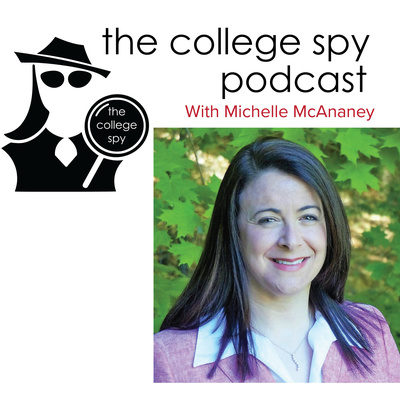
The College Spy has launched a new podcast with some great content for Counselors, Parents and Students. It is a weekly podcast that addresses all aspects of the college selection and admissions process hosted by Michelle McAnaney, founder of The College Spy.

As a high school counselor for 16 years and Director of Guidance at two high schools, she has extensive experience working with administrators and teachers. In this podcast she will outline how parents and students can take full advantage of all the resources offered at your high school.

In the first podcast, Michelle and her co-host, Justin McAnaney discuss how COVID-19 is impacting the college admission process and how high school juniors and seniors will need to move forward with their college search and selection process despite the disruption caused by the virus. This is a developing topic that changes day-to-day as colleges, standardized testing providers and high schools continue to update their responses to the virus.

Here is a link to the podcast: https://anchor.fm/thecollegespy/episodes/1-COVID-19-and-College-Admissions-ec9aq4/a-a1r5ckq

Update(4/15/2020) – The 2nd podcast was just released on Test Optional Admissions Policies

In this episode, Michelle McAnaney, the founder of The College Spy, and her co-host, Justin McAnaney, discuss test optional college admissions policies.  We review what “test optional” means for the student and the college and why colleges are increasingly adopting these policies, especially in connection with the COVID-19 virus. We address how students should plan for admissions to test optional colleges and universities.  

For a list of the 1,000+ test optional colleges and universities in the United States and additional information on standardized testing, see:

The National Center for Fair and Open Testing:  https://www.fairtest.org

Here is a link to the new podcast: https://anchor.fm/thecollegespy/episodes/2-Test-Optional-College-Admissions-ecpeoc/a-a1uepot

Update (5/11/2020) – The 3rd podcast was just released on College Letters of Recommendation

In this episode, Michelle McAnaney, the founder of The College Spy, and her co-host, Justin McAnaney, discuss letters of recommendation. We review where the letter fits into the college admissions process and how, from whom and when to ask for a letter recommendation. We address strategies for working with school counselors, teachers and others to obtain strong recommendation letters and some pitfalls to avoid as students work through this key element of the college application. 

Here is a link to the new podcast – https://anchor.fm/thecollegespy/episodes/3-College-Letters-of-Recommendation-edhna8/a-a23bjns

Coping with Coronavirus: What Students Need to Know

Current students–like most of us– have never experienced anything like the 2020 pandemic. With schools closing and events being cancelled, normal life has been greatly disrupted.

High school closings means no athletics, clubs, proms or other social events. It’s a really big loss for many students. Juniors applying to college will not be able to do the campus tours or attend the college fairs they normally would this spring. Seniors who’ve been accepted don’t have the chance to go to on-campus admitted students events to help make their final decisions.

Being sent home from college in the middle of the term is incredibly unsettling. Day-to-day social and athletic opportunities are gone, and classes have suddenly gone virtual. Those who  are seniors may have already bid a rushed goodbye to friends months earlier than expected.

Here are some ideas you can pass along to students to help them through these turbulent times:

  • Honor your feelings. You have every right to be upset that you are no longer on campus with your friends, or that you can’t participate in an internship or study abroad. Your feelings are valid, regardless of how others might react.
  • Find balance. While “venting” may give you temporary relief, be sure to spend time focusing on fulfilling activities as well, such as hobbies, reading, or creative endeavors.
  • Manage your media exposure. Staying up to date on important changes (e.g., travel bans) is appropriate, but it’s not necessary to check news outlets multiple times a day.
  • Keep some perspective. If you and your family are healthy, be thankful. Consider ways that you might learn or grow from this experience. You are living through a historical event that people will talk about for many years to come. Some of the changes in society–which we can only guess at–are likely to be positive. 
  • Focus on what’s under your control. You can practice good hygiene and social distancing; you can’t control the availability of masks and treatments, or when schools will reopen.
  • Become a distance-learning expert. Not only is this technology important to your education right now, but it is also likely to be more widely used in the future. Become familiar with how the online platforms work, and help your teachers and school think creatively about how to use it most effectively.
  • Do something constructive. Brush up on your cooking skills. Learn to fix things around the house. You will need these skills in adulthood.
  • Expand your knowledge. Learn a new computer language or foreign language. There are many free resources available online. You might uncover a career path you never knew about.
  • Maintain your health. Sleep, good nutrition and exercise are as important as ever. They will help keep your spirits as well as your immunity up.
  • Develop routines. Your old patterns (e.g., going to sports practice) may not be possible now, but you can establish new habits such as regular chat times with friends or mealtimes with family.
  • If you’re in high school, stay on track with college admissions. Colleges are making allowances for the current situation (e.g., by extending the deposit deadline or going test-optional), but they still expect you to do your part. You can learn about colleges through virtual tours/events, communicate with admissions reps by phone or email and, most importantly, continue to do well in your courses.
  • If you’re in college, continue laying the groundwork for your career. Stay connected to your professors; research future career paths or internships; update your resume or LinkedIn profile.

Your ability to be resourceful, and to draw on the support of others during this crisis, will make you a wiser, more resilient person in the years to come.

Eric Endlich, Ph.D. is the founder of  Top College Consultants®. You can connect with him on LinkedIn or like his Facebook page. He can also be reached by e-mail at eric@topcollegeconsultants.com.

Free Handouts available for download – The Role of the Counselor

The American School Counselor Association (ASCA) has put together some great resources that you can use to for back-to-school nights, faculty meetings, school board meetings, one-on-one parents meetings or any other time you might want to have resources to share that show the valuable role you play in working with students. Here are the direct links:

They offer the profession a lot of great tools to help you do your job better. If you would like to have more information on what benefits they offer and information about joining ASCA, here is the link: https://www.schoolcounselor.org/school-counselors-members/member-benefits-info

High School Career Guidance

It was at the Queen’s Croquet Ground in the story of Alice in Wonderland, that the game begins with Alice using a flamingo tucked under her arm as the mallet, a rolled-up hedgehog as the puck and the Queen’s soldiers bent over, acting as the hoops. The players all start at the same time without waiting for their turn. The hedgehog continually unrolls itself and the Queen’s soldiers are called away to another beheading. The game quickly turns into disorganized chaos with everyone running in different directions.

For many High School students, planning for their future training or career can, at times, resemble this croquet game. With so many career opportunities available, each with different skill requirements, how do students begin to consider making decisions about which direction to take?

Working on employability while studying isn’t just for those wanting to get on to prestigious graduate programs. Doing so helps students to discover what sort of work they want to do so they can start to plan their future study and work experience.

Like all students, I went through the same levels of confusion, which is why today, I spend my days providing what is termed ‘expert’ virtual speaker sessions for schools across the US.

As school counsellors will appreciate, giving each student the right information and advice comes with the same challenges; what a student may be inspired by today, may not be the career of their future.

From my experience many of today’s students need a wake-up call to tell them what is going on in the world of employment and the steps they should be taking. The objective of my sessions is to not only inspire them but to open up their minds to potential careers and the skills they’ll need. Being young (I’m only 26 years old myself) certainly helps to ensure they feel more aligned to my advice.

My career has taken several turns, from community theater, to helping small businesses find their ‘voice’; making their ideas a reality and helping to visualize and create their brand.

The first thing I share with students during my sessions is that, to a certain extent, there are two main skill areas that are required in all careers; marketing and IT.

Whichever career path a student takes, marketing is a central requirement. Whether a student wants to run their own website development company, work for a law firm, become a teacher or be a hairstylist they all need to market themselves. A lawyer has to ‘sell’ his defense to the jury, a web developer and hairstylist have to market themselves to potential new clients and a restaurant owner has to market the business to the surrounding community. In fact, everyone has to market themselves. If you want to apply for a job, you’ll need to write your resume to be appealing to the company and then, if invited in, you’ll need to promote yourself to the people conducting the interview.

IT is another skill that thankfully most of today’s students have. Creativity and artistic skills play a major role in technology. If they are to become a website developer or graphic designer, today’s new-age careers demand a high level of creativity. Whether they run their own business and set up a marketing database or use an online system for invoicing, they will all need to know how to use technology in their future careers.

Questions

One common trait in all my sessions is that the students want to know the formula. They want me to tell them what they need and the career they should embark on. I therefore spend time ensuring that students recognize that they are the only ones in charge of their future.

The next most common question I’m asked is whether they have to go to college. While I dropped out of college, I always encourage them to go; after all the experience of college life is so valuable and you learn skills beyond pure academic achievement. But what I do stress is that if it’s just not practical for any individual student, it isn’t 100 percent necessary.

And finally, in terms of setting up my own business, they want to know how hard it was and how long it takes; again, expecting a set formula. It is interesting that however honest I am about the hard work and long hours they seem to value this honesty. I start with hard facts about the failures, long hours and the loneliness of working alone. The bottom line they need to understand is that ‘the world is a lot more difficult than you think.’ I want these students to understand that whatever stage they are at in their career pathway, they may certainly feel like they are running around the Queen’s Croquet Ground, feeling confused, taking constant knocks, experiencing failure, and being at a loss to see a clear direction. These are all completely normal; it’s an important part of career guidance.

Ryan Hertel is an expert speaker on Career Exploration. He carries out face to face and virtual sessions in classes and assemblies across the US. For further information please visit www.LessonALive.com .

Secondary Schools College Admissions Services Update

The Secondary Schools College Admission Services Update is now available. It provides secondary schools professionals an opportunity to report on the current admission-related services at their schools and organizations under these unprecedented circumstances.

This is a tool created by NACAC. With so many schools closed or otherwise disrupted, it’s a challenge for counselors to provide students, especially seniors, with transcripts, guidance, and other services needed to finalize college plans. The Secondary Schools tool shows how different schools and counselors are responding. The tool includes replies to questions such as:

  • What is your school’s plan for issuing final course grades?
  • Do you have the ability to provide updated transcripts and other information?
  • What questions are your students seeking answers to from colleges at this time?

Here is a link to it: https://www.nacacnet.org/news–publications/newsroom/secondary-schools-update-coronavirus/

Would you like to include what your school is doing to help other Counselors around the country? If so, here is a link to include your schools information – https://nacac.formstack.com/forms/covid_19_sec_response

Should Your Students Write Their College Essay Now?

Before they start, they should ask themselves a few questions to determine if they are ready

This time of year, we focus on ways to prepare for the college essay, which students generally begin writing at the end of junior year – presumably in June.

But lately, we’ve been getting a lot of questions from counselors, independent educational consultants and parents about the college essay.

Should students start writing their essays now, while they are home?

The answer to this question doesn’t have a simple answer.

We understand these are unsettling, super stressful times. You are working remotely while news about college admissions for the Class of 2020 has been changing by the minute since the Covid-19 pandemic began.

So, what are your students supposed to do with all this additional free time? Likely, they’ve got schoolwork. Much of everything else has been canceled. Sports. Dances. Clubs. Jobs. They can’t sit inside Starbucks with their friends or go shopping at the mall (neither can you!) They can chat on Instagram or Snap Chat and binge watch their favorite shows if they are fortunate enough to have Netflix, Amazon Prime or Hulu. But to be honest, we know – and you know – there’s  not much going on.

Before making a decision about whether or not your students should actually start writing their college essay, they need to ask themselves:

  • Does writing my Common App essay sound like something I want to do now?
  • Why am I going to write a college essay?
  • Why should I write it now?
  • Is it urgent that I write any college essay now?

Right now, more than ever, they should not forget the fundamentals: Plan. Process. Schedule.

Unless your students can reliably start the Common App essay, and finish it soon, it won’t work. They need to make sure they have a plan to finish what they start.

Help them make sure they have a process to follow so they know exactly what they’re doing and WHY they are doing it.

And make sure they understand the importance of sticking to a schedule. Everything is up in the air right now. They might need help staying focused.

Unless the essay is something your students can focus on – and I mean really focus on – it won’t work.

Were they going to wing it? Then they should slow down. It’s hard to focus.  It’s hard to stick to a routine.

To succeed on a college essay, students need a plan. They need a schedule. And they need a process to get it done without losing momentum?

So back to that original question: “Should students start working on college essays now?”

Share with you students in an email the right questions, and you’ll help them come up with the right answer.

It’s a good time to learn more. I hope you’ll ask your students to join me on April 7 for a free, 1-hour class, to help you prepare for your college essay. It’s online, on Zoom.

Get Started on Your College Essay – Free

Find out what you need to know to stand out in your college essay from Wow Writing Workshop, the leading national experts on the college essay. It can be hard to write about yourself, especially when the stakes are so high. We’ll help you prepare now, so you can write your essay when you are ready. We’ll answer your questions, too. Sign up here.

Stay healthy. We’re sending warm and calming thoughts to all of you.

Kim Lifton is President and Co-founder of Wow Writing Workshop, a strategic communication company specializing in college admission and grad school application essay writing and professional training. She leads a team of writers and teachers who understand the writing process inside and out. Wow’s team teaches students how to write application essays, and provides expert training on their unique approach to professionals who want to improve their essay coaching practices. Kim blogs regularly about the college essay’s role in the admission process for multiple industry publications and websites. In 2019, she was named a LinkedIn Top Voice in Education.

Before co-founding Wow, Kim worked as a reporter and communication consultant. Highlights include: Co-producing a PBS documentary about teens and depression, No Ordinary Joe: Erasing the Stigma of Mental Illness; writing “First Class,” a weekly lifestyle column about the area’s most successful businessmen and women for the Detroit Free Press; creating “A Small Business Adventure,” a 12-part monthly series about the perils and pitfalls of running a small business for the Detroiter Magazine; supervising a public relations campaign and accompanying print materials that attracted local and national print, radio, and TV media coverage for the National Council of Jewish Women’s annual convention in celebrating its 100th anniversary.

Newer Posts
Older Posts

Link for Counselors

Current Publication

View Current Publication

Advertisements

LINK Newsletter for Counselors

Sign up to receive our bi-weekly e-newsletter.